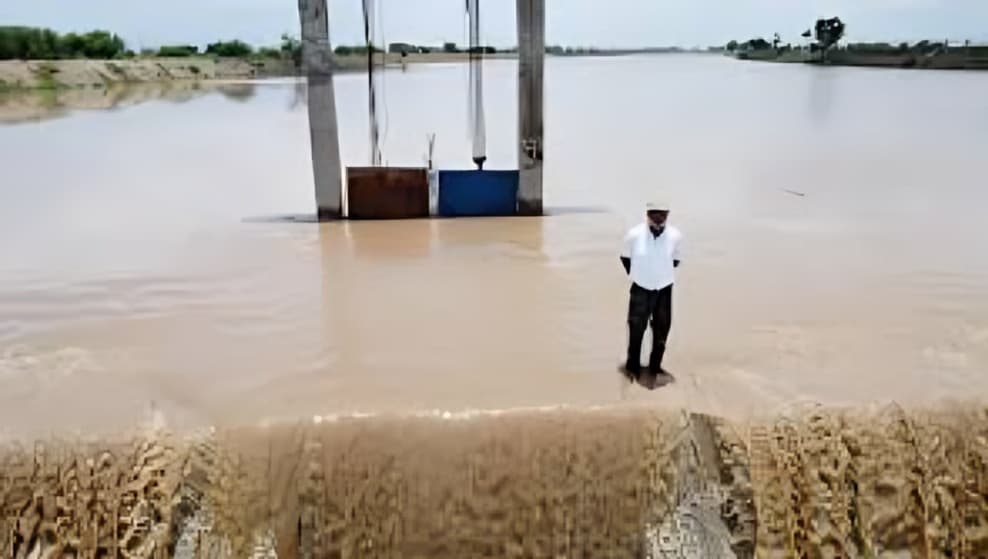
In response to continuous heavy rainfall in the region, all 59 gates of the Shetrunjay Dam located in Gujarat’s Bhavnagar district have been opened up to three feet. The dam, which plays a crucial role in regional irrigation and water management, witnessed significant inflow from catchment areas, prompting authorities to release water to maintain safe reservoir levels.
Drone visuals released by local authorities and news agencies show a breathtaking yet powerful view of the water gushing out of the dam gates. The footage has quickly gained attention, not only for its visual impact but also for the scale of the precautionary measures being implemented.
According to the Bhavnagar district administration, the decision to open the gates was taken after water levels in the dam crossed the warning mark. Engineers on-site coordinated with the state irrigation department to ensure that the discharge was carried out in a controlled and safe manner. The water is being released into the downstream river channels, which are currently capable of handling the excess volume.
Officials confirmed that there is no immediate danger to nearby villages or urban settlements. However, they have advised residents living in low-lying areas downstream to remain cautious. Emergency response teams have been stationed nearby to handle any unforeseen developments.
"We are continuously monitoring the situation and taking all preventive measures to ensure public safety," said a senior official from the Bhavnagar district. “The dam is structurally sound, and there is no reason for panic. The release of water is routine during the monsoon when inflow levels rise sharply.”
Local weather forecasts indicate that more rainfall is expected over the next few days in the Saurashtra region, including Bhavnagar. As a result, authorities are likely to continue regulated water releases to avoid sudden surges. The meteorological department has also issued alerts for moderate to heavy rain in isolated pockets of Gujarat.
The Shetrunjay Dam, constructed across the Shetrunji River, is a major irrigation source for thousands of farmers in the region. The dam supports both drinking water and agricultural needs, making its management critical during the monsoon season.
Residents in nearby villages have shared their concerns, especially with memories of past years when sudden water releases led to partial flooding. However, they have also expressed confidence in the current management, citing better communication and advance warning systems.
Environmental experts have pointed out that such controlled releases are necessary to maintain dam integrity and prevent overflow disasters. They also emphasized the importance of updating dam infrastructure and improving forecasting models to better prepare for extreme weather patterns driven by climate change.
In conclusion, while the opening of all 59 gates of the Shetrunjay Dam may appear alarming at first glance, it remains a strategic decision to manage rising water levels safely. The situation is under control, and officials continue to monitor weather patterns and reservoir data closely to protect lives and property.