Maharashtra Chief Minister Devendra Fadnavis has criticised Shiv Sena UBT chief Uddhav Thackeray and Maharashtra Navnirman Sena MNS chief Raj Thackeray following their joint protest against the Election Commission of India in Mumbai.
Fadnavis described the two Thackeray cousins as Ghajinis while questioning their arguments concerning the 2024 Maharashtra Assembly elections, Chief Election Commissioner Gyanesh Kumar and the Special Intensive Revision SIR of electoral rolls.
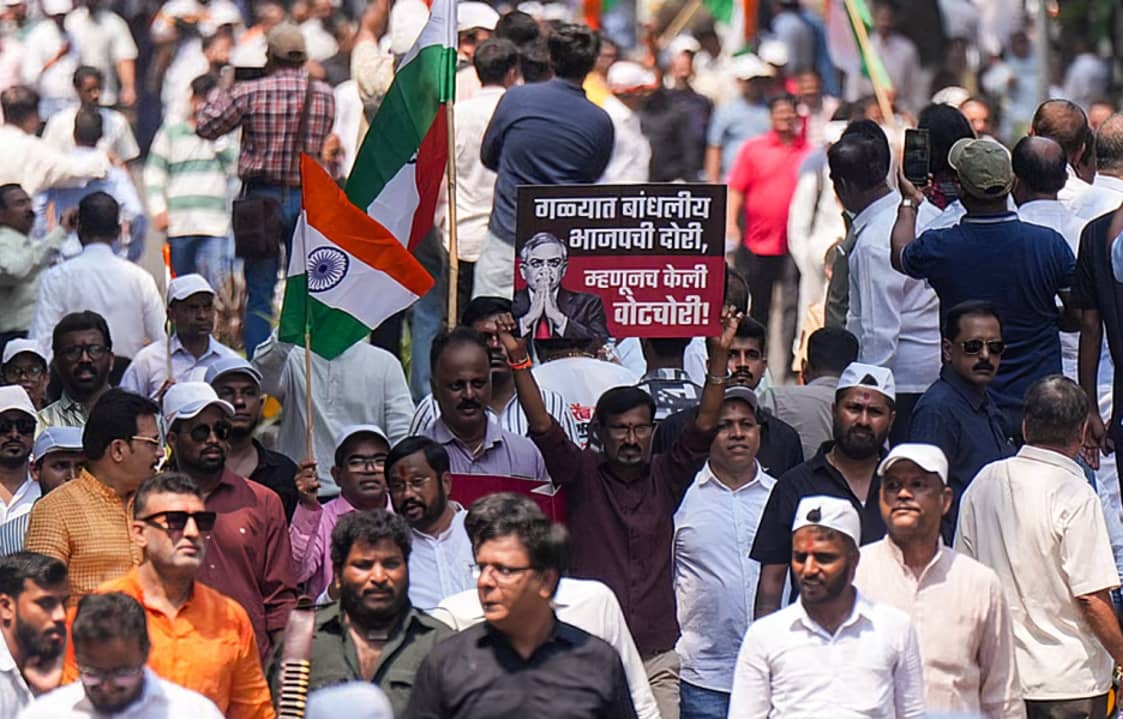
The remarks came a day after Uddhav Thackeray and Raj Thackeray jointly led a protest march in Mumbai demanding the removal or resignation of Chief Election Commissioner Gyanesh Kumar. The demonstration also raised objections to the SIR exercise and called for changes in the electoral process.
Speaking to reporters in Nagpur, Fadnavis said the protest was an attempt by the Thackeray cousins to regain political ground. He also claimed that the turnout at the march was lower than expected despite the publicity surrounding the event. These remarks represent the Maharashtra chief minister’s political assessment of the demonstration.
Fadnavis used the term Ghajini as a political reference to the 2008 Hindi film of the same name, whose central character suffers from severe memory loss. He used the reference while questioning the chronology of the claims being made against the Election Commission.
According to Fadnavis, Gyanesh Kumar became Chief Election Commissioner in 2025, while the Maharashtra Assembly elections were conducted in 2024. He also pointed out that the Special Intensive Revision exercise referred to in the current political debate began in Maharashtra in 2026.
Fadnavis questioned how an election commissioner who assumed the position in 2025 and an electoral roll revision exercise conducted in 2026 could have influenced the Maharashtra Assembly elections held in 2024.
The chronology has become an important part of the political debate. According to current reports, Gyanesh Kumar took charge as Chief Election Commissioner in February 2025. He had previously served as an Election Commissioner from March 2024. The Maharashtra Assembly election was held in November 2024. The distinction between his earlier role as Election Commissioner and his later appointment as Chief Election Commissioner is therefore relevant to the arguments being exchanged by the ruling and opposition sides.
The protest led by Uddhav and Raj Thackeray was organised on October 4 in Mumbai. The march was presented by its organisers as a broader opposition demonstration against the Election Commission and its handling of electoral rolls. The protesters demanded action against Gyanesh Kumar and opposed the Special Intensive Revision process.
The demonstration began in south Mumbai and moved towards the Brihanmumbai Municipal Corporation headquarters. Leaders from the Congress and the Sharad Pawar-led Nationalist Congress Party Sharadchandra Pawar also participated in the protest.
The Thackeray cousins have alleged that the electoral roll revision process could lead to the deletion of large numbers of legitimate voters. Raj Thackeray also demanded that the SIR exercise in Maharashtra be cancelled and called for elections to be conducted using ballot papers instead of electronic voting machines.
Uddhav Thackeray also criticised the Election Commission and alleged that voters were being removed from electoral rolls. These statements are political allegations made by the opposition and have been strongly disputed by the Election Commission and the ruling side.
The Election Commission has maintained that electoral roll revision exercises are intended to identify and remove duplicate, deceased or otherwise ineligible entries while ensuring that eligible voters remain on the rolls. The commission has also rejected allegations that its electoral processes are designed to favour any political party.
Fadnavis, meanwhile, accused the Thackeray cousins of using the Election Commission as a target for political criticism following electoral setbacks. He said the protest was an effort to regain lost political ground and questioned the factual basis of some of the claims made against the poll body.
The exchange reflects the growing political dispute in Maharashtra over electoral rolls, the Election Commission and the SIR exercise. The issue has also become part of a wider national opposition campaign against the Election Commission, with opposition parties demanding greater transparency in the electoral process.
The October 4 Mumbai demonstration was notable because party flags were reportedly not allowed. Participants were instead asked to carry the national Tricolour, with organisers presenting the event as a wider citizens’ protest rather than a demonstration by a single political party.
Fadnavis’s Ghajini remark has since become a major political talking point because it directly targets the chronology of the opposition’s allegations. His argument is that the 2024 Maharashtra election took place before Gyanesh Kumar became Chief Election Commissioner and before the 2026 SIR exercise began.
The Thackerays and other opposition leaders, however, have continued to question the Election Commission’s functioning and the electoral roll revision process. Their protest is part of a larger political dispute over voter lists, election administration and institutional accountability.
The controversy is therefore not limited to Fadnavis’s personal criticism of Uddhav and Raj Thackeray. At its centre is a broader political disagreement over how electoral rolls should be revised, how the Election Commission should function and whether recent changes could affect voters.
As the political debate continues, claims made by both the ruling side and the opposition need to be distinguished from independently established facts. The Election Commission has defended the electoral revision process, while opposition parties continue to demand changes and greater accountability.