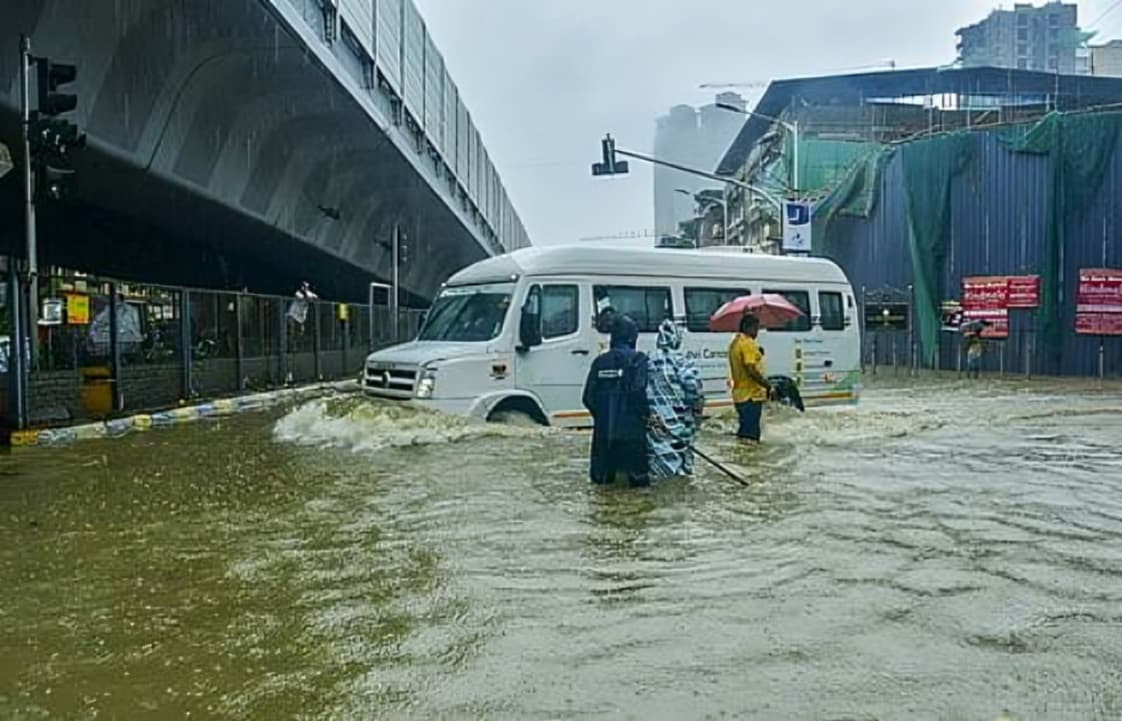
Mumbai witnessed widespread disruption after heavy rains battered the city, flooding several areas and paralyzing transport services. The downpour, among the heaviest this monsoon season, led to waterlogging in key parts of the city, severely affecting daily life. The intensity of the rainfall prompted the Maharashtra government to declare a holiday for government offices, while schools and colleges were also shut as a precautionary measure.
Road traffic was among the worst affected, with major routes submerged under knee-deep water. Long traffic jams were reported on arterial roads such as the Eastern and Western Express Highways, leaving commuters stranded for hours. Many vehicles broke down in waterlogged stretches, further worsening congestion. Local residents struggled to reach their workplaces, and several were forced to return home due to the impassable conditions.
Railway services, considered the city’s lifeline, also took a hit. Suburban train operations were delayed or suspended on several routes after tracks were inundated. Thousands of daily commuters were stranded at stations, with announcements urging them to seek alternate arrangements. Although railway authorities deployed pumps to drain water from flooded tracks, the persistent rainfall slowed restoration efforts. Long-distance trains entering and leaving Mumbai were also delayed.
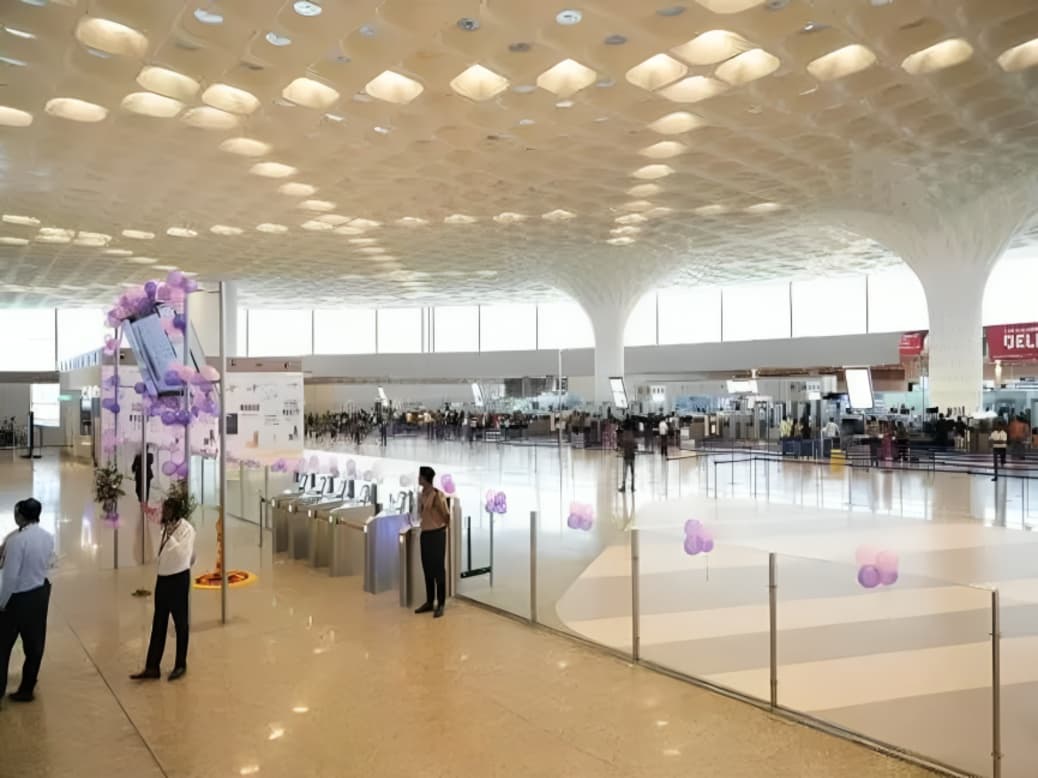
Air travel was not spared either. Several flights at Mumbai’s Chhatrapati Shivaji Maharaj International Airport were delayed due to poor visibility and operational challenges. Airlines issued advisories to passengers to check flight status before leaving for the airport.
The Brihanmumbai Municipal Corporation (BMC) deployed emergency response teams across the city to tackle waterlogging and clear drains. Pumps and machinery were pressed into service in the worst-hit areas such as Sion, Kurla, Andheri, and Dadar. Officials urged people to avoid venturing into flooded areas and to stay updated through official alerts. Disaster management teams were also kept on standby in case of worsening conditions.
Citizens in low-lying neighborhoods were among the most affected, with many reporting water entering their homes. In some areas, electricity supply was temporarily cut to prevent accidents. Residents expressed frustration over recurring waterlogging issues, pointing out that despite annual assurances of monsoon preparedness, the city continues to face the same challenges each year.
The Maharashtra government assured that all possible measures are being taken to address the situation. Chief Minister Eknath Shinde reviewed the rainfall impact and directed civic officials to provide relief where needed. Essential services were kept operational, while priority was given to clearing blocked roads and restoring public transport at the earliest.
Experts warn that Mumbai’s urban infrastructure remains vulnerable to extreme weather events, which are becoming more frequent due to climate change. With the monsoon season still underway, authorities have urged citizens to remain vigilant and follow safety advisories.
For the people of Mumbai, the relentless rainfall was another reminder of the city’s struggle to balance rapid urbanization with climate resilience. As the water slowly receded in some areas, officials prepared for more showers in the coming days, keeping the city on alert.