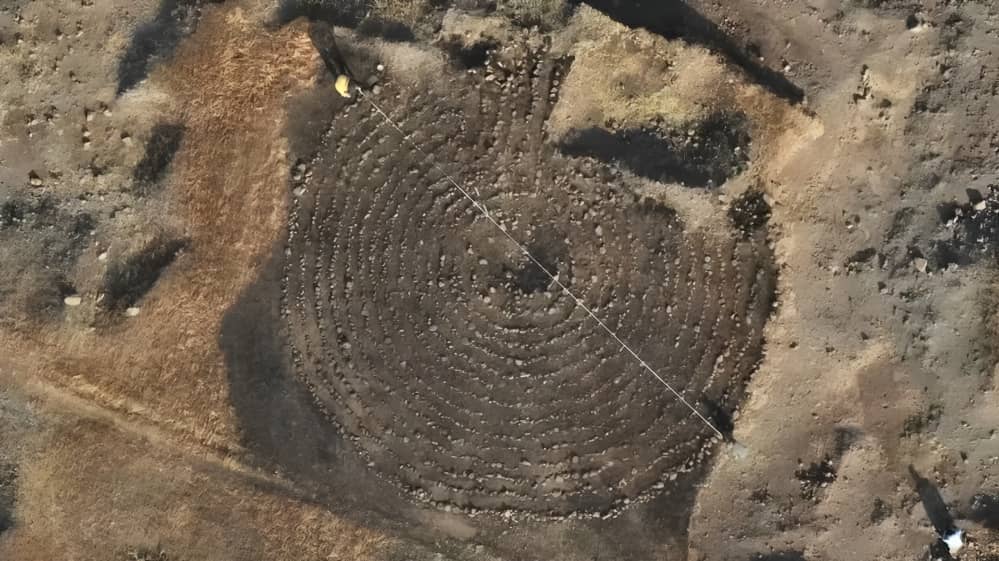
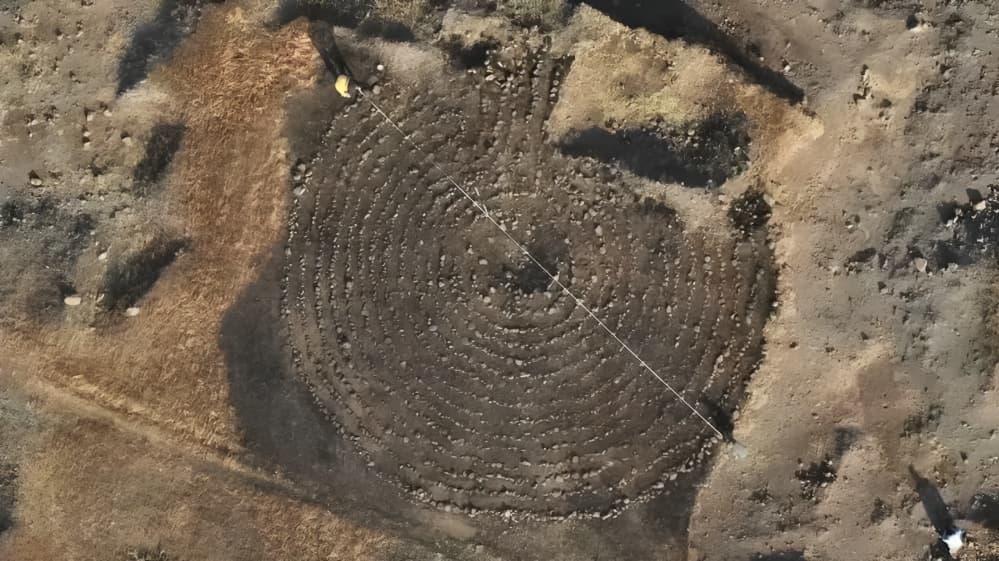
A remarkable archaeological discovery has emerged in Maharashtra's Solapur district with the unearthing of a 15-circuit ancient labyrinth. This discovery has captured the attention of historians, archaeologists, and heritage enthusiasts, as such labyrinths are rarely found in India. Preliminary analysis suggests that the labyrinth is carved into solid rock and consists of 15 distinct circuits forming a complex, circular pattern. The design indicates careful planning and craftsmanship, reflecting the advanced architectural skills of the civilization that created it.
Labyrinths have historically been associated with religious, ceremonial, and meditative practices across cultures worldwide. In India, the discovery of such a multi-circuit labyrinth is unprecedented, offering a unique glimpse into the spiritual or ritualistic practices of the region's ancient inhabitants. Experts from state archaeological departments, along with representatives from national heritage organizations, have initiated detailed studies to analyze the labyrinth's design, orientation, and potential uses.
The site’s discovery was made during routine surveys in a remote area of Solapur, where local researchers noticed unusual patterns etched into the rock surface. Subsequent exploration revealed the full extent of the labyrinth, including intricate grooves and pathways that make up its 15 circuits. The discovery has sparked discussions among historians about the timeline and cultural context of the structure. While the exact period remains undetermined, preliminary studies suggest it could date back several centuries, possibly linked to local religious or spiritual traditions.
Archaeologists are meticulously documenting the labyrinth using 3D imaging, mapping, and photogrammetry to ensure precise records of its layout. Excavations around the site have also begun to look for artifacts, pottery, or inscriptions that might provide clues about the people who built it and the purposes it served. The team aims to preserve the site while continuing research to understand its historical significance fully.
The discovery of the labyrinth also opens new avenues for cultural tourism in Solapur. Authorities are considering plans to create a controlled access site where visitors can learn about the labyrinth, its history, and the broader context of ancient Indian architecture. The project emphasizes conservation, ensuring that the structure is protected from natural erosion and human interference.
Experts believe that studying the Solapur labyrinth could shed light on the broader socio-cultural landscape of ancient Maharashtra. It provides evidence of advanced spatial planning and symbolic design, suggesting that ancient communities in this region engaged in complex ritualistic or meditative practices. Scholars hope that further research will help contextualize this find within India’s rich heritage of ancient architecture and religious symbolism.
As work continues, archaeologists are calling for increased public awareness about the importance of preserving such heritage sites. The Solapur labyrinth not only adds to the historical record of Maharashtra but also contributes to a deeper understanding of India’s ancient cultural and spiritual traditions. This discovery underscores the need for ongoing archaeological surveys and the protection of lesser-known heritage sites across the country.