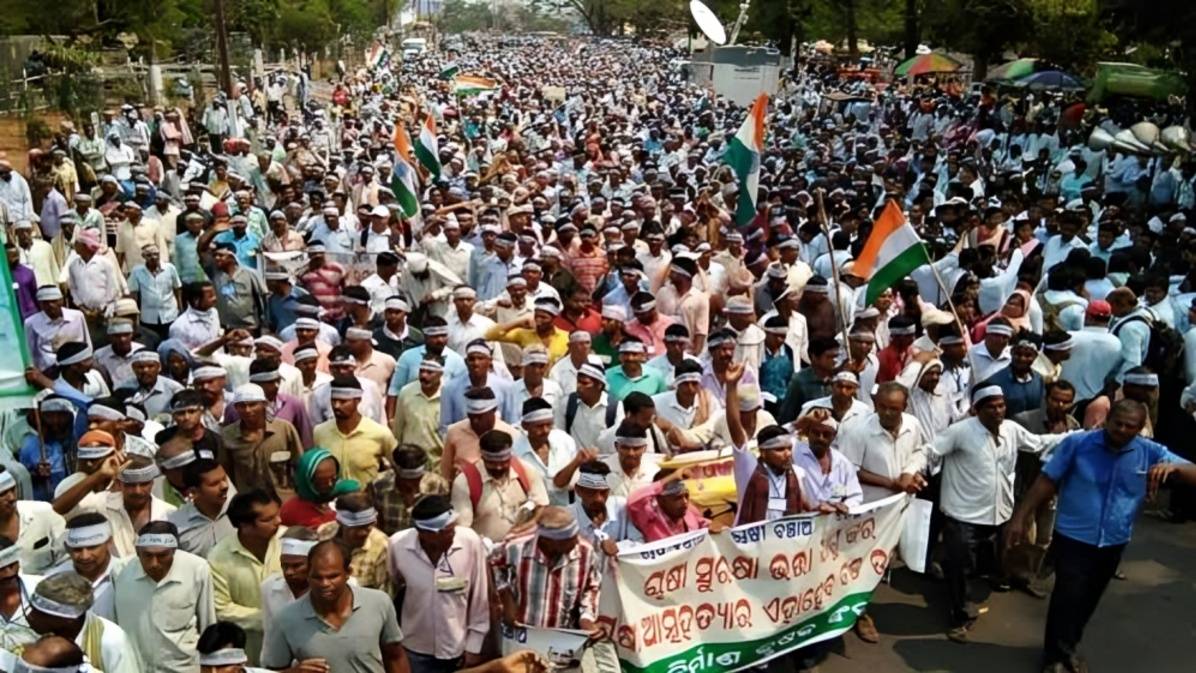
Contractual electricity workers in Bhubaneswar, Odisha, have intensified their protest over employment security and the reinstatement of employees who have lost their jobs. In a symbolic demonstration, protesters covered themselves with funeral shrouds and staged a living corpse protest to draw attention to their demands. The agitation has continued for several weeks, with workers also undertaking a hunger strike to press the state government and electricity authorities to address their concerns.
The demonstration was organised under the banner of the Odisha Electricity Contractual Workers' Joint Forum, also known as Odisha Bidyut Thika Karmachari Milita Mancha. Workers gathered at PMG Square in Bhubaneswar and used the unusual form of protest to highlight the uncertainty surrounding their employment and the financial difficulties faced by affected families.
According to reports published on November 8, the protest had entered its 38th day, while the hunger strike had continued for five days at that point. The workers' representatives said the agitation had not received a satisfactory response from the authorities. The latest figures supplied in connection with the protest describe it as a 41-day agitation, with the hunger strike continuing for seven days.
Why Are Electricity Workers Protesting?
The workers are primarily demanding job security and the immediate reinstatement of employees who have been dismissed. They have raised concerns about the practice of removing experienced contractual employees when outsourcing agencies or tender arrangements change.
According to the workers' association, employees who have served in the electricity distribution sector for several years remain vulnerable to losing their jobs whenever a contract is transferred to a new agency. The association wants an end to what it describes as repeated and arbitrary retrenchment under the tender system.
The protesters argue that workers who have gained years of experience in electricity-related duties should not be removed without proper consideration of their service records. They are also seeking clear employment arrangements that would protect existing employees from sudden termination.
The association has called for the reinstatement of workers who have already been dismissed. It has urged the state government and the concerned electricity authorities to intervene and ensure that long-serving employees are not left without employment because of changes in outsourcing arrangements.
Thousands of Workers Face Employment Uncertainty
The workers' association has claimed that Odisha has approximately 15,000 contractual electricity employees and that around 2,000 workers have been removed from service at different times. These figures are based on the association's claims and have not been independently established in the reports available.
A separate report published on November 7 said that more than 4,000 contractual electricity workers were participating in the protest at PMG Square. It also reported that more than 7,000 contractual workers across the state could face uncertainty over their employment.
The concerns are particularly significant for employees who depend on monthly wages to support their families. Losing a job can affect household expenses, children's education, healthcare and other essential financial commitments. Workers say that their experience in the electricity distribution sector should be recognised when decisions are taken about employment and outsourcing contracts.
Hunger Strike and Health Concerns
The protest has also included a hunger strike as workers attempt to increase pressure on the authorities. Association president Dilip Kumar Sahu said that several employees had experienced health problems during the hunger strike.
According to his statement reported on November 8, between 12 and 15 workers had fallen ill and were admitted to hospitals. This figure was reported as the association's account of the situation.
The workers have continued their demonstration despite concerns about the physical impact of prolonged fasting. Their representatives have appealed to the government to hold discussions and find a solution before the situation worsens.
The use of funeral shrouds during the demonstration was intended as a symbolic expression of the workers' concerns about their livelihoods. By staging the living corpse protest, they sought to communicate the seriousness of their employment-related grievances and draw public attention to their demands.
Earlier Protests and Unresolved Demands
Contractual electricity workers in Odisha have raised similar concerns in earlier protests. In May 2026, thousands of workers demonstrated against retrenchment and demanded the reinstatement of employees who had been removed from service. They also sought a separate outsourcing framework for the state.
Reports about the earlier agitation said that the workers wanted greater employment protection, fair wages and social security. Following that protest, the services of 1,744 workers were reportedly regularised after intervention by Chief Minister Mohan Charan Majhi. However, the workers involved in the latest agitation say that several employment-related concerns remain unresolved.
The latest demonstration reflects continuing dissatisfaction among contractual employees over the security of their jobs and the way outsourcing arrangements affect their employment.
What Are the Workers Demanding From the Government?
The protesters want the Odisha government to take steps to protect existing contractual employees, reinstate dismissed workers and prevent sudden job losses linked to changes in tender arrangements. They are also seeking direct discussions with the authorities to address their concerns.
The workers have warned that the agitation could be intensified if their demands are not considered. They say they will continue their protest until they receive a concrete response on employment security and reinstatement.
The issue also raises wider questions about the working conditions of contractual employees in essential public services. Electricity distribution depends on field workers, technical staff and other personnel who help maintain services and respond to consumer requirements. The protesters argue that retaining experienced workers is important for both employee welfare and the continuity of electricity-related work.
The next steps will depend on whether the state government and the concerned electricity authorities initiate discussions with the workers' representatives. For now, the shroud demonstration and hunger strike have brought the contractual employees' demands back into public focus in Odisha.