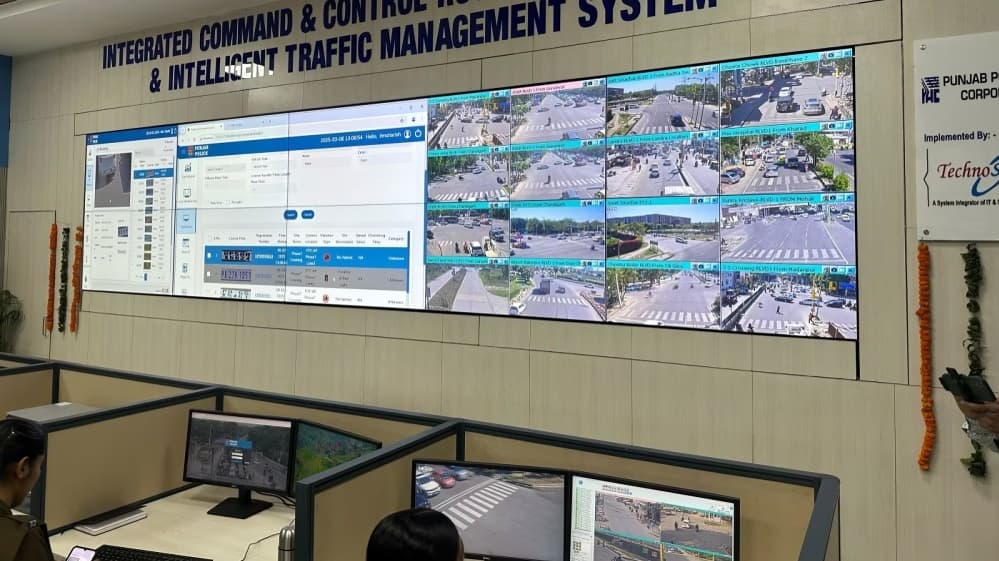
Chandigarh: Punjab Police has been expanding the use of digital technology and intelligence based systems to strengthen its operations against organised crime networks operating within and beyond the state. According to officials, a dedicated operations centre has been established to coordinate real time monitoring and analysis of criminal activities.
Inside the secure operations facility, officers monitor multiple digital systems that provide continuous updates from districts across the state. Large screens display call data analysis, digital maps and intelligence alerts while communication channels remain active with field units providing updates about ongoing investigations and suspicious activities.
Officials describe the facility as a central coordination hub designed to support intelligence led policing. The objective is to identify potential criminal activities at an early stage and prevent incidents such as gang related violence before they occur.
Over the past several years Punjab Police has adopted a strategy that combines traditional investigative techniques with modern digital technology. Human intelligence gathered by officers and informants continues to play a key role, but it is now supported by advanced data analysis and communication systems.
According to an official statement issued by the police department, organised crime groups often operate through networks that extend beyond state borders and sometimes even across international locations. Tracking such networks requires constant monitoring of communication patterns financial transactions and movement across regions.
The digital tools used in the operations centre allow officers to examine large volumes of data quickly. This includes analysing call records mapping relationships between suspected criminals and monitoring patterns that could indicate potential criminal planning.
Law enforcement agencies around the world are increasingly using similar methods to combat organised crime. Data analysis and technology based surveillance help investigators identify connections between individuals and groups that may not be immediately visible through traditional policing methods.
Officials say that the adoption of intelligence driven policing has improved coordination between different units of the police force. Information collected from district level officers can now be quickly shared with the central monitoring team which then evaluates potential risks and provides guidance for field operations.
The system also helps in tracking individuals associated with known gangster networks. By studying communication patterns and movement data investigators can identify possible meeting points or locations where criminal activities might be planned.
Authorities believe that early identification of such patterns allows police units to intervene before crimes take place. Preventive measures such as surveillance targeted operations and coordination with other law enforcement agencies can then be implemented.
The use of digital technology has also strengthened collaboration between state police departments and national investigative agencies. Since many organised crime groups operate across different states information sharing becomes essential for effective law enforcement.
Punjab Police officials say the technology based monitoring system will continue to evolve as new tools and analytical methods become available. The department is also focusing on training officers to use digital systems effectively while maintaining strict procedures to ensure legal compliance and data security.
As organised crime networks become more complex law enforcement agencies are increasingly relying on advanced technology and intelligence analysis to protect public safety and maintain law and order.