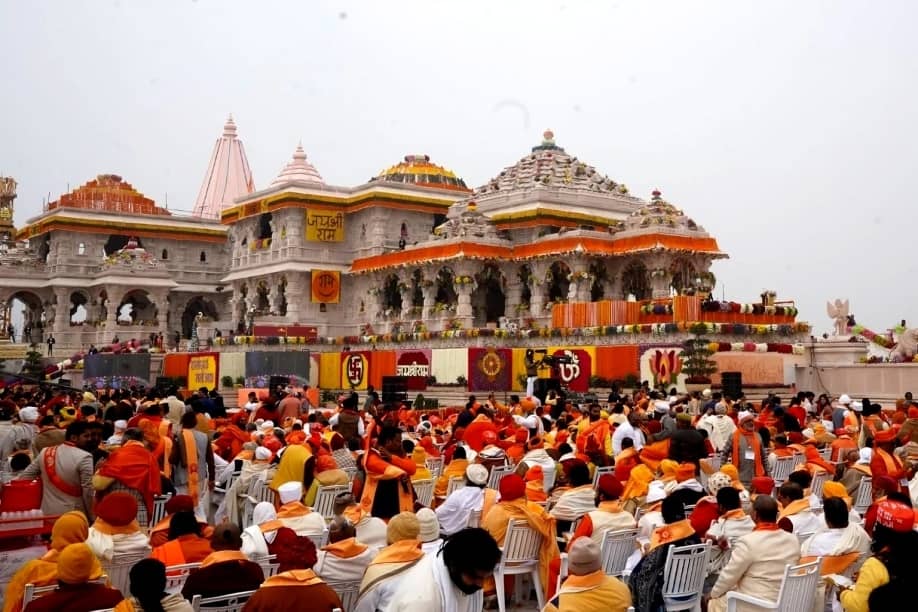

Ayodhya’s Ram Temple has officially reached a historic milestone, with Prime Minister Narendra Modi hoisting the sacred saffron flag atop the golden kalash of the temple at noon on Vivah Panchami. The main structure now stands at a towering height of 161 feet, marking the completion of a project that has been long awaited by millions of devotees and followers of Lord Ram worldwide. This moment represents not only an architectural and spiritual achievement but also a testament to the enduring faith of the Indian populace.
One of the most remarkable aspects of the Ram Mandir project is its funding model. The construction was supported entirely through voluntary contributions from devotees, totaling over Rs 3,000 crore. This makes the Ayodhya temple the largest crowd-funded religious project in recorded history. Donations poured in from across India and abroad, ranging from small amounts contributed by ordinary citizens to larger donations from organizations and philanthropists. The collective effort highlights the deep emotional connection and devotion of people who consider the temple a symbol of cultural and spiritual heritage.
The temple’s completion marks the culmination of years of meticulous planning, architectural expertise, and construction work. Designed to reflect the grandeur and sanctity associated with Lord Ram, the structure incorporates traditional Indian craftsmanship, intricate carvings, and modern engineering techniques to ensure durability and aesthetic appeal. The golden kalash atop the temple, where the saffron flag was hoisted, serves as a symbolic focal point visible from afar, emphasizing the spiritual significance of the site.
Beyond its architectural and religious importance, the Ayodhya Ram Temple project represents a broader narrative of unity and faith. Millions of Indians contributed according to their means, creating a sense of collective ownership and pride in the temple. The voluntary donations system allowed people from diverse backgrounds and regions to participate in what many consider a historic spiritual endeavor.
Authorities have ensured that the temple is not only a place of worship but also a cultural and tourist landmark. Once fully operational, the temple is expected to attract millions of visitors annually, contributing to local development and promoting religious tourism. It is anticipated to host various spiritual, cultural, and educational events, reinforcing its role as a center of devotion and heritage.
In conclusion, the completion of the Ram Temple in Ayodhya is a landmark achievement in India’s religious and cultural landscape. Funded entirely by public contributions amounting to over Rs 3,000 crore, the project reflects the collective faith, devotion, and commitment of millions of devotees worldwide. With the saffron flag now hoisted atop the golden kalash, the temple stands as a symbol of spiritual heritage, unity, and the enduring legacy of Lord Ram’s devotion in India.