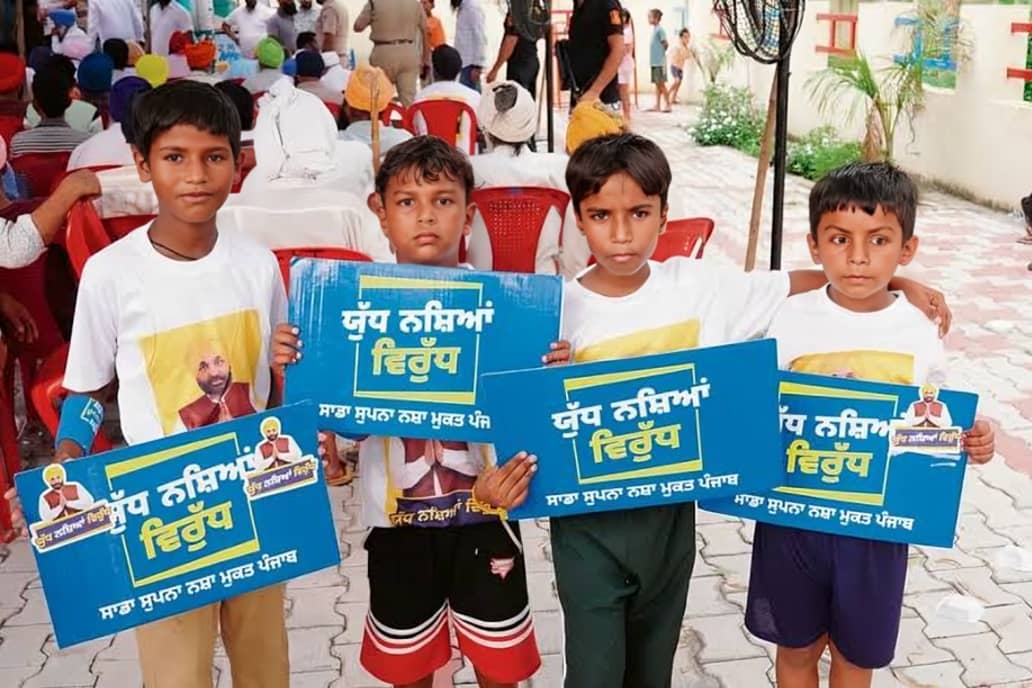
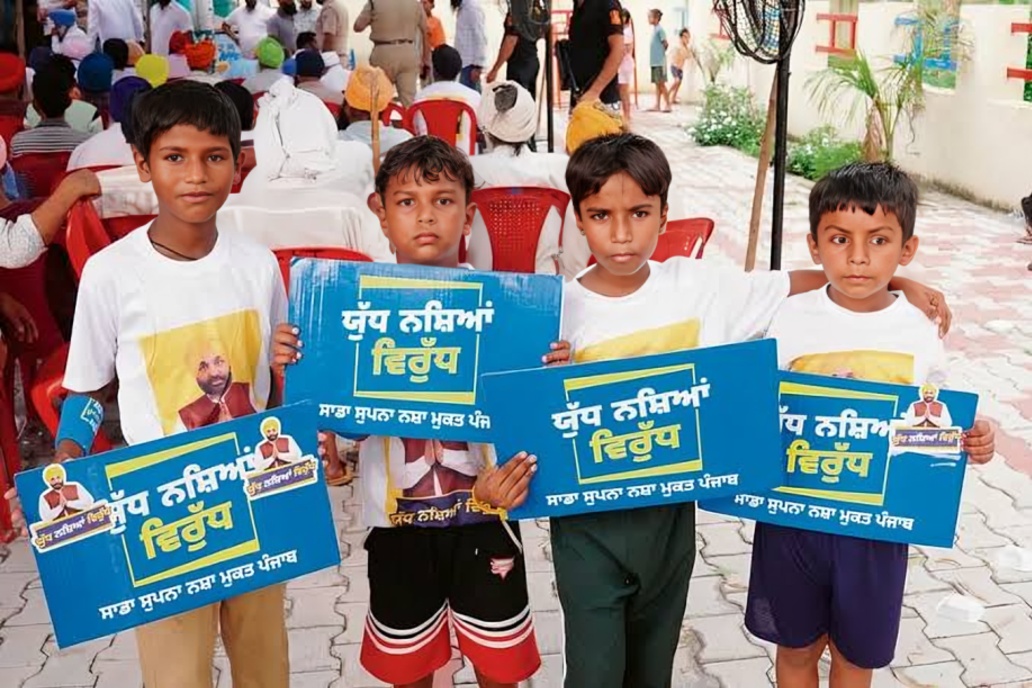
Punjab has reported a significant increase in the number of people seeking treatment at government run de addiction and rehabilitation centres, with admissions rising sharply since the launch of the state government’s Yudh Nashean Virudh anti drug campaign.
According to data released by the Punjab government, admissions to government de addiction centres increased from 9,577 in 2024 to 25,290 in 2025. This represents an increase of more than 164 percent in one year. The figures were highlighted by Punjab Health Minister Dr Balbir Singh, who said the increase indicates greater public confidence in the state’s treatment infrastructure.
The upward trend has continued during 2026. More than 14,000 people had been admitted to government de addiction centres by July this year, according to the latest figures cited by the state government. The continued increase suggests that the demand for publicly supported addiction treatment services remains high.
The rise in admissions has been presented by the Punjab government as an important development in its efforts to address substance abuse. The state launched the Yudh Nashean Virudh campaign in March 2025 as part of a broader strategy combining drug enforcement, treatment, rehabilitation and public awareness.
Health Minister Dr Balbir Singh said the growing number of admissions indicates that individuals and families are increasingly willing to approach government facilities for assistance. The government has viewed the trend as an indication of increasing confidence in its treatment network.
However, the rise in admissions should not by itself be interpreted as evidence that drug addiction has declined. Higher admissions can also reflect increased awareness, improved access to treatment, greater willingness among affected individuals to seek help and expansion of treatment capacity. The available figures primarily measure utilisation of government treatment facilities.
The state has also reported a substantial increase in admissions to rehabilitation centres. According to the data cited by the Health Minister, rehabilitation centre admissions increased from 2,644 in 2024 to 8,574 in 2025. This represents an increase of more than 224 percent. By July 2026, more than 5,800 people had already been admitted to rehabilitation centres, accounting for nearly 68 percent of the total admissions recorded during the whole of 2025.
The rehabilitation component is significant because recovery from substance dependence often requires continued support after the initial phase of treatment. Rehabilitation programmes can help individuals work towards recovery, rebuild family relationships and return to education, employment or community life.
The Yudh Nashean Virudh campaign has adopted a broader approach to the state's anti drug strategy. Alongside enforcement against drug trafficking, the campaign has focused on encouraging people affected by substance use to access treatment and rehabilitation services. The government has also emphasised awareness activities and community participation.
As part of the wider campaign, Punjab has been using information received through the Safe Punjab Helpline to support action against drug related offences. According to recent government data reported by the Times of India, information received through the helpline has contributed to thousands of arrests in drug related cases since the campaign began. This reflects the enforcement side of the government's broader strategy.
The government has also been working to strengthen awareness about substance abuse among young people. A separate initiative reported in August 2026 involves training more than 21,850 teachers across 12 districts to identify early signs of drug abuse and mental health concerns among students. The programme is intended to help schools recognise potential problems at an earlier stage and connect students with appropriate support.
The increase in treatment admissions comes against the backdrop of Punjab's continuing challenge with substance dependence. The issue affects not only individuals but also families, communities and public institutions. Access to affordable treatment is therefore an important part of any long term strategy to address drug dependence.
Recent judicial observations have also highlighted the scale of the challenge. The Punjab and Haryana High Court recently noted that nearly half of Punjab's prison population was identified as drug dependent in a state status report. The court described the situation as a serious challenge requiring significant attention from the government.
The court's observations underline why treatment and rehabilitation remain important alongside law enforcement. Drug trafficking and organised supply networks require policing and enforcement, while people affected by addiction require healthcare, counselling, rehabilitation and long term social support.
The latest admission figures therefore provide one measure of how extensively government treatment facilities are being used. The increase from 9,577 admissions in 2024 to 25,290 in 2025 represents a substantial change in demand for services. The additional 14,000 plus admissions recorded by July 2026 indicate that the higher level of utilisation has continued into the current year.
The Punjab government has interpreted these figures positively, arguing that more people are coming forward for treatment instead of avoiding formal healthcare services. Greater participation in treatment can be important in reducing the long term social and health consequences associated with substance dependence.
At the same time, maintaining public confidence will require treatment centres to provide consistent medical care, counselling, rehabilitation and follow up support. Expanding capacity alone may not be sufficient if patients do not receive sustained assistance after completing an initial treatment programme.
The state will also need to monitor whether increased admissions translate into successful recovery outcomes. Measures such as treatment completion, relapse prevention, rehabilitation outcomes, employment support and long term follow up can provide a broader picture of the effectiveness of the programme.
The Yudh Nashean Virudh campaign has consequently become a central part of Punjab's strategy against drug abuse. Its approach combines enforcement with treatment and rehabilitation, reflecting the government's stated objective of addressing both the supply of drugs and the health needs of people affected by substance use.
With admissions continuing to rise in 2026, the coming months will provide further data on whether the increase in treatment utilisation can be sustained. The government's challenge will be to maintain treatment capacity, improve rehabilitation services and ensure that people seeking help receive continued support throughout their recovery.
For now, the latest figures show a sharp increase in the use of Punjab's government de addiction and rehabilitation infrastructure. The state government considers the trend an indication of greater public confidence in its treatment system, while the broader figures also demonstrate the continuing scale of the substance abuse challenge facing Punjab.