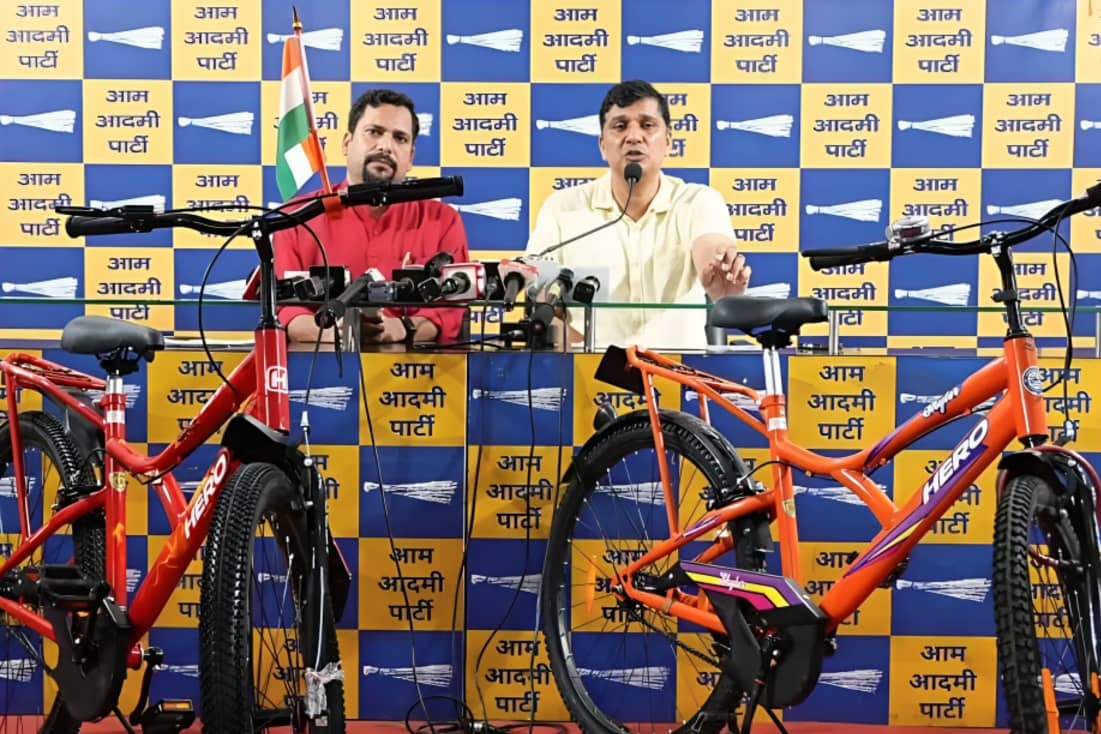
The Aam Aadmi Party has raised questions over the Delhi government’s purchase of bicycles, alleging a significant difference between the government purchase price and the retail price of a comparable bicycle.
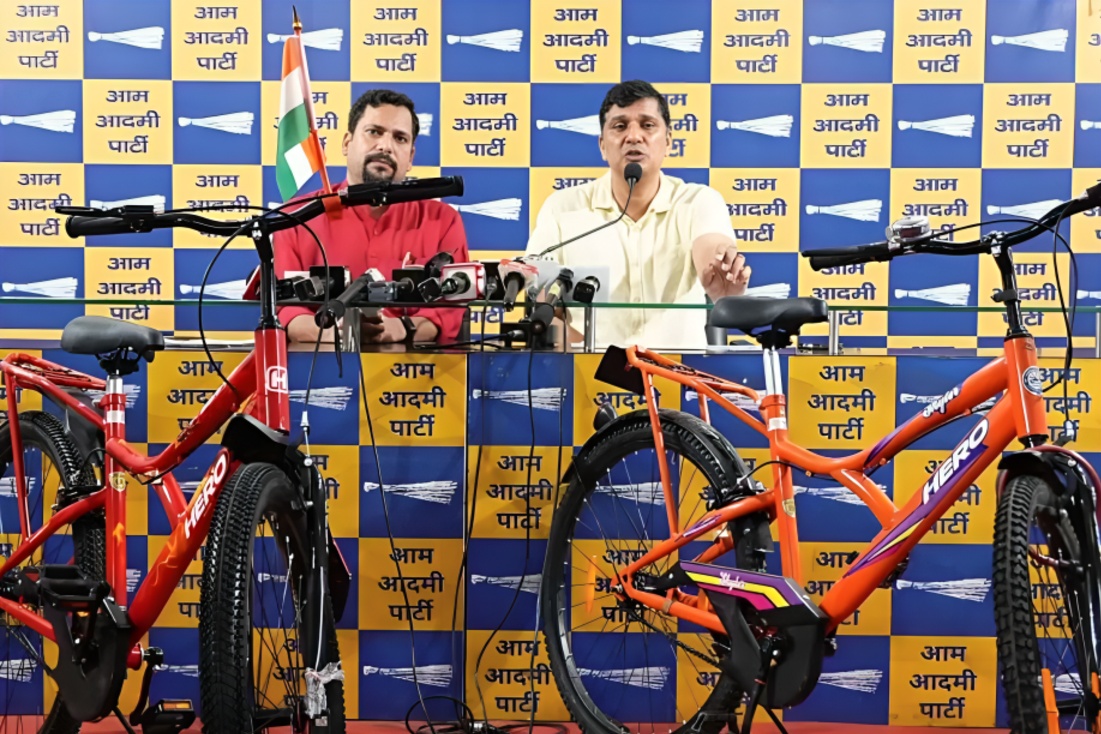
The party displayed two bicycles as part of its allegation. According to the AAP, one bicycle was available in the retail market for around ₹4,200, while a bicycle purchased by the government was priced at approximately ₹6,957. The party questioned why the government allegedly paid a substantially higher amount for a bicycle that it claimed had similar characteristics.
AAP representatives also made allegations about the components used in the government-purchased bicycles. The party claimed that some of the bicycles contained lower-cost local components and stickers resembling established bicycle brands. These claims have not, however, been independently established and would need to be verified through procurement documents, product specifications and an official inquiry.
The issue has become part of the political debate in Delhi, with the Aam Aadmi Party seeking an explanation from the government over the procurement process. The party said it plans to present the two bicycles to ministers and ask them to clarify the difference in price and specifications.
Government procurement involves several factors beyond the retail price of a product. The final cost can depend on the quantity purchased, transportation, taxes, warranty provisions, accessories, specifications, installation, distribution and other contractual conditions. Therefore, a difference between a retail price and a government procurement price does not by itself establish financial irregularity.
At the same time, allegations involving significant price differences can raise questions about whether public funds were used efficiently. Procurement records can help determine whether the products purchased by the government were identical to those available in retail markets or whether there were differences in specifications, quality, warranty or other contractual requirements.
The AAP has argued that the bicycles it displayed should be compared directly with those purchased by the government. By presenting the two products together, the party aims to draw attention to what it describes as an unexplained price difference.
The allegation regarding brand stickers is another issue that would require verification. If a product carries a particular brand name or logo, procurement records, manufacturer information and product documentation can establish whether the branding is genuine and whether the product supplied matches the specifications mentioned in the government contract.
The Delhi government’s response will therefore be significant in determining the facts. Officials could clarify the procurement method, the number of bicycles purchased, the supplier selected, the specifications included in the tender and the total cost paid by the government.
If the bicycles were purchased through a formal tender process, details of the tender and contract could provide information about the basis on which the supplier was selected. Such records could also show whether the quoted price was compared with competing bids and whether the government followed the applicable procurement rules.
The controversy comes at a time when government spending and transparency remain important political issues. Opposition parties frequently scrutinize government purchases to question whether taxpayers’ money is being spent efficiently. Governments, in turn, are expected to provide clear documentation when questions are raised about public expenditure.
The AAP’s decision to present the bicycles to ministers is intended to keep the issue in the public spotlight. The party has sought answers regarding the price difference, the quality of the bicycles and the alleged use of local components and brand stickers.
However, the allegations should be distinguished from established facts until the relevant procurement documents and product details are examined. A comparison between two bicycles is meaningful only if they have the same specifications, quality standards, accessories, warranty and other contractual conditions.
The controversy is therefore likely to focus on the procurement records and the government’s explanation. If the government can establish that the higher price was justified by differences in specifications, bulk procurement conditions or other legitimate costs, the price gap may have a documented explanation. If the products and contractual terms are substantially identical, further questions about the procurement could arise.
For now, the AAP has called for transparency and accountability, while the allegations await clarification from the Delhi government. The issue highlights the importance of open procurement processes, accurate product specifications and proper documentation whenever public money is spent.
The final assessment of the bicycle purchase will depend on official records, supplier information and a detailed comparison of the products involved. Until those details are made available and independently verified, the claims should be treated as political allegations rather than established findings.