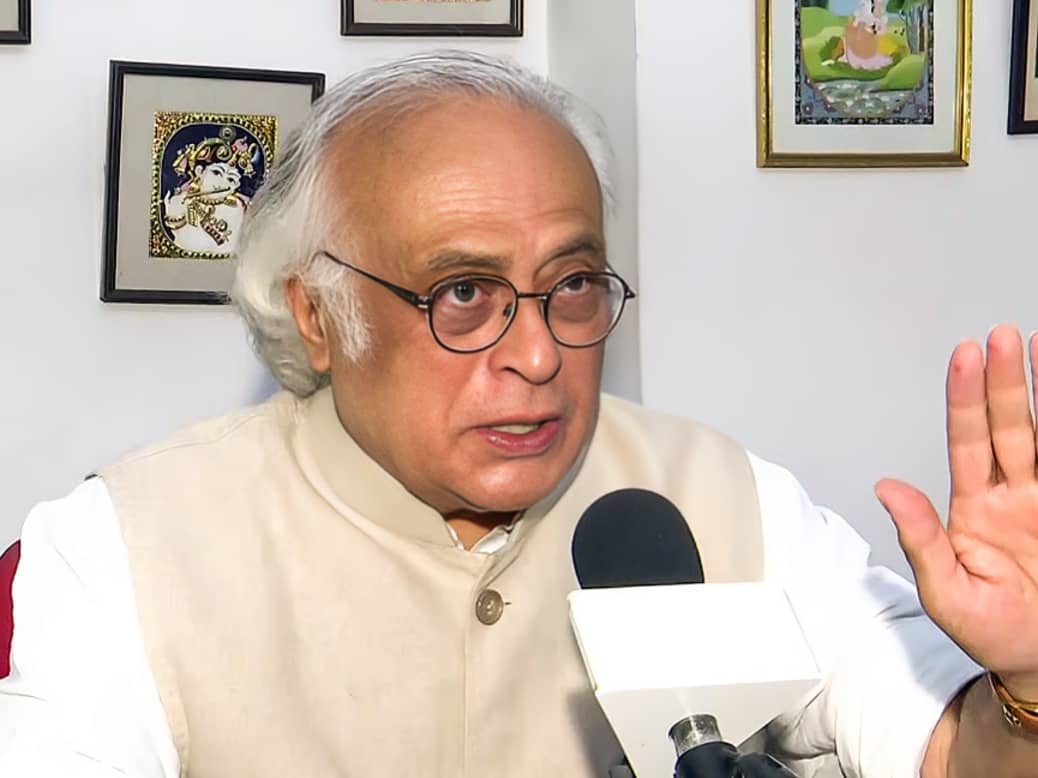
The Congress has criticised Prime Minister Narendra Modi for not addressing inflation during the latest episode of his monthly Mann Ki Baat radio programme. Congress MP Jairam Ramesh questioned the government's response to rising prices and argued that inflation remains an important concern for households.
Ramesh's comments came a day after Prime Minister Narendra Modi addressed the nation through the 138th episode of Mann Ki Baat. According to the Congress leader, the Prime Minister discussed several subjects during the programme but did not specifically address the issue of rising prices.
In a post on social media, Ramesh alleged that the impact of inflation was no longer restricted to household kitchen expenses. He referred to increases in the prices of vegetables and other consumer goods and questioned how ordinary families were expected to manage their household budgets.
The Congress MP specifically highlighted onion prices. Government data released for August 2026 showed that onion inflation stood at 48.27 percent, compared with 22.54 percent in July. Garlic inflation was recorded at 43.60 percent, while ginger inflation stood at 73.82 percent during the same month.
The broader inflation figures also showed an increase in price pressures during August. India's Consumer Price Index based retail inflation rose to 4.82 percent in August from 4.45 percent in July. Food inflation increased to 5.95 percent from 5.52 percent during the same period. Rural food inflation stood at 6.13 percent, while urban food inflation was 5.64 percent.
Ramesh used these figures to question the government's approach to inflation. He argued that higher prices were affecting the financial planning of middle class and lower income households. He also referred to declining household savings and increasing family debt while asking how families could manage their regular expenses under such circumstances.
The Congress has made inflation a recurring point of criticism against the central government. Party leaders have repeatedly raised questions about food prices, household expenses and the financial pressure faced by consumers. Ramesh's latest statement was framed around the Prime Minister's Mann Ki Baat programme and the subjects discussed during the broadcast.
The government data provides a more detailed picture of the price situation. While several food items recorded higher inflation in August, some commodities also registered lower prices. According to data released by the Ministry of Statistics and Programme Implementation, tomato inflation was negative 31.09 percent and potato inflation was negative 13.14 percent in August. Lady's finger and certain other vegetables also recorded negative inflation.
The increase in onion prices has nevertheless attracted particular attention because onions are an important part of household food consumption in India. The government has also taken steps to manage onion prices through buffer stock interventions. In September, government agencies sold thousands of tonnes of buffer onions through subsidised channels in several cities. The initiative was aimed at increasing supply and limiting the impact of higher retail prices.
Earlier in August, the Delhi government had also prepared measures to monitor onion supplies after prices increased. Officials were asked to monitor supplies and prevent hoarding, while arrangements were made to bring onions from producing regions to the national capital.
The increase in food prices has also been reflected in recent economic discussions. Analysts have pointed to weather conditions, crop damage, supply conditions and changes in the availability of agricultural commodities as some of the factors that can influence food prices. Onion prices in particular can fluctuate significantly depending on harvest cycles, storage conditions and market arrivals.
Ramesh's criticism focused not only on food prices but also on household purchasing power. He referred to consumer products such as air conditioners, televisions and refrigerators and argued that families were facing pressure from multiple categories of expenditure.
The Congress has questioned why the Prime Minister did not use the Mann Ki Baat platform to directly address the concerns surrounding inflation. Ramesh asked when the government would respond to what he described as one of the country's most pressing economic concerns.
The Prime Minister's Mann Ki Baat programme covers a wide range of subjects and is used to communicate with citizens on issues including social initiatives, cultural activities, education, science, environment and public participation. The Congress's criticism was specifically directed at the absence of a discussion on inflation in the latest broadcast.
The political exchange comes at a time when inflation has moved higher from the previous month. The August retail inflation figure of 4.82 percent was above July's 4.45 percent. Food inflation also increased from 5.52 percent to 5.95 percent.
However, inflation is not uniform across all categories. Government data shows that while onions, garlic and ginger recorded significant increases, several other food items recorded lower prices compared with the previous year. This means that the effect of inflation can vary depending on the spending patterns of individual households.
The government has also continued to monitor essential commodity prices and use buffer stocks in selected markets. The Consumer Affairs Department reported that subsidised onion sales were being carried out through agencies including the National Cooperative Consumers Federation and the National Agricultural Cooperative Marketing Federation. These measures were intended to increase availability and moderate retail prices.
The Congress, however, has argued that such measures have not removed the broader pressure on household budgets. Ramesh's comments therefore combine criticism of the government's economic response with a specific question about the subjects discussed during Mann Ki Baat.
The latest exchange illustrates how inflation continues to remain a significant political issue. The Opposition is using the increase in food prices to question the government's economic policies, while official data shows that price movements differ considerably across individual commodities.
For consumers, the impact of inflation depends on the prices of products and services that make up their household expenditure. Rising prices of essential food items can have a direct effect on monthly budgets, particularly when several categories increase simultaneously.
The August data also indicates that food prices were a major contributor to the overall increase in consumer inflation. Food inflation rose to 5.95 percent, while headline retail inflation reached 4.82 percent.
The Congress is expected to continue raising the issue of inflation and household expenses in its political criticism of the central government. For the government, managing food supply and containing sharp price increases in essential commodities remain important economic and administrative concerns.
The dispute over Mann Ki Baat therefore comes against the backdrop of officially recorded increases in retail and food inflation. While Jairam Ramesh has criticised the Prime Minister for not discussing the issue during the radio programme, the government has continued to use supply interventions, including buffer onion sales, to address price pressures in essential commodities.
The latest inflation figures and the political reactions to them are likely to keep household expenses and food prices at the centre of public and political discussion in the coming weeks.