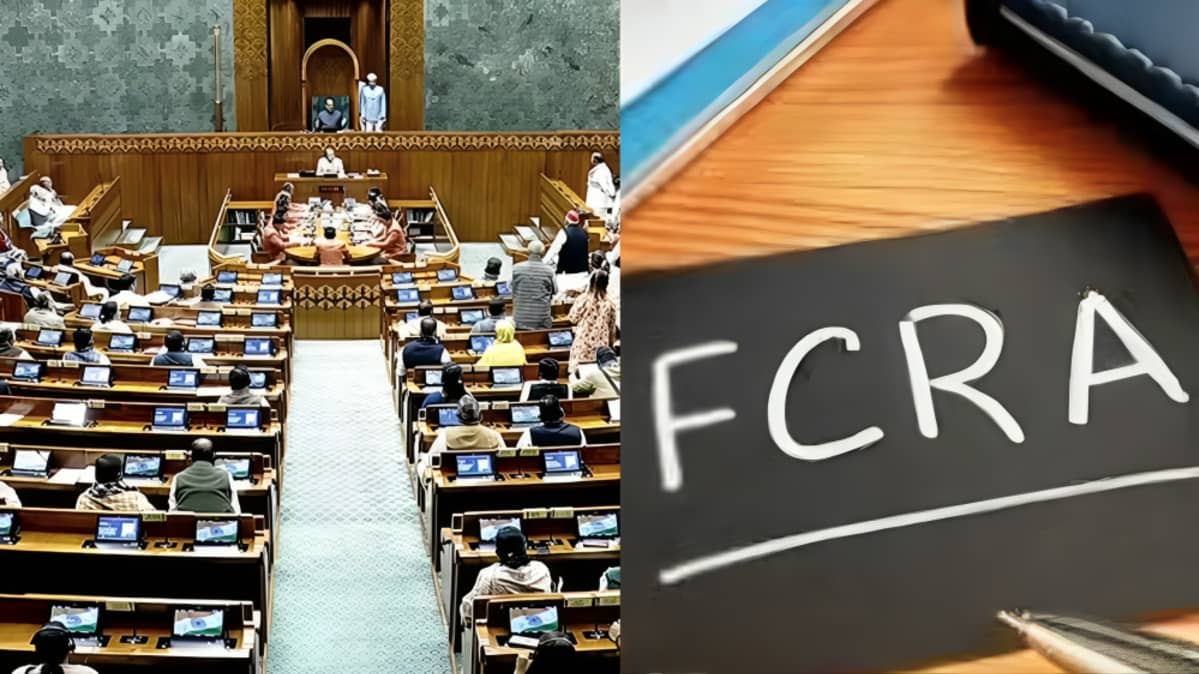
The Joint Parliamentary Committee examining the Foreign Contribution Regulation Amendment Bill 2026 is set to begin detailed scrutiny of the proposed legislation, with the panel scheduled to examine the Bill clause by clause.
The committee, chaired by BJP Lok Sabha MP Sanjay Jaiswal, is expected to hear from senior officials, financial experts and legal professionals as part of its examination. State Bank of India Chairman CS Setty, Attorney General Tushar Mehta and other legal experts are scheduled to brief the committee on the financial, legal and compliance implications of the proposed amendments.
The Foreign Contribution Regulation Amendment Bill 2026 seeks to amend provisions of the Foreign Contribution Regulation Act, 2010. The law governs the acceptance and utilisation of foreign contributions by individuals, associations and organisations in India.
The Bill was introduced in the Lok Sabha on March 25, 2026. On August 12, both Houses of Parliament agreed to refer the legislation to a Joint Parliamentary Committee for further examination. A 31 member committee was subsequently constituted to study the proposed amendments and prepare a report for Parliament.
The parliamentary panel held its introductory meeting last week. During that meeting, Home Secretary Govind Mohan briefed members about the government's stated objectives behind the proposed amendments.
According to the government, the changes are intended to address internal security concerns and strengthen oversight of organisations receiving foreign contributions. The committee was also informed that the number of organisations registered under the FCRA has declined over the past decade, while the overall amount of foreign contributions received by registered organisations has increased.
The detailed scrutiny beginning this week will allow members of the committee to examine individual provisions of the Bill. Clause by clause consideration generally enables parliamentary committees to assess the wording, scope and possible implementation of proposed legal provisions before preparing recommendations.
The committee is expected to receive views on several aspects of the legislation, including financial compliance, regulatory requirements, legal procedures and the monitoring of foreign contributions.
SBI Chairman CS Setty is expected to provide the committee with information on financial and banking related aspects of foreign contributions. His briefing is likely to help members examine issues involving the movement and monitoring of foreign funds through the banking system.
Attorney General Tushar Mehta and other legal experts are also expected to appear before the panel. Their inputs will cover the legal framework surrounding the proposed amendments and their relationship with existing provisions of the FCRA.
Legal expert Gursimran Kohli of AZB Partners is among those expected to brief the committee, along with senior officials from the Union Home Ministry and the Ministry of Law and Justice.
The proposed amendments have attracted political debate since the Bill was introduced. The government has maintained that the legislation is intended to make the use of foreign contributions more transparent and accountable and to strengthen regulatory oversight.
The Bill has also been referred to the committee amid concerns expressed by several Opposition parties and other stakeholders about the potential impact of tighter regulation on non-governmental organisations and institutions receiving foreign funding.
The first meeting of the JPC was held on September 18. The committee has been given the task of examining the Bill in detail and submitting its report to the Lok Sabha by the last day of the first week of the Winter Session of Parliament.
The legislation deals with an area that has remained subject to considerable regulatory attention in recent years. The FCRA framework requires organisations receiving foreign contributions to comply with specified registration, reporting and utilisation requirements.
The government has argued that effective monitoring is necessary to ensure that foreign contributions are used for the purposes for which they are received and that financial regulations are followed. The proposed amendments are part of that broader regulatory framework.
At the same time, organisations and Opposition leaders have raised concerns about the possible consequences of stricter oversight. Their concerns include the impact of regulatory requirements on legitimate non-governmental organisations and institutions that depend on foreign contributions for their activities.
The parliamentary committee is expected to consider these different perspectives during its examination. Parliamentary scrutiny provides members with an opportunity to seek clarifications from government officials, legal experts, financial institutions and other stakeholders before making recommendations.
The committee's detailed examination could therefore involve discussions on the wording of individual clauses, the powers of regulatory authorities, compliance requirements and mechanisms for dealing with foreign contributions.
The referral of the Bill to a Joint Parliamentary Committee also means that the proposed legislation is still under examination and has not completed the parliamentary process. Any changes recommended by the committee would subsequently have to be considered through the parliamentary procedure.
The JPC's report will provide its observations and recommendations on the proposed legislation. The final outcome will depend on the subsequent parliamentary process and decisions taken by the two Houses.
For NGOs and other organisations receiving foreign contributions, the proposed changes could be significant because the FCRA governs how such funds can be received, maintained and used. However, the precise effect on individual organisations will depend on the final provisions approved by Parliament.
The committee's upcoming meetings are therefore expected to focus on both the regulatory objectives of the Bill and the practical implications of implementing its provisions.
With senior financial and legal officials appearing before the panel, the scrutiny is also expected to examine how the proposed framework would work in practice. Questions concerning banking procedures, compliance monitoring, legal safeguards and administrative mechanisms could form part of the committee's deliberations.
The government has presented the proposed amendments as measures aimed at improving transparency, accountability and internal security. Opposition parties and other stakeholders have sought detailed examination of the provisions and raised concerns about their potential impact.
The Joint Parliamentary Committee will now consider these issues as it begins its clause by clause examination of the Foreign Contribution Regulation Amendment Bill 2026. The committee's recommendations will be submitted to the Lok Sabha within the deadline set by Parliament, after which the proposed legislation will proceed through the next stages of parliamentary consideration.