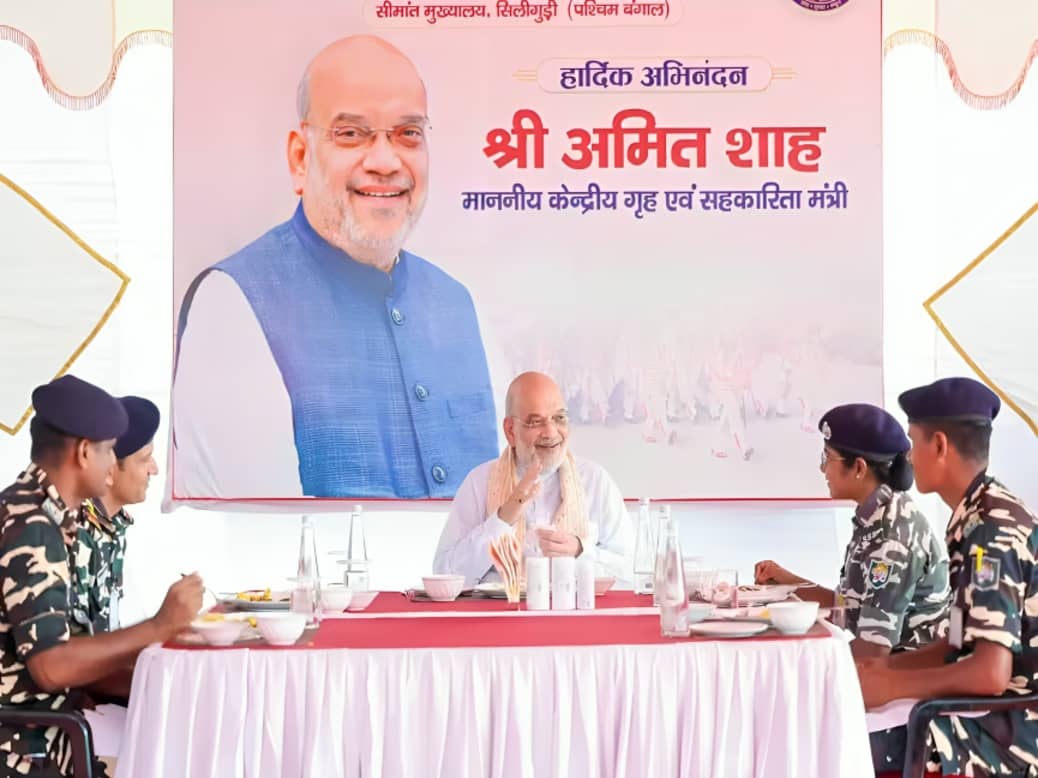
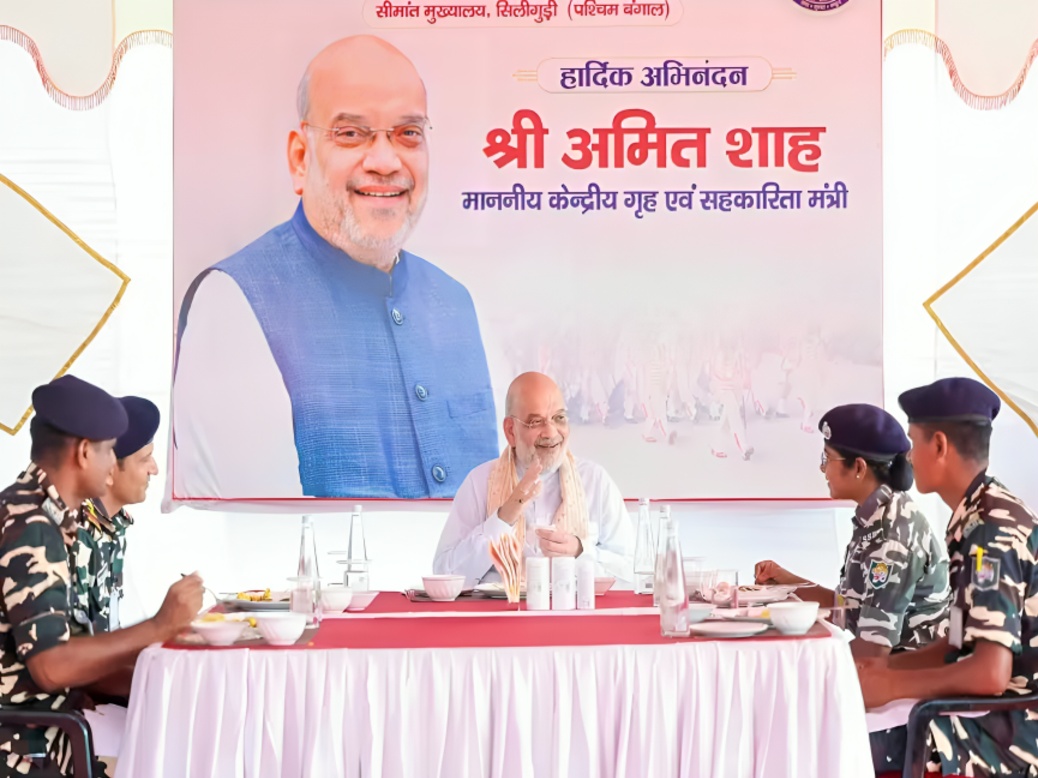
Union Home Minister Amit Shah has announced a new administrative measure to accelerate the process of issuing citizenship certificates under the Citizenship Amendment Act in West Bengal. According to Shah, eight District Magistrates in the state have been empowered to fast track the issuance of CAA certificates to eligible applicants.
Shah made the announcement during his visit to Siliguri in West Bengal. The move is significant because the Citizenship Amendment Act has remained an important political and administrative issue in the state. The law provides a pathway to Indian citizenship for eligible members of specified communities who came to India from Pakistan, Bangladesh and Afghanistan under the conditions prescribed by the legislation.
The Union Home Minister said the decision to authorise eight District Magistrates would help speed up the administrative process. The move is aimed at making the citizenship certification procedure more accessible and reducing delays for eligible applicants.
The Citizenship Amendment Act was passed by Parliament in 2019. Under the law, eligible Hindu, Sikh, Buddhist, Jain, Parsi and Christian migrants from Pakistan, Bangladesh and Afghanistan who entered India on or before December 31, 2014, can seek Indian citizenship subject to the requirements of the law.
CAA implementation has been a major political issue in West Bengal, particularly because the state has a large population with historical links to migration from neighbouring countries. The BJP has repeatedly presented the law as an important measure for eligible refugee communities, while opposition parties have raised concerns about its implementation and wider implications.
During his latest visit, Shah also spoke about governance and the rule of law in West Bengal. He claimed that the state had entered a new phase of administration under the BJP government. His remarks included criticism of the previous government and allegations concerning corruption, syndicate politics and the implementation of criminal law reforms. These claims represent the BJP’s political position and have been strongly contested by its political opponents.
Shah specifically alleged that the previous administration had not implemented the Bharatiya Nyaya Sanhita in the state in a manner he considered adequate. He linked this allegation to what he described as an environment of cut money, syndicate politics and corruption.
The Bharatiya Nyaya Sanhita is India's principal criminal code that replaced the Indian Penal Code as part of a broader restructuring of criminal laws. Its implementation has been a subject of discussion across states since the new criminal law framework came into force.
Shah also praised the BJP-led administration in West Bengal and referred to the government's performance during its first 100 days. He claimed that Chief Minister Suvendu Adhikari's government had fulfilled 43 percent of the promises contained in the BJP's election manifesto, known as the Sankalp Patra, within the first 100 days.
The claim formed part of Shah's broader argument that the new administration was moving quickly on its electoral commitments. He presented the figure as evidence of the government's progress in implementing promises made to voters.
The CAA announcement comes at a politically significant time for West Bengal. Citizenship, migration, border security and the rights of refugee communities have been prominent issues in the state's political discourse. The BJP has consistently highlighted these subjects as part of its political agenda in the state.
Shah has also connected the citizenship issue with border management and illegal immigration. During his West Bengal engagements, he has emphasised the importance of securing India's borders and addressing what the BJP describes as illegal infiltration. The government has separately continued to focus on strengthening border security infrastructure along sensitive stretches of the international boundary.
For eligible applicants, the authorisation of District Magistrates could potentially simplify the administrative process because district-level officials will have a more direct role in processing applications and issuing certificates.
However, obtaining a citizenship certificate under the CAA remains subject to the eligibility requirements and procedures established under the law and its rules. The announcement does not mean that citizenship will automatically be granted to every person belonging to one of the specified communities.
The development is also likely to remain a political talking point in West Bengal. The BJP has sought to highlight faster implementation of the CAA as part of its commitment to eligible refugee communities. Opposition parties have previously criticised the law and questioned aspects of its implementation.
Shah's remarks therefore combined an administrative announcement on citizenship certificates with a wider political assessment of governance in West Bengal. He argued that the new government was strengthening the rule of law while moving ahead with its electoral commitments.
The authorisation of eight District Magistrates is expected to give greater administrative momentum to the citizenship certification process. Further details about the districts covered, the number of applications pending and the timeline for processing individual applications would provide a clearer picture of the measure's practical impact.
For now, the key announcement is that eight District Magistrates in West Bengal have been empowered to expedite CAA citizenship certificates. The measure places district-level administration at the centre of the effort to speed up the certification process for eligible applicants.