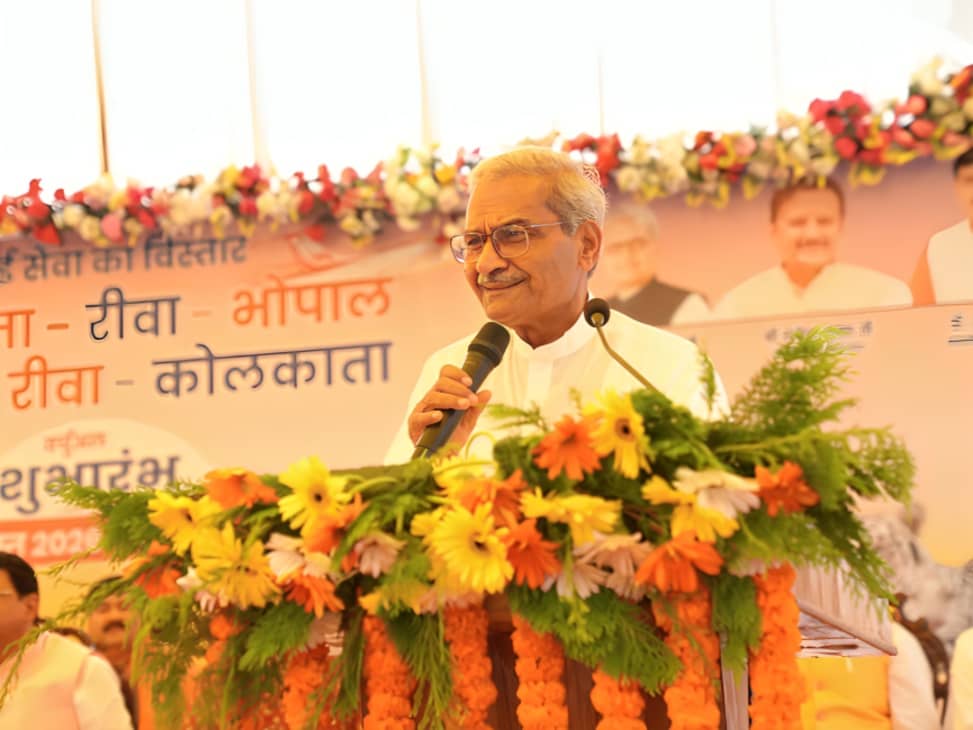

BJP MP Janardan Mishra has triggered a political controversy with a remark made while defending the Centre's ethanol blending policy, as debate over the use of ethanol in petrol continues across the country.
Mishra, who represents Rewa in Madhya Pradesh, was speaking in support of the government's ethanol blending programme when he questioned critics of the policy. His remark, which referred to whether pure petrol would come from a person's father's house, has attracted attention and criticism because of its language.
The statement comes at a time when the government's ethanol blending policy has become a subject of public and political discussion. The policy aims to increase the share of ethanol mixed with petrol and reduce India's dependence on imported crude oil.
The Centre has promoted ethanol as an alternative fuel component, citing benefits including reduced dependence on crude oil imports, support for farmers and the development of domestic biofuel production. Ethanol is primarily produced from agricultural feedstocks, including sugarcane and other crops.
However, the expansion of ethanol blending has also raised concerns among some motorists and political groups. Questions have been raised about fuel compatibility, vehicle mileage, long term engine performance and the impact of blending on consumers.
Against this backdrop, Mishra's latest comment has become a separate political talking point. Rather than focusing only on the technical aspects of ethanol blending, attention has shifted towards the language used by the BJP MP while responding to criticism of the policy.
The controversy is also notable because it follows reported advice from Prime Minister Narendra Modi to NDA MPs during a recent interaction. Modi reportedly asked lawmakers to maintain discipline in their public conduct and not carry the tensions of parliamentary proceedings into their activities outside Parliament.
The timing of Mishra's remark has therefore led to renewed discussion about the need for elected representatives to exercise caution while making public statements.
At the centre of the policy debate is India's broader effort to increase the use of biofuels. Ethanol blending is part of the country's strategy to reduce reliance on imported fossil fuels and promote domestically produced alternatives.
The government has steadily increased ethanol blending in petrol over the years. The programme has also been presented as a way to create additional demand for agricultural products and provide new opportunities for farmers and ethanol producers.
At the same time, consumers remain interested in how higher ethanol content affects their vehicles and fuel expenses. Vehicle manufacturers have increasingly developed models designed to operate with higher ethanol blends, while older vehicles may have different compatibility considerations.
The debate has consequently involved both economic and technical questions. Supporters of ethanol blending argue that it can strengthen energy security and reduce dependence on imported oil. Critics have raised concerns about its effect on vehicle efficiency and consumer costs.
Mishra's comments have added a political dimension to this ongoing discussion. His statement has been widely discussed because of the direct language used while responding to criticism of the policy.
The BJP MP's remarks should be viewed separately from the government's official position on ethanol blending. The policy itself is based on broader energy, agricultural and environmental objectives rather than on any individual political statement.
The controversy also highlights the wider challenge faced by political leaders when communicating about complex public policies. Statements made by elected representatives can quickly attract public attention, particularly when they involve issues that directly affect millions of consumers.
For the government, the continuing ethanol blending programme remains an important component of its energy strategy. For consumers, questions about fuel quality, vehicle compatibility and economic impact remain central to the discussion.
As the debate continues, the focus is expected to remain on both the effectiveness of ethanol blending and the practical impact of the policy on motorists. Further clarification from the government and automobile industry could help address concerns surrounding higher ethanol blends.
Meanwhile, Janardan Mishra's remark has intensified the political debate surrounding the issue. The controversy comes at a time when senior BJP leadership is also emphasising disciplined public communication among party lawmakers.
The latest episode therefore brings together two separate discussions: the merits and concerns surrounding India's ethanol blending programme, and the manner in which political representatives communicate their positions on contentious public policies.