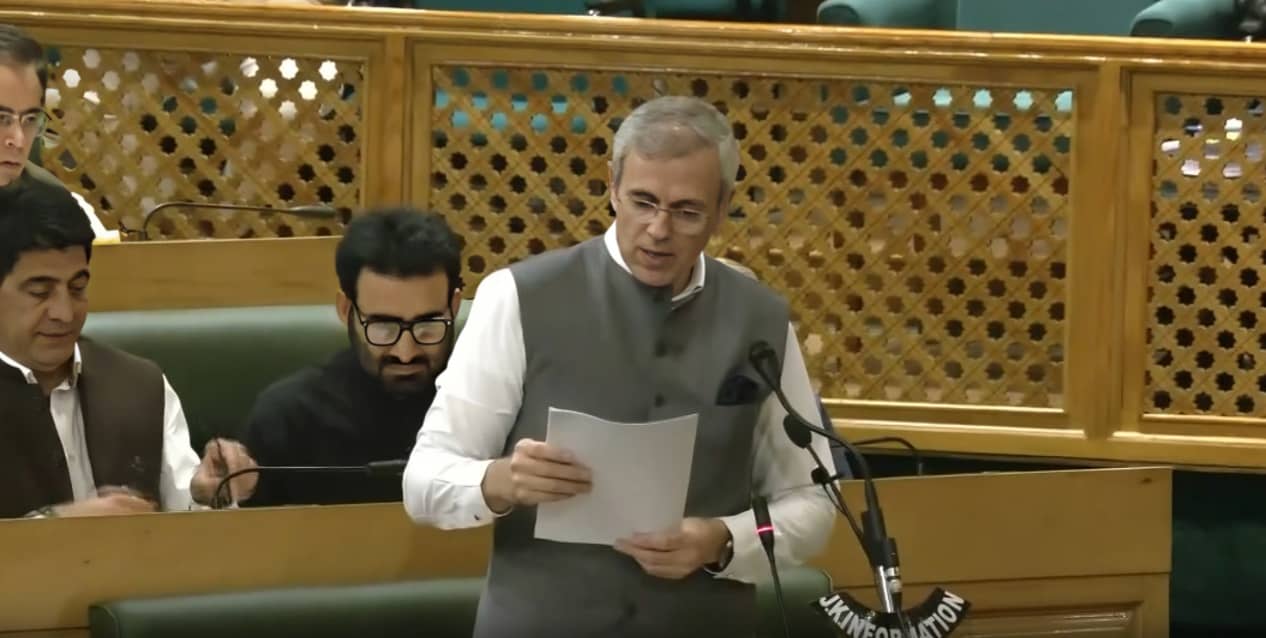
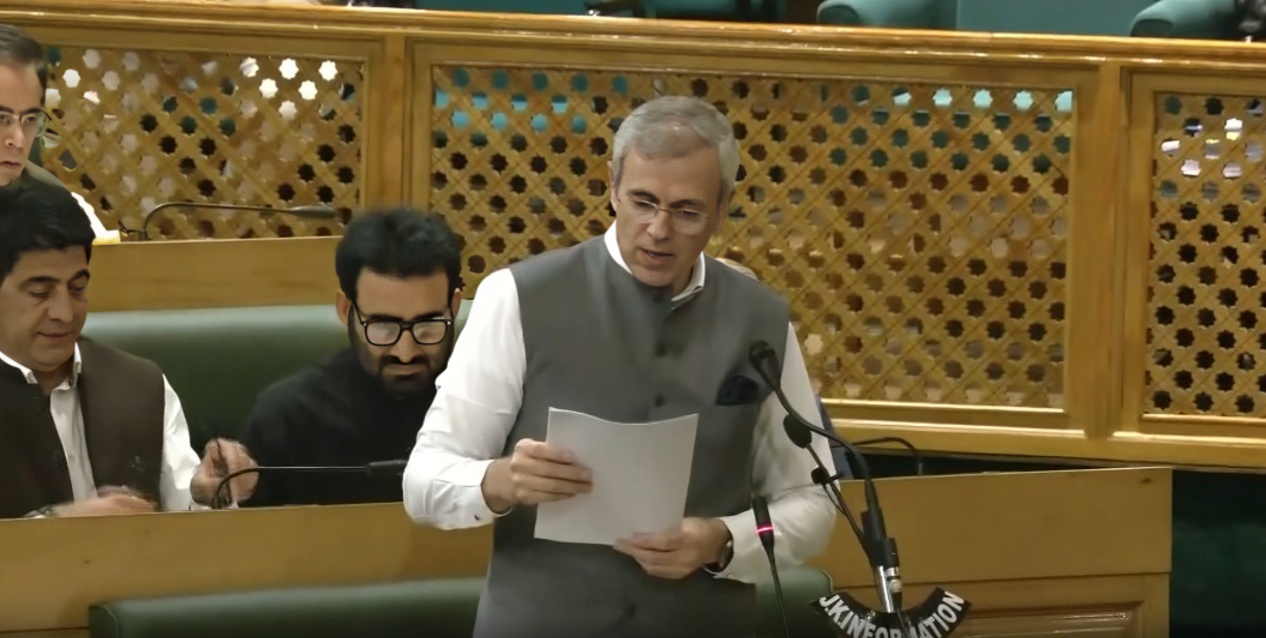
The Jammu and Kashmir Legislative Assembly on September 28 passed a resolution calling for the immediate and urgent restoration of full statehood to Jammu and Kashmir. The resolution was moved by Chief Minister Omar Abdullah during the ongoing autumn session of the Assembly and was passed amid strong protests, slogan shouting and a walkout by Bharatiya Janata Party legislators.
The resolution had been introduced by Omar Abdullah on September 25. During the debate, the Chief Minister argued that the restoration of statehood should not be delayed indefinitely and questioned the lack of a specific timeline for returning Jammu and Kashmir to statehood.
The resolution called upon the Government of India to restore full statehood to Jammu and Kashmir at the earliest and to formally communicate the decision to the Union Territory's elected Assembly. It also referred to earlier resolutions passed by the House in 2000 and 2024.
The reference to earlier resolutions became a major point of disagreement during the Assembly proceedings. The 2000 resolution had sought greater autonomy for Jammu and Kashmir, while the resolution passed by the Assembly in November 2024 called for the restoration of special status and constitutional safeguards.
BJP legislators objected to linking the current statehood demand with the earlier autonomy-related positions. BJP leaders said they supported the restoration of statehood but opposed language or references that they viewed as seeking a return to the constitutional position that existed before August 5, 2019.
The Assembly proceedings also saw several legislators propose amendments to the resolution. Some members, including legislators from the ruling National Conference and other parties, sought explicit references to Article 370 and Article 35A. Other proposed amendments referred to the restoration of special status, constitutional safeguards and the pre-1953 position of Jammu and Kashmir.
However, these amendments were not ultimately pressed when the resolution was put to a vote. The final resolution therefore remained focused on the demand for restoration of full statehood while retaining references to the earlier Assembly resolutions.
The debate became increasingly tense as BJP legislators protested inside the House. BJP members raised slogans and entered the well of the Assembly during the proceedings. The opposition party maintained that the resolution should be limited to the issue of statehood and should not be linked with the previous autonomy or special-status positions.
BJP Leader of Opposition Sunil Sharma said the party supported restoration of statehood but objected to the language and references contained in the resolution. According to reports, the BJP also questioned the manner in which the resolution had been admitted for discussion by the Speaker.
The ruling National Conference and its allies defended the resolution. Support came from legislators belonging to the National Conference, Congress, Peoples Democratic Party, Peoples Conference, Communist Party of India Marxist, Aam Aadmi Party and independent members, according to reports. The resolution was ultimately adopted by voice vote after the proposed amendments were withdrawn.
The issue of Article 370 and Article 35A has remained politically significant in Jammu and Kashmir following the constitutional changes of August 2019. At that time, the special constitutional provisions associated with Jammu and Kashmir were removed and the former state was reorganised into the Union Territories of Jammu and Kashmir and Ladakh.
The current Assembly resolution does not restore Article 370 or Article 35A. Instead, references to those provisions came through amendments proposed by individual legislators during the debate. Those amendments were withdrawn before the final resolution was passed. This distinction is important in understanding the actual text and scope of the Assembly's decision.
Chief Minister Omar Abdullah also spoke about the practical implications of Jammu and Kashmir continuing as a Union Territory. During the Assembly discussion, he raised questions about the division of administrative powers and the functioning of the elected government under the existing constitutional arrangement. He argued that the absence of full statehood affects the functioning of the elected administration.
Omar also questioned references to an unspecified "appropriate time" for restoring statehood. He argued that the Union government had previously indicated that statehood would be restored at an appropriate stage but that a specific timeline had not been provided.
The BJP took a different position on the wording of the resolution. Its legislators argued that the statehood demand should be separated from issues relating to autonomy and the constitutional status that existed before 2019. The disagreement over this point was one of the main reasons for the confrontation inside the Assembly.
The proceedings also included a motion by BJP legislators seeking action against Assembly Speaker Abdul Rahim Rather. Reports said BJP members questioned the Speaker's decision to allow the resolution to be taken up. The Speaker referred to the Assembly's rules while responding to the issue.
As the debate continued, the Assembly witnessed repeated disruptions and exchanges between members from the treasury and opposition benches. BJP legislators eventually walked out of the House before the resolution was passed.
The passage of the resolution is significant because it represents a formal demand from the elected Jammu and Kashmir Assembly for the restoration of full statehood. However, the resolution itself is a recommendation or demand addressed to the Union government and does not by itself change Jammu and Kashmir's existing constitutional status.
The Union Territory of Jammu and Kashmir was created following the Jammu and Kashmir Reorganisation Act, 2019. The Assembly's latest resolution seeks a change from the present Union Territory arrangement back to full statehood.
The debate also demonstrates that there are differences among political parties and legislators over how the demand for statehood should be framed. While the restoration of statehood has received support across sections of the political spectrum, there are disagreements over whether the issue should be connected with the earlier autonomy and special-status positions.
The National Conference has historically maintained positions concerning greater autonomy and the constitutional safeguards associated with Jammu and Kashmir. Some legislators therefore sought to incorporate those issues into the latest resolution. The BJP, meanwhile, argued that such references could alter the focus of the statehood demand.
The resolution will now be forwarded to the Union government. Its passage places the statehood issue formally on record as a demand of the Jammu and Kashmir Legislative Assembly.
The developments also come amid continuing political discussion over the future administrative and constitutional structure of Jammu and Kashmir. The Assembly's resolution has reopened debate over statehood, autonomy, special status and the relationship between the elected government and the Union government.
For now, the immediate outcome is that the Assembly has adopted a resolution seeking the urgent restoration of full statehood. The BJP opposed the wording and staged a walkout, while members supporting the resolution voted to pass it.
The controversy surrounding the resolution is expected to continue beyond the Assembly proceedings, particularly over the references to earlier resolutions and proposed amendments concerning Article 370, Article 35A and autonomy. Those provisions were not restored through the latest resolution, but their proposed inclusion during the debate highlighted continuing differences among legislators.
The Jammu and Kashmir Assembly's decision therefore represents a renewed institutional demand for restoration of statehood, while the protests and walkout demonstrate the political disagreement over how that demand should be presented. The next stage will depend on the response of the Union government to the Assembly's resolution.