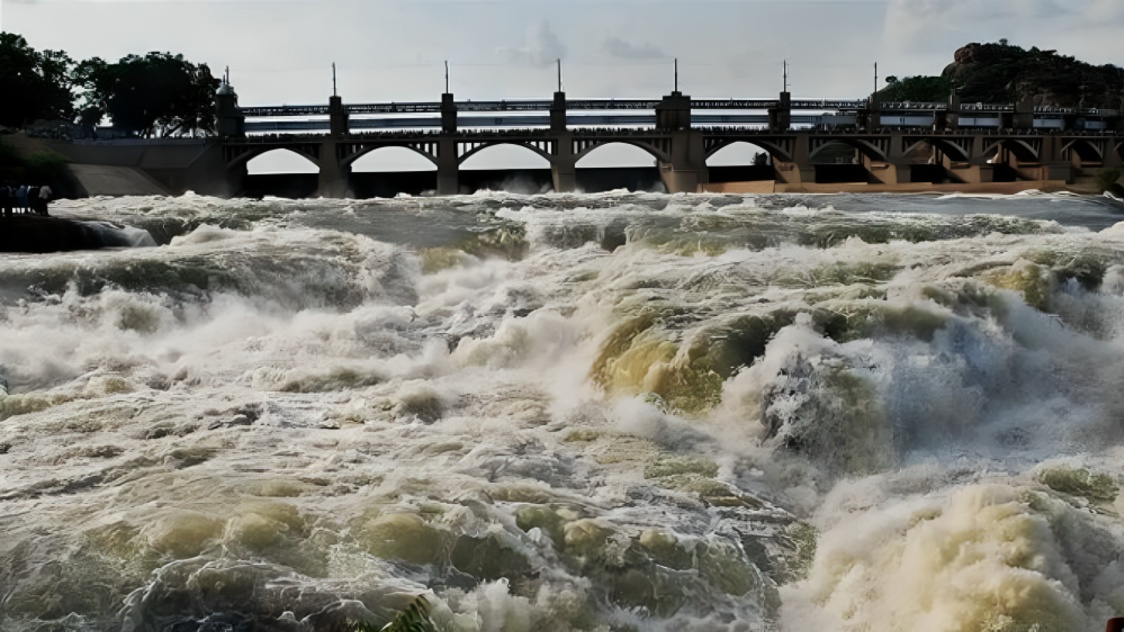
The Supreme Court is scheduled to hear Tamil Nadu's plea seeking the release of Cauvery water from Karnataka on August 13, bringing the long-running inter-state water dispute back before the country's highest court.
The Cauvery water dispute has remained a sensitive issue between Tamil Nadu and Karnataka for several decades. The river originates in Karnataka and flows through Tamil Nadu before reaching the sea. Both states depend on the river for agriculture, drinking water and other requirements.
The availability and release of Cauvery water become particularly important during periods of inadequate rainfall. When inflows into Karnataka's reservoirs decline, discussions over water releases often become a source of disagreement between the two states.
Tamil Nadu has approached the Supreme Court seeking the release of water from Karnataka. The state has raised concerns over the availability of water and the requirements of farmers dependent on the Cauvery river system.
The Supreme Court hearing on August 13 is expected to focus on Tamil Nadu's submissions and the response from Karnataka. The court may also consider the prevailing water availability, reservoir levels, rainfall conditions and the applicable arrangements governing the sharing of Cauvery waters.
The dispute is governed by a series of legal and institutional arrangements developed over several years. The Cauvery Water Management Authority and other mechanisms have been established to facilitate implementation of water-sharing decisions and address disputes between the states.
The Supreme Court has previously dealt with several aspects of the Cauvery dispute, including the sharing of water between Karnataka and Tamil Nadu. The court's decisions have played an important role in determining the framework under which the two states are expected to manage the river's water resources.
For Tamil Nadu, the availability of Cauvery water is particularly important for agricultural activities in the state's Cauvery delta region. Farmers depend on timely water releases for cultivation, especially during the crop seasons when rainfall alone may not be sufficient.
Karnataka, meanwhile, has its own water requirements, including drinking water needs and irrigation demands in areas dependent on the Cauvery basin. During periods of lower reservoir storage, the state has faced pressure to balance its local requirements with its obligations under the existing water-sharing framework.
These competing requirements have repeatedly resulted in disagreements between the two states. The issue can also generate strong political reactions because of its direct impact on farmers and water users.
The upcoming Supreme Court hearing therefore assumes significance for both Tamil Nadu and Karnataka. Any direction issued by the court could influence the immediate approach to water releases and the management of the river during the current period.
The court may examine the latest information regarding rainfall, reservoir storage and water inflows before considering the plea. Such data is important in determining the availability of water and the extent to which releases can be made without affecting essential requirements.
The Cauvery dispute also highlights the broader challenge of managing inter-state rivers in India. Rivers that cross state boundaries require coordination between multiple governments, particularly when water availability is affected by seasonal rainfall and changing climatic conditions.
Both Tamil Nadu and Karnataka have consistently maintained that their respective water requirements must be protected. At the same time, decisions relating to the Cauvery are expected to follow the legal framework established through judicial orders and institutional mechanisms.
The August 13 hearing will provide an opportunity for the Supreme Court to consider the latest developments and the submissions made by the two states. The outcome could offer clarity on the immediate water-sharing issue and determine the next course of action.
The Cauvery water dispute is likely to remain an important issue until the two states achieve a stable and predictable mechanism for managing the river's resources. For now, attention remains focused on the Supreme Court proceedings and any directions that may emerge from the August 13 hearing.