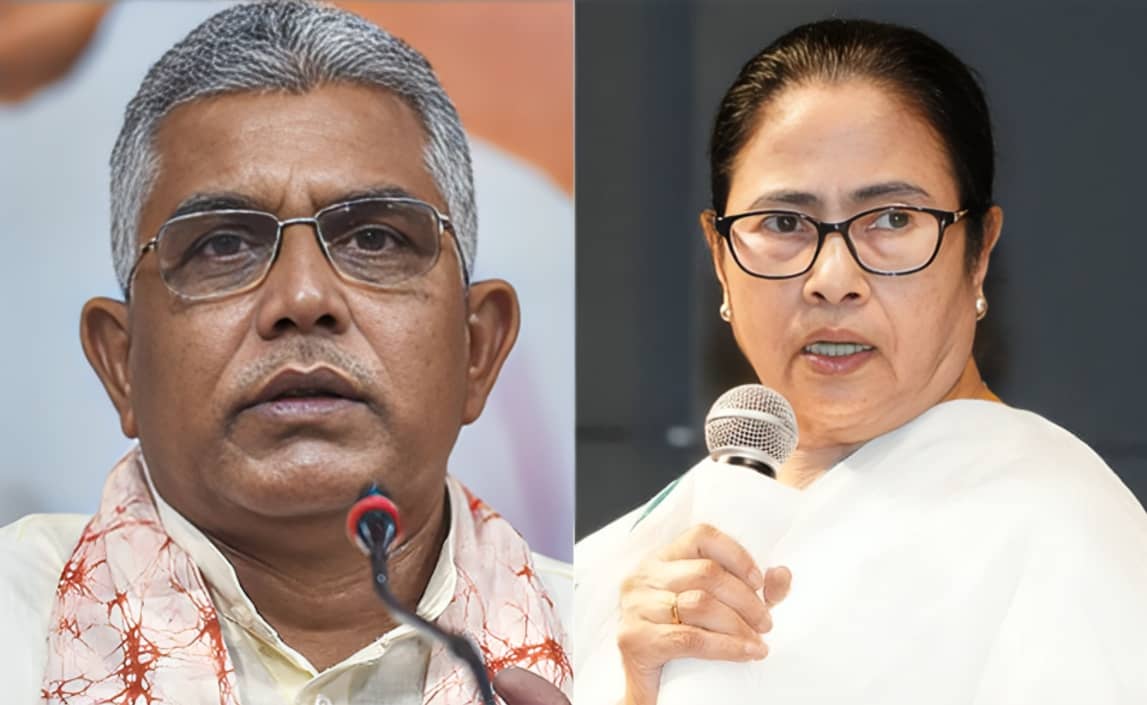

Political exchanges between the ruling and opposition parties in West Bengal intensified after senior Bharatiya Janata Party leader Dilip Ghosh criticized a protest led by Chief Minister Mamata Banerjee.
Speaking to media representatives, Ghosh questioned the relevance and public support for the protest. He claimed that the demonstration failed to attract significant participation and suggested that even members of the ruling party were not fully supportive of the initiative. According to him, the public had already expressed its views through the democratic process and expected political leaders to focus on governance and development issues.
The comments came in response to a protest organized by Mamata Banerjee, who has been actively raising various political and administrative concerns. The protest was part of a broader political campaign aimed at highlighting issues that the ruling Trinamool Congress believes require immediate attention from authorities.
Dilip Ghosh argued that public sentiment should be respected and emphasized that voters have already delivered their mandate through elections. He stated that citizens expect elected representatives to address day-to-day concerns rather than engage in political confrontations. His remarks reflected the Bharatiya Janata Party's criticism of the protest and its objectives.
The Trinamool Congress, however, has consistently defended its protest campaigns, stating that public demonstrations are an important democratic tool for highlighting issues affecting citizens. Party leaders have maintained that protests and public outreach programs help bring attention to matters that may otherwise be overlooked.
Political analysts note that public demonstrations remain a significant aspect of Indian politics, often serving as platforms for parties to communicate their concerns and mobilize public opinion. In West Bengal, where political competition remains intense, such events frequently become subjects of debate between the ruling party and the opposition.
Observers believe that statements from leaders of both sides are likely to influence political discussions in the state. While the BJP continues to question the effectiveness and necessity of the protest, the Trinamool Congress is expected to defend its actions and emphasize its political objectives.
The latest exchange highlights the ongoing rivalry between the two major political forces in West Bengal. Both parties have regularly accused each other of failing to address public concerns while claiming to represent the interests of citizens.
As political activities continue across the state, leaders from both camps are expected to intensify their campaigns and public outreach efforts. The debate surrounding the protest is likely to remain a topic of discussion in political circles, particularly as parties prepare for future electoral contests and policy debates.
The incident also underscores the broader political environment in West Bengal, where public statements, demonstrations, and political mobilization continue to play a central role in shaping public discourse and party strategies.