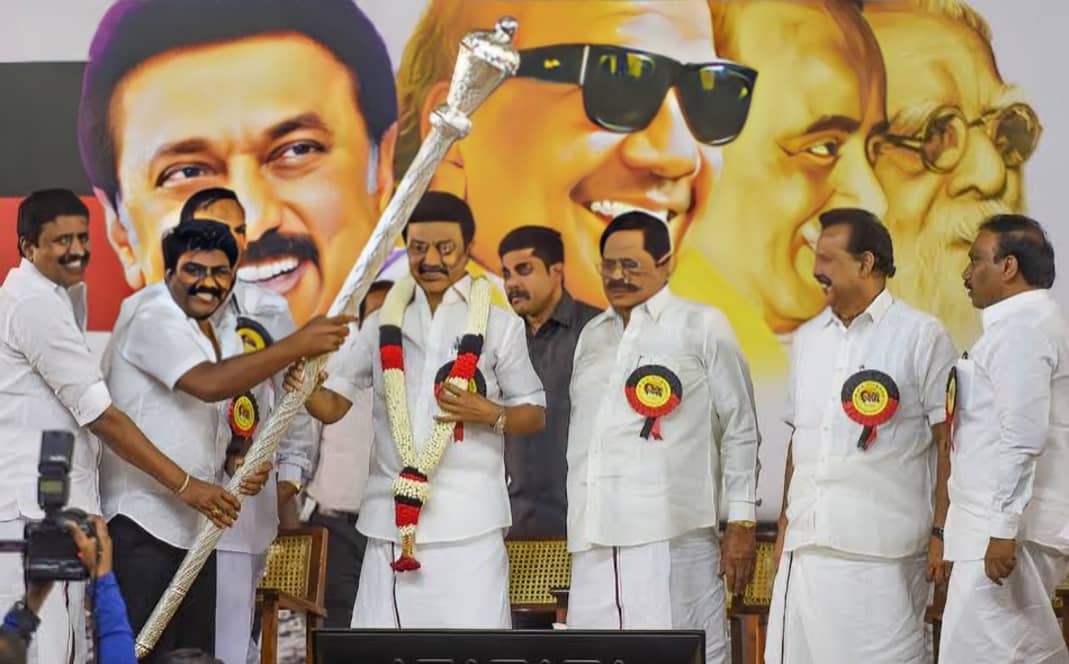

Dravida Munnetra Kazhagam President and Tamil Nadu Chief Minister M K Stalin has announced the formation of a 10 member advisory committee to undertake a comprehensive review of the party's organisational structure. The initiative comes after an assessment of recent election outcomes and extensive feedback received from party members and supporters.
According to the party, the committee has been entrusted with examining the existing organisational framework from the grassroots level to the state leadership. The objective is to identify areas that require restructuring and recommend measures to strengthen the party's functioning ahead of future political challenges.
The decision was taken after the party leadership reviewed suggestions from cadres across Tamil Nadu. In addition to direct feedback from party workers, the leadership also considered approximately six lakh responses submitted through online platforms. The party stated that these responses were analysed with the assistance of artificial intelligence to identify recurring concerns, suggestions and organisational priorities.
The newly formed advisory committee will evaluate the current structure of the party, including branch units, district organisations and higher level committees. Based on its findings, it is expected to submit recommendations on improving coordination, organisational efficiency, communication and grassroots engagement.
Party leaders believe that periodic organisational reviews are important to ensure effective functioning and to address changing political and administrative requirements. The committee's recommendations are expected to help strengthen internal coordination and improve the party's outreach among members and the public.
The announcement follows the party's review of recent electoral performance. While the DMK continues to remain a major political force in Tamil Nadu, the leadership has emphasised the importance of learning from election experiences and implementing necessary organisational reforms. The review process is intended to identify strengths, address shortcomings and prepare the organisation for future electoral contests.
The use of artificial intelligence in analysing large volumes of feedback marks a notable aspect of the review process. By examining responses received from party workers and supporters, the leadership aims to make data driven decisions regarding organisational improvements. However, the final recommendations will be based on the committee's detailed assessment and consultations with various levels of the party.
The advisory committee is expected to engage with office bearers and cadres before submitting its report to the party leadership. After reviewing the recommendations, the leadership will decide on the organisational changes to be implemented.
Political observers note that internal restructuring exercises are commonly undertaken by political parties after elections to improve organisational efficiency and strengthen grassroots networks. The DMK's latest initiative reflects its effort to evaluate its internal structure and prepare for future political campaigns through systematic review and organisational reforms.