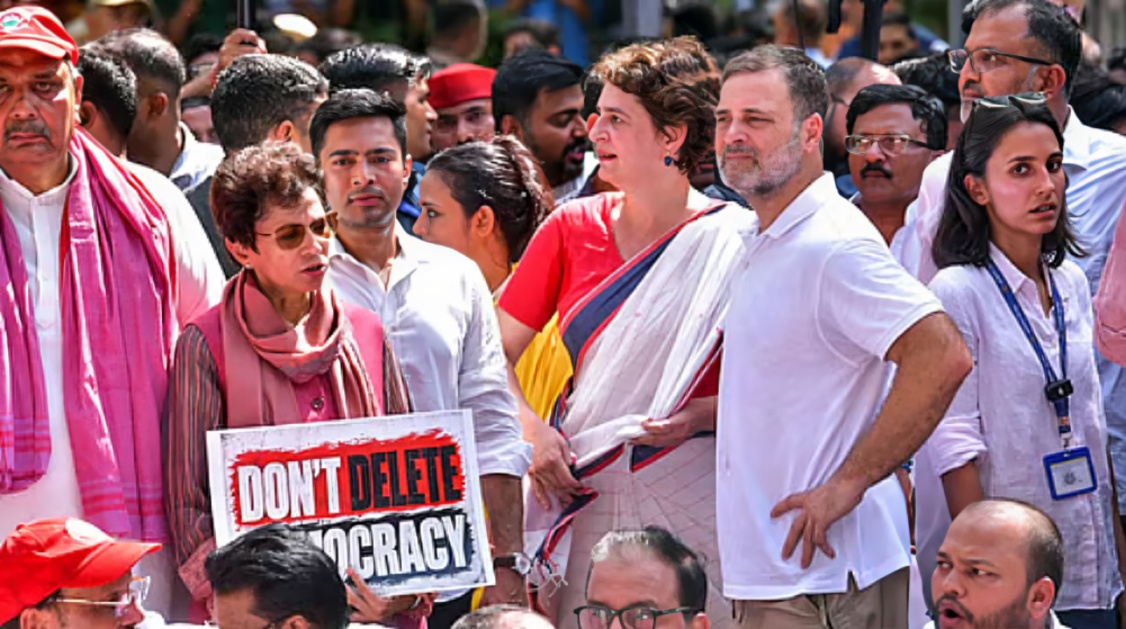
Hooda Says INDIA Bloc Protest Will Continue Until Chief Election Commissioner Gyanesh Kumar Resigns
New Delhi, October 12, 2026
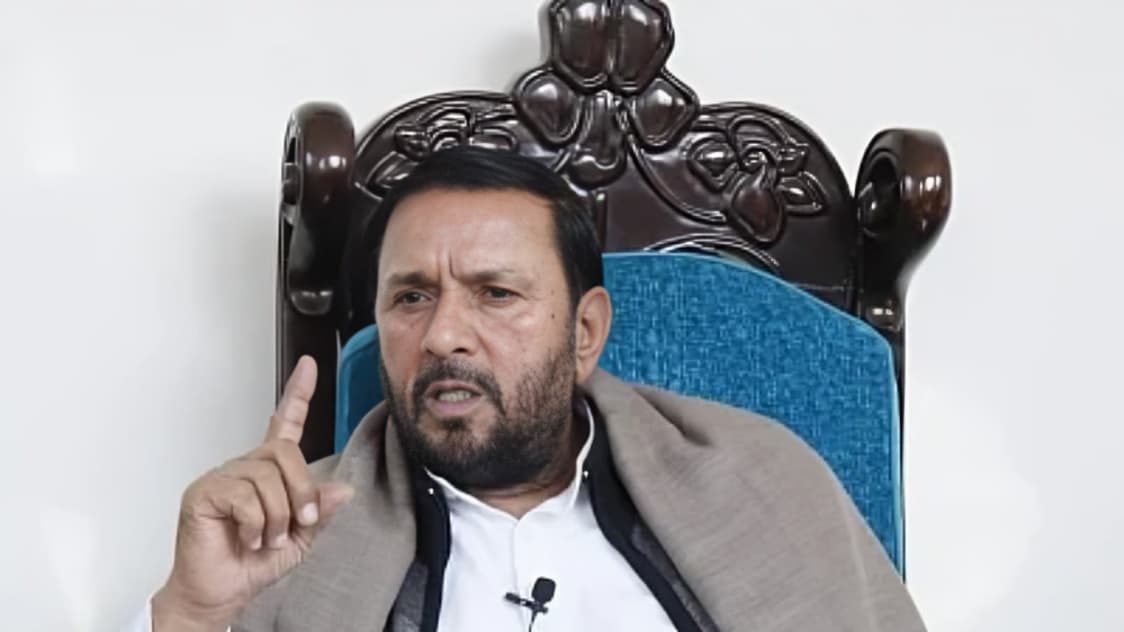
Congress leader and former Haryana Chief Minister Bhupinder Singh Hooda has said that the INDIA bloc’s protest against Chief Election Commissioner Gyanesh Kumar will continue until the election chief resigns. His statement came ahead of the Opposition alliance’s planned march towards the Supreme Court to raise concerns about alleged electoral irregularities and the revision of voter lists.
Hooda said the demonstration was intended to demand accountability from the Election Commission. The Opposition has alleged discrepancies in the electoral process and called for the Chief Election Commissioner to step down. These allegations remain political claims and have not, by themselves, established wrongdoing by the election authorities.
Hooda reiterates demand for resignation
Speaking to reporters ahead of the planned protest, Hooda said the INDIA bloc had organised the march to press for Gyanesh Kumar’s resignation. He asserted that the agitation would not stop until the demand was addressed.
The former Haryana Chief Minister accused the Chief Election Commissioner of being responsible for alleged discrepancies in the electoral process. He also said that a large number of people had joined the campaign and that the Opposition intended to continue raising the issue.
The demand forms part of a wider political confrontation between the Congress-led Opposition and the ruling Bharatiya Janata Party over the conduct of elections and the administration of voter lists.
The Opposition has questioned the way electoral rolls are revised and has called for greater transparency and accountability. The Election Commission is responsible for administering elections and maintaining electoral rolls under the applicable legal framework.
INDIA bloc plans march towards the Supreme Court
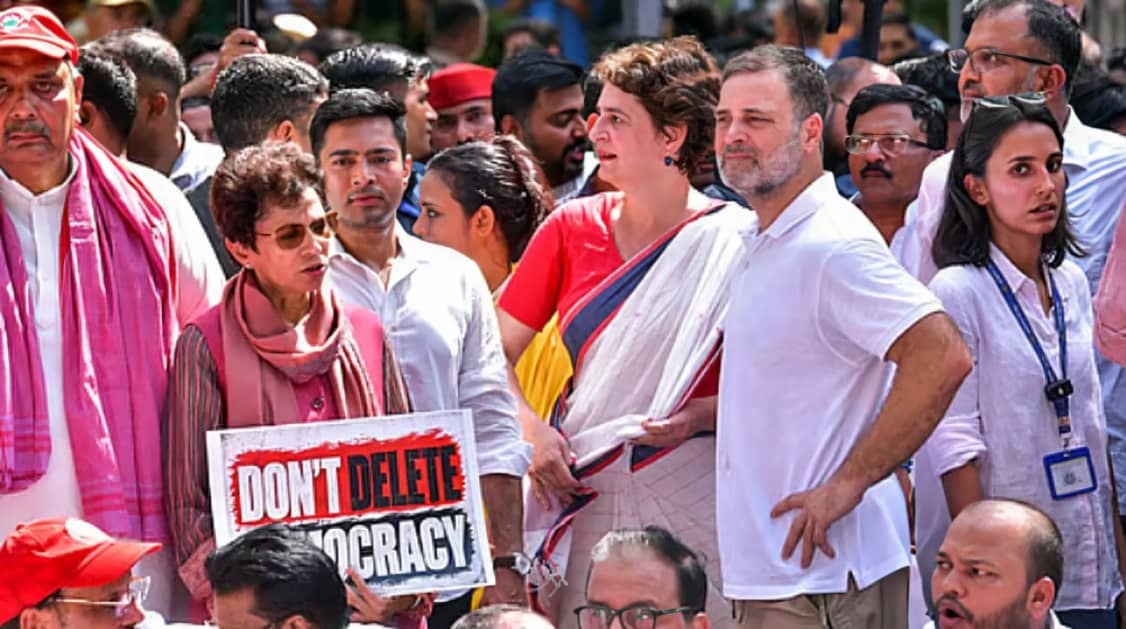
The INDIA bloc announced a protest march towards the Supreme Court in New Delhi on October 12. The demonstration was planned to draw attention to the Opposition’s concerns about electoral irregularities and to demand action against the Chief Election Commissioner.
Opposition leaders have said they want their concerns to receive attention through the judicial system. The planned march follows earlier demonstrations in the national capital over similar allegations.
The Supreme Court has established procedures for hearing legal challenges involving election-related matters. Any formal challenge must be considered according to the court’s jurisdiction, applicable law and the evidence presented.
The Opposition’s decision to march towards the court does not mean that its allegations have been judicially established. Any legal determination would depend on the proceedings and findings of the relevant authorities.
Haryana Congress leaders gather at Hooda’s residence
Ahead of the march, several Haryana Congress leaders, including Members of Parliament and Members of the Legislative Assembly, gathered at Hooda’s residence.
The meeting reflected the party’s preparations for the demonstration and its intention to maintain pressure on the Election Commission over the allegations. Congress leaders have repeatedly argued that questions about electoral transparency should be addressed clearly and that public confidence in elections must be protected.
Hooda has been a prominent Congress leader in Haryana and previously served as the state’s Chief Minister. His participation in the campaign adds a senior state-level voice to the INDIA bloc’s broader protest.
The Congress and its allies have sought to make electoral accountability a central political issue. The BJP and the Election Commission have rejected or disputed accusations of deliberate electoral manipulation in related controversies.
Jebi Mather says the march is about protecting democracy
Congress MP Jebi Mather also commented on the planned demonstration, saying that the march was intended to protect democracy rather than represent a particular political party, caste, religion or state.
Mather said participants would join as citizens who believe that democratic institutions and electoral processes should be protected. She emphasised the importance of standing by the demand despite political pressure.
Her remarks were intended to present the protest as a broader civic appeal rather than an activity limited to party supporters. The INDIA bloc has called on citizens to take an interest in the allegations and the wider debate over electoral accountability.
However, the Opposition’s description of the protest does not settle the factual questions at the centre of the dispute. Those questions would require examination of the relevant evidence and responses from the authorities.
Dispute over electoral rolls and accountability
The current confrontation is linked to Opposition concerns about the revision of electoral rolls, including the Special Intensive Revision process. Opposition parties have alleged that irregularities could affect eligible voters and have questioned whether the process has been conducted fairly.
Electoral roll revision is intended to improve the accuracy of voter lists by updating information and identifying entries that require correction or removal. The process can involve checking duplicate registrations, deceased voters, changes of residence and other details.
The political dispute concerns how the exercise is being conducted, whether eligible voters are adequately protected and whether the procedures are transparent. The Election Commission has responsibility for maintaining electoral rolls, while political parties and citizens can raise concerns through the prescribed channels.
The Opposition has called for greater scrutiny and has made the Chief Election Commissioner’s resignation a central demand. Whether its claims result in legal or administrative action will depend on the relevant evidence and decisions.
What happens next
The INDIA bloc’s planned march is part of its continuing campaign for electoral accountability. Hooda’s statement indicates that Congress leaders intend to sustain the protest until Gyanesh Kumar resigns, while Mather has framed the demonstration as an effort to defend democratic principles.
The development adds to the political debate over the Election Commission’s role and the credibility of electoral processes. It also raises questions about how political disagreements over elections should be addressed through public debate, institutional review and legal procedures.
For now, the resignation demand remains the Opposition’s political position. The allegations of electoral irregularities should be distinguished from verified findings, and any legal conclusions must follow the appropriate process.