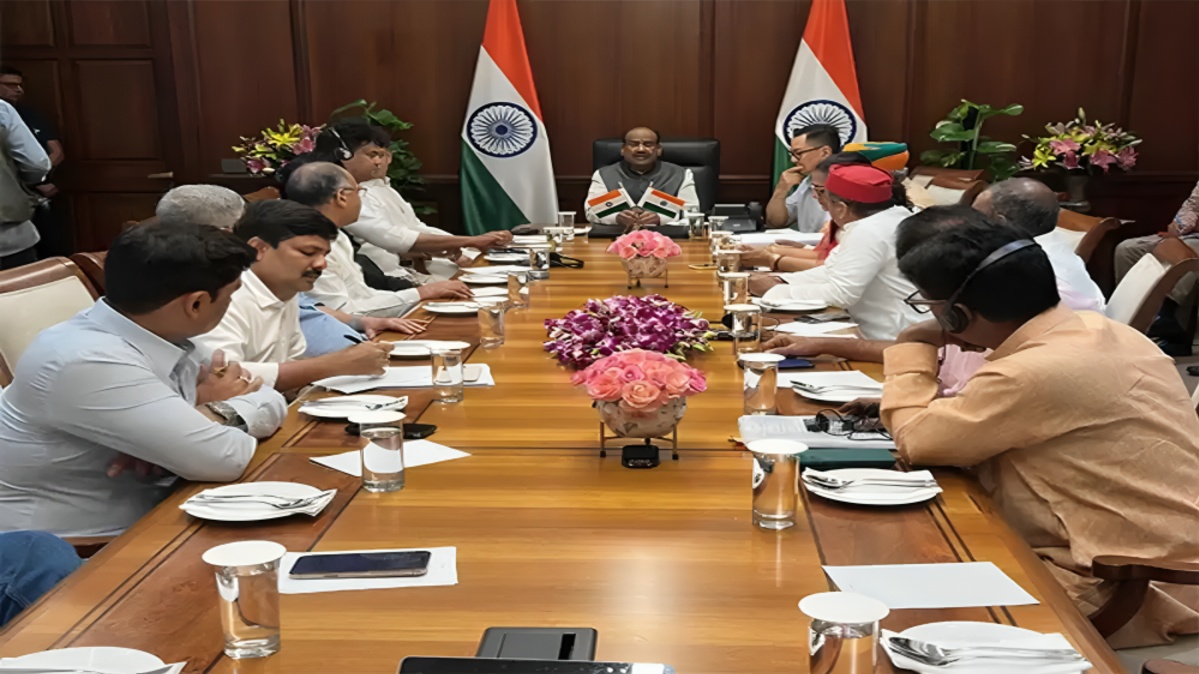
The political divide between the government and Opposition was visible after the conclusion of the parliamentary session, as several INDIA bloc parties reportedly stayed away from the Lok Sabha Speaker’s traditional tea gathering held following the adjournment of the House.
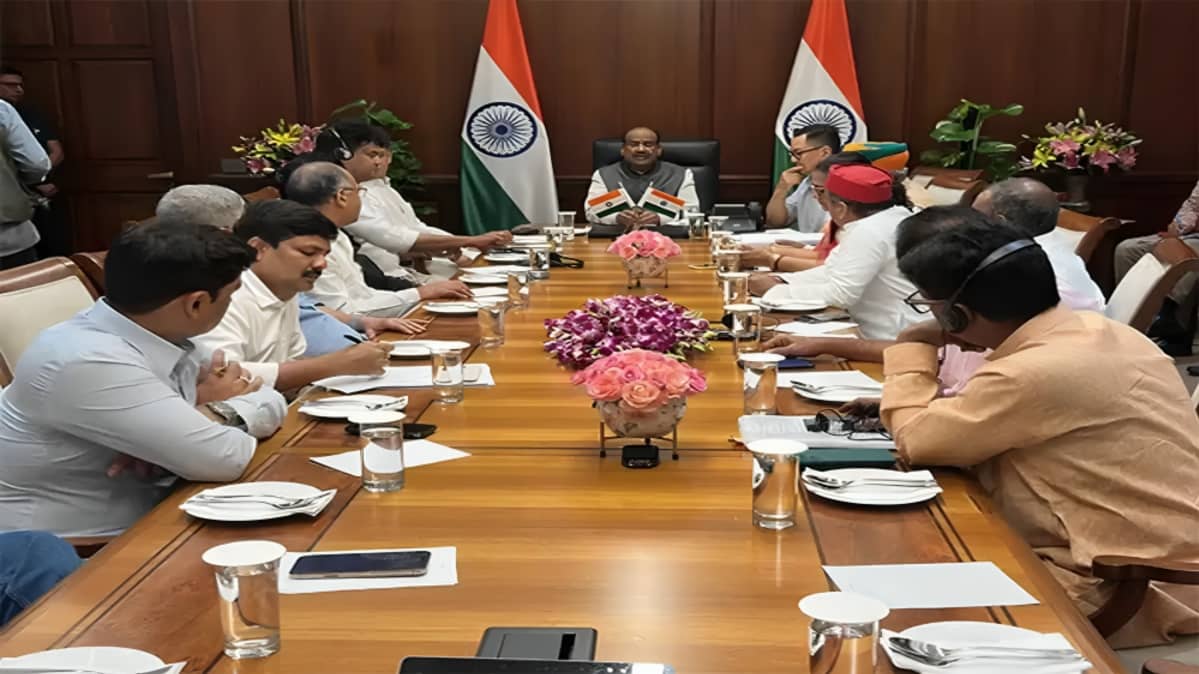
The Lok Sabha was adjourned sine die, formally bringing the scheduled proceedings of the session to an end. Following the conclusion of the proceedings, the Lok Sabha Speaker hosted a traditional tea gathering attended by Prime Minister Narendra Modi and several senior ministers.
However, leaders from several Opposition parties did not attend the gathering. The Congress, Trinamool Congress and Samajwadi Party were among the INDIA bloc parties whose leaders reportedly stayed away from the Lok Sabha event.
At the same time, some Opposition leaders attended the traditional tea gathering hosted by the Rajya Sabha Chairman. Congress president Mallikarjun Kharge and senior Congress leader Sonia Gandhi were among those present at the Rajya Sabha event.
The separate attendance patterns came after a parliamentary session marked by disagreements between the government and Opposition over several political and public issues. Opposition parties had raised concerns on matters including student protests, alleged police action, examination-related issues and other subjects during the session.
The tea gatherings are traditionally held after parliamentary sessions and provide an informal setting for leaders from different political parties to interact outside the formal proceedings of the Houses. Such events are generally viewed as an opportunity for political leaders to meet in a less formal environment despite differences over legislation and public policy.
The absence of several Opposition leaders from the Lok Sabha Speaker’s event therefore attracted political attention, particularly because it followed a session marked by confrontation between the government and Opposition.
The decision by Opposition parties to skip the gathering can be viewed in the context of their broader political strategy during the session. Opposition parties have frequently used protests and coordinated actions to highlight issues they believe require government accountability.
The government, meanwhile, has continued to defend its position on the issues raised by the Opposition and has sought to focus parliamentary discussions on its legislative and policy agenda.
The presence of the Prime Minister and senior ministers at the Lok Sabha gathering demonstrated the participation of the government leadership in the traditional post-session event. The absence of several major Opposition groups created a visible contrast between the two sides.
In the Rajya Sabha, however, the presence of Mallikarjun Kharge, Sonia Gandhi and other Opposition representatives at the Chairman’s tea gathering showed that some Opposition leaders continued to participate in the traditional post-session interaction.
The different attendance patterns do not necessarily indicate a complete breakdown in communication between political parties. Parliamentary leaders routinely interact through formal and informal channels even when their parties disagree on major political issues. However, participation or non-participation in traditional events can also carry political significance, particularly when it occurs after a contentious session.
The conclusion of a parliamentary session is usually followed by political assessments from both the government and Opposition. The ruling alliance highlights its legislative achievements and policy initiatives, while Opposition parties often focus on issues they believe were not adequately discussed or addressed.
During the session, disagreements over student protests and alleged police action were among the issues that contributed to tensions between the two sides. Opposition parties sought greater discussion and accountability, while the government maintained its position.
The political differences were also visible through protests, slogans and coordinated demonstrations by Opposition members. These developments contributed to an atmosphere of confrontation around several parliamentary proceedings.
The decision of some INDIA bloc parties to skip the Lok Sabha Speaker’s tea gathering came against this backdrop. The Congress, Trinamool Congress and Samajwadi Party were reported to have stayed away from the event, while other Opposition leaders attended the Rajya Sabha Chairman’s gathering.
The events highlight the continuing political competition between the ruling alliance and the INDIA bloc. Both sides are likely to continue presenting their respective positions to the public even though the parliamentary session has concluded.
With the House adjourned sine die, political parties will now focus on their respective organisational and constituency activities until the next parliamentary proceedings. Issues raised during the session are expected to remain part of public debate and could return for discussion when Parliament meets again.
The post-session gatherings therefore provided another indication of the current political atmosphere. While the government leadership participated in the Lok Sabha Speaker’s event, several major Opposition parties chose not to attend. At the same time, Opposition leaders including Kharge and Sonia Gandhi participated in the Rajya Sabha Chairman’s gathering.
The developments underline the complex relationship between parliamentary tradition and political disagreement. Even during periods of intense confrontation, such traditional gatherings can provide an informal platform for interaction among political leaders.
For now, the different responses to the two tea gatherings have become part of the broader political narrative following the conclusion of the parliamentary session. The government and Opposition are expected to continue debating the issues raised during the session through political and public forums ahead of future parliamentary proceedings.