Jammu and Kashmir Chief Minister Omar Abdullah on Friday moved a resolution in the Legislative Assembly seeking the immediate and urgent restoration of full statehood to Jammu and Kashmir.
The resolution triggered strong protests from BJP legislators, leading to an uproar inside the Assembly and disruption of proceedings. BJP members objected particularly to references in the resolution to earlier decisions of the Jammu and Kashmir Assembly concerning autonomy and special status.
The resolution moved by Omar Abdullah called upon the Government of India to restore full statehood to Jammu and Kashmir and said that the resolution should be forwarded to the Union government. It also referred to resolutions passed by the Assembly on June 26, 2000, and November 6, 2024.
The reference to the 2000 resolution became the main point of disagreement between the ruling National Conference and the BJP. The 2000 resolution had been passed when Farooq Abdullah, Omar Abdullah's father, was Chief Minister. That resolution sought restoration of greater autonomy for Jammu and Kashmir.
The Assembly passed another resolution in November 2024 seeking dialogue on the restoration of special status and constitutional guarantees for Jammu and Kashmir. The BJP had opposed that resolution as well.
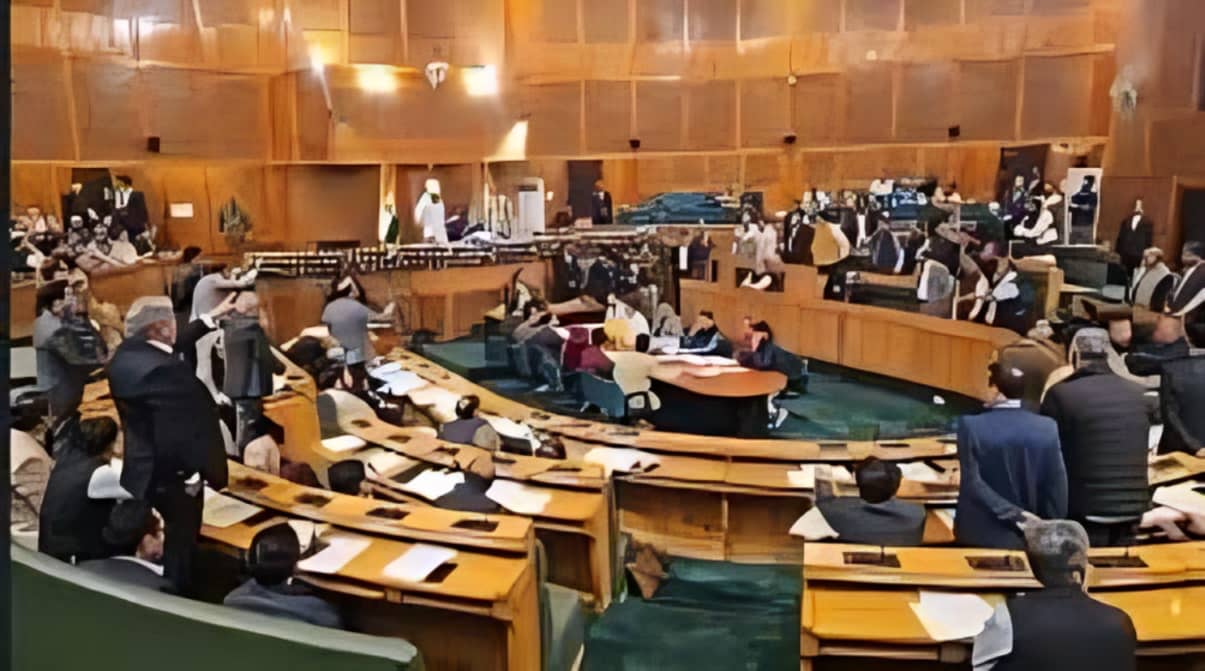
When Omar Abdullah introduced the latest statehood resolution, BJP members protested against the inclusion of references to these earlier resolutions. BJP legislators entered the Well of the House, raised slogans and tore copies of the resolution. The confrontation between members of the ruling National Conference and the opposition BJP led to further disruption.
According to reports, BJP MLA Vikram Randhawa was later marshalled out of the Assembly after creating a disturbance. Speaker Abdul Rahim Rather repeatedly appealed to members to return to their seats, but the protests continued. The Speaker subsequently adjourned the House for 30 minutes. The Assembly was later adjourned until Monday, September 28.
The BJP's main objection was that a resolution dealing with restoration of statehood should not have included references to the earlier autonomy resolution. BJP leaders argued that the reference brought the issue of greater autonomy back into the Assembly.
Leader of Opposition Sunil Sharma criticised the resolution and accused the National Conference government of attempting to revive the earlier autonomy agenda. The BJP said it would not support discussions concerning autonomy or Article 370 in the Assembly.
The National Conference government has presented the resolution differently. Omar Abdullah has maintained that the latest resolution is specifically focused on restoring full statehood and does not seek to reopen the earlier questions of autonomy or special status.
After the disruption, Abdullah said the earlier resolutions remained part of the Assembly's record and that the new resolution was intended to add a specific demand for restoration of statehood. He argued that the statehood demand should be considered separately from the earlier resolutions.
While moving the resolution, Abdullah also referred to what he described as assurances given to the people of Jammu and Kashmir following the reorganisation of the erstwhile state in 2019.
According to Abdullah, a sequence involving delimitation, elections and restoration of statehood had been discussed. He argued that delimitation had taken place and Assembly elections were conducted in 2024, but full statehood had not yet been restored.
The Chief Minister appealed to members across party lines to support the statehood resolution. He said restoration of statehood was an issue concerning the people of Jammu and Kashmir as a whole rather than a demand belonging to one political party.
Abdullah also argued that the restoration of full statehood would give the elected government greater authority over several areas of administration. He referred to institutions and administrative matters where, according to him, the elected government does not currently have the same control that a full state government would have.
The BJP, however, has questioned the manner in which the resolution was introduced and has rejected the inclusion of the previous autonomy resolution. BJP legislators also raised objections over the procedure followed during the presentation of the resolution.
The dispute reflects the continuing political disagreement in Jammu and Kashmir over the region's constitutional and administrative status.
Jammu and Kashmir was reorganised as a Union Territory in 2019 following the reorganisation of the former state. The Union Territory later held Assembly elections in 2024, following which the National Conference formed the government with Omar Abdullah as Chief Minister.
Restoration of statehood has remained an important demand of the National Conference government. The issue has also been raised by other political parties and leaders in Jammu and Kashmir, although parties differ on the constitutional questions connected with the region's previous special status.
The latest Assembly resolution is therefore part of a larger political debate over the future administrative status of Jammu and Kashmir.
The wording of the resolution has become particularly significant because it refers to both the 2000 autonomy resolution and the 2024 special status resolution. Omar Abdullah has argued that mentioning the earlier resolutions does not change the purpose of the new resolution. According to his position, the current motion is intended to add a demand for immediate restoration of full statehood.
The BJP has taken a different position and has said that the reference to the earlier resolutions makes the issue broader than a simple statehood demand. BJP legislators have therefore opposed the motion in its present form.
The disagreement resulted in significant disruption to the Assembly proceedings. The protests included slogan shouting, members entering the Well of the House and tearing copies of the resolution. The Speaker's repeated requests for order were followed by adjournments.
The next stage will depend on how the Assembly takes up the resolution after the adjournment. The ruling National Conference is seeking support for the statehood demand, while the BJP has continued to oppose the references to autonomy and special status.
The issue is also being watched because any Assembly resolution on statehood is ultimately a political appeal to the Government of India. Passing such a resolution does not by itself restore statehood. The final decision regarding the constitutional and administrative status of Jammu and Kashmir rests with the Union government and Parliament under the applicable constitutional and legal framework.
For now, the political dispute has centred on the wording of the resolution and the references to earlier Assembly decisions. Omar Abdullah maintains that the immediate objective is restoration of full statehood, while the BJP has objected to the inclusion of earlier autonomy-related resolutions.
The Assembly's next proceedings are expected to provide further clarity on whether the resolution will be debated and put to a vote. Until then, the issue remains a major point of political disagreement between the National Conference government and the BJP in Jammu and Kashmir.