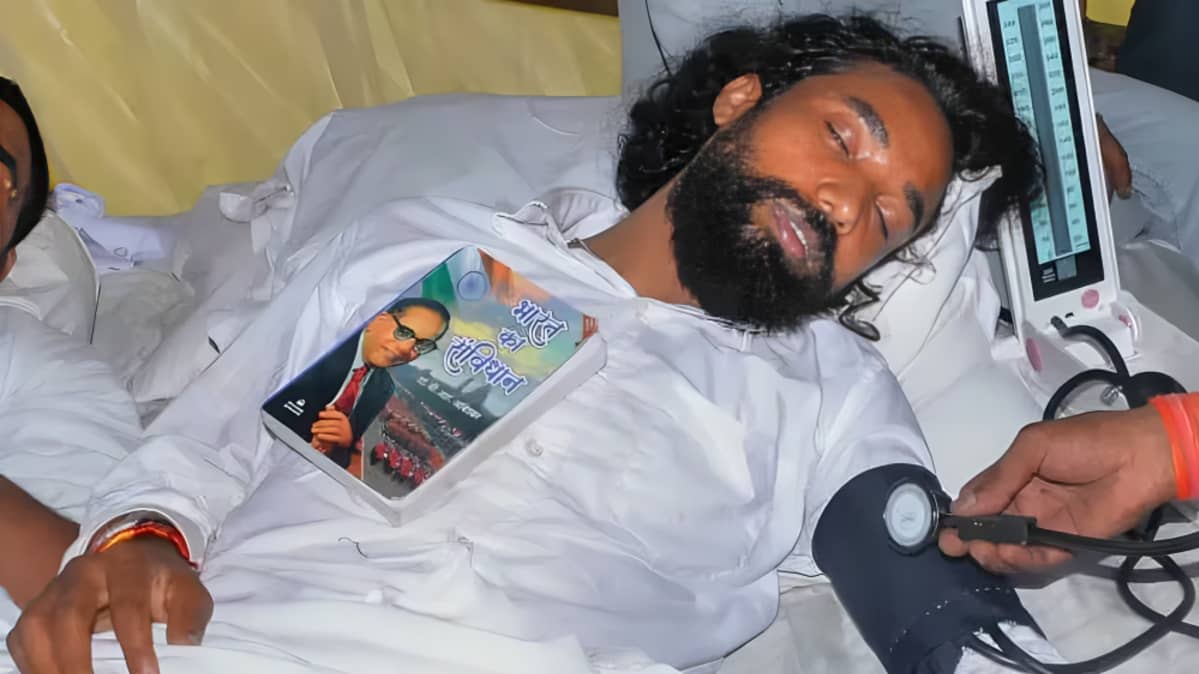
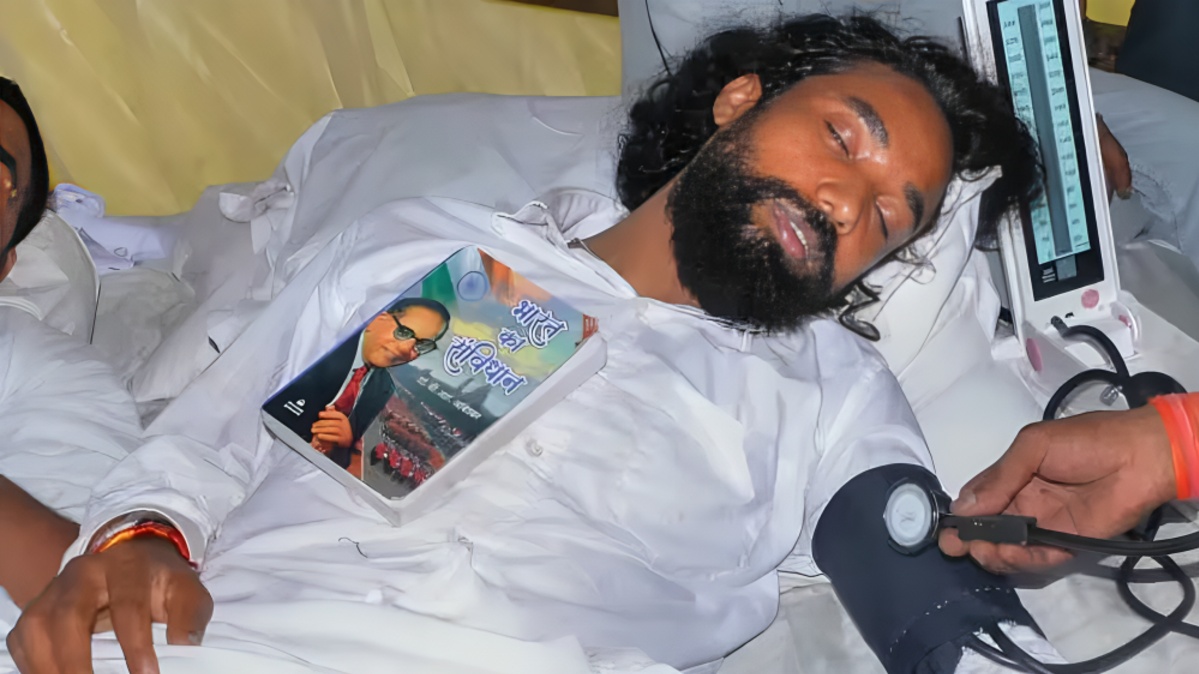
JLKM leader Devendra Mahto has sought permission to leave hospital and return to the site of an ongoing student protest in Jharkhand. Mahto has been participating in an agitation related to alleged irregularities in recruitment examinations and has reportedly been on a hunger strike for 11 days.
According to the information available, Mahto’s health deteriorated during a student march towards the state Assembly. Following the decline in his health, he was admitted to a hospital for medical treatment. Despite being under medical care, Mahto has expressed his desire to return to the protest site and continue his participation in the students’ agitation.
Mahto reportedly wrote to the civil surgeon seeking permission for hospital discharge. In his communication, he indicated that he wanted to rejoin the students who were continuing their protest. He has maintained that his presence and support are important to the students who are demanding action over alleged irregularities in recruitment examinations.
The protest has been linked to concerns raised by students regarding recruitment examinations and the process through which candidates are selected for government jobs. Students participating in the agitation have called for transparency in the examination process and appropriate action if irregularities are established.
Mahto has reportedly said that although he is receiving treatment in hospital, his thoughts remain with the students at the protest site. His statement reflects his continued support for the demands being raised by the protesting candidates.
The issue has attracted attention among students in the state, with a large number of candidates reportedly supporting the agitation. Recruitment examinations are particularly important for young people preparing for government employment, and allegations of irregularities can create uncertainty among candidates who have invested significant time and resources in their preparation.
The students have been seeking clarity over the recruitment process and alleged irregularities. Their demands are centred on ensuring that examinations are conducted fairly and that eligible candidates receive equal opportunities.
Mahto’s decision to seek discharge from hospital comes despite his reported health concerns. Medical professionals are responsible for determining whether a patient is fit to leave hospital, and any decision regarding discharge would normally depend on the individual’s medical condition and the advice of the treating doctors.
The protest has also become a political issue, with JLKM and other supporters highlighting the concerns raised by students. The continuing agitation has placed pressure on authorities to respond to the allegations and address questions surrounding the recruitment examination process.
For students, the outcome of recruitment examinations can have a direct impact on their career prospects. Any allegation of unfair practices or irregularities can therefore lead to demands for an investigation and corrective measures. Students have been calling for authorities to provide clear information about the examination process and address their concerns.
The administration’s response will be important in determining how the situation develops. If an investigation is conducted, official findings could clarify whether any irregularities occurred and whether further action is required.
The authorities may also have to consider the health concerns of protesters participating in hunger strikes. Extended fasting can create serious health risks, particularly when a person’s condition has already deteriorated. Medical supervision is therefore an important aspect of any prolonged protest involving hunger strikes.
Mahto’s reported request to return to the protest site has added another development to the ongoing agitation. His supporters are expected to continue pressing for action on the students’ demands, while the authorities may be required to balance the protestors’ right to demonstrate with public order and health considerations.
The controversy highlights the wider concerns surrounding recruitment examinations and the expectations of young candidates seeking government employment. Transparent procedures, timely communication and appropriate investigation of complaints are important for maintaining confidence in the examination system.
At present, the allegations concerning recruitment examination irregularities remain matters raised by the protesters and should be distinguished from officially established findings. Any conclusion regarding wrongdoing would depend on an investigation and evidence from the relevant authorities.
The situation in Jharkhand is therefore being closely watched by students and political groups. Mahto’s request for hospital discharge demonstrates his intention to continue supporting the agitation, while the students remain focused on their demands for transparency and accountability in the recruitment process. The next steps by the state authorities and the outcome of any investigation are likely to determine the future course of the protest.