The controversy surrounding Vande Mataram has intensified in Kerala following protests by the Bharatiya Janata Party's youth wing over the absence of the national song from an official Independence Day programme.
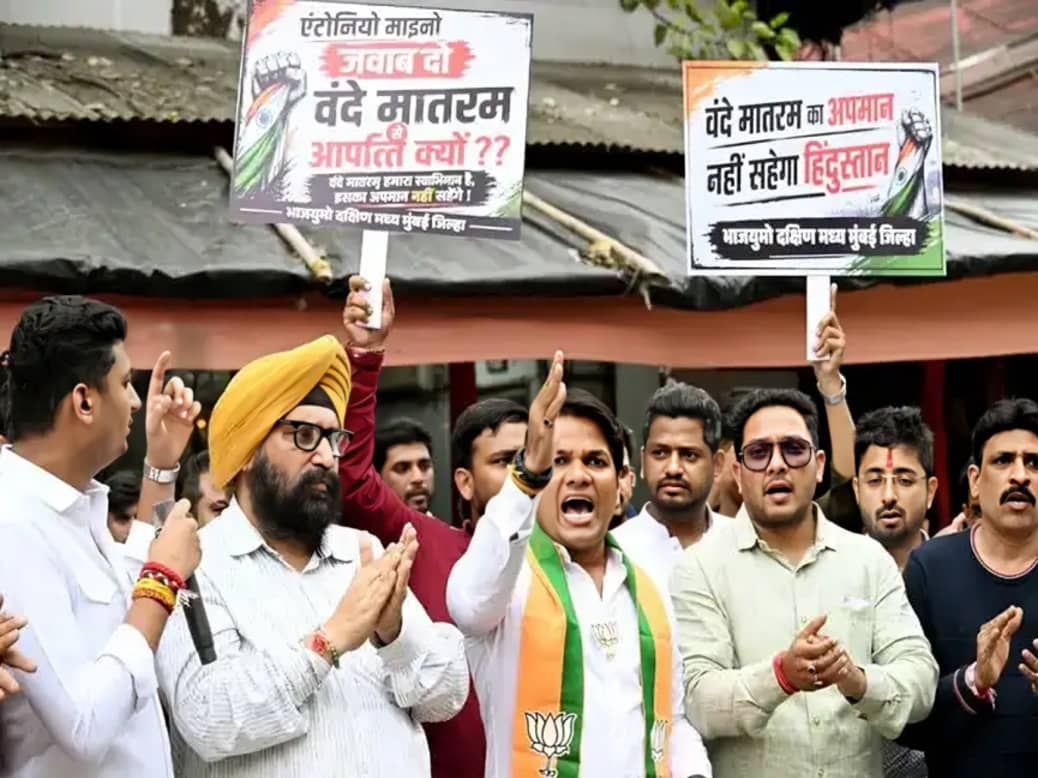
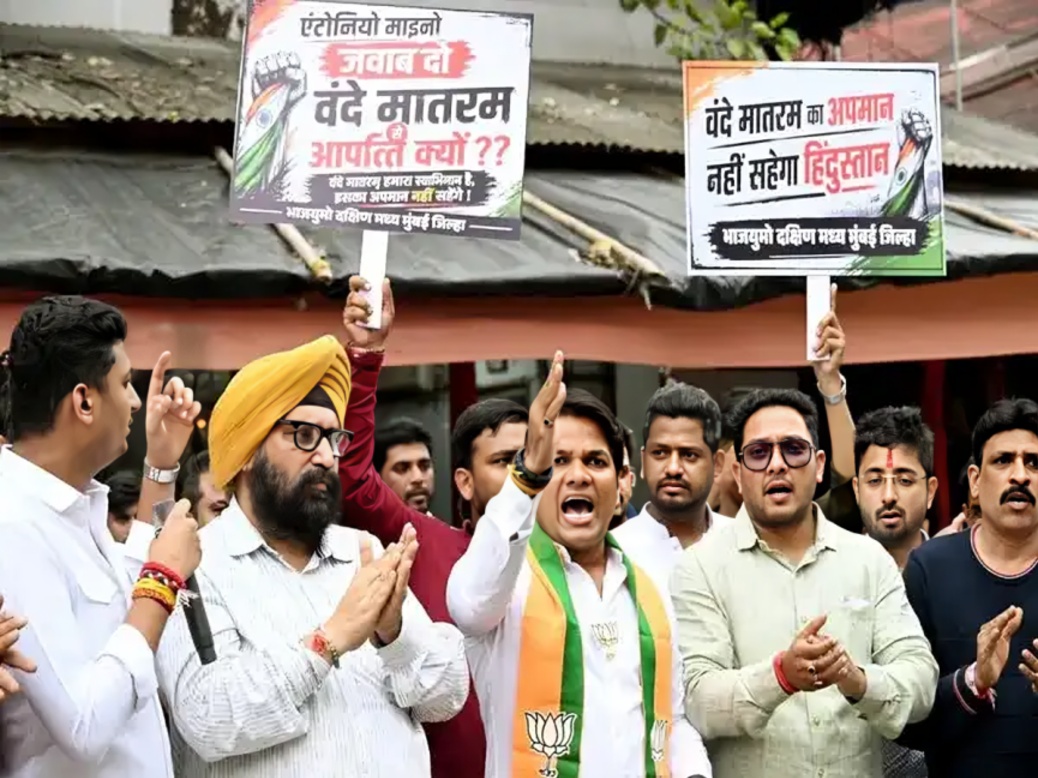
The BJP youth wing, Yuva Morcha, staged protests in different parts of Kerala. In Thiruvananthapuram, protesters burned effigies representing Kerala Chief Minister V D Satheesan and Pakistan founder Muhammad Ali Jinnah. The demonstration was organised to express opposition to the non-singing of Vande Mataram during the Independence Day celebrations.
The issue has emerged as a political controversy in the state following the Independence Day celebrations on August 15. BJP leaders have criticised the Kerala government over the absence of Vande Mataram and questioned the government's position on the national song.
BJP representatives alleged that the state government had come under pressure from groups opposed to the full rendition of Vande Mataram. They compared the government's position with that of Muhammad Ali Jinnah, who was a prominent leader of the Muslim League and later became the founder of Pakistan. The comparison was part of the BJP's political criticism of the state government's position.
The BJP has described the issue as one involving national pride and unity. Party leaders said that the absence of Vande Mataram from an official Independence Day programme was unacceptable and announced that protests would continue.
Yuva Morcha leaders said similar demonstrations were organised at different locations across Kerala. The protests included public demonstrations and the burning of effigies as a means of expressing opposition to the state government's position.
The controversy comes against the backdrop of a wider debate in Kerala over the singing of Vande Mataram during official and educational programmes. The Kerala General Education Department's Independence Day guidelines for schools required institutions to hoist the national flag and sing the national anthem, Jana Gana Mana. The guidelines did not specifically direct schools to sing Vande Mataram, which subsequently became a subject of political debate.
The BJP has taken a strong position on the issue and has organised programmes promoting the singing of Vande Mataram across Kerala. The party had earlier announced plans to hoist the national flag and sing Vande Mataram at thousands of locations in the state as part of its Independence Day activities.
The controversy has also involved members of the Kerala government. Kerala Transport Minister C P John had earlier criticised what he described as the BJP's approach to the issue and questioned the political significance attached to the full rendition of the song. His comments added another dimension to the ongoing debate.
The dispute has also generated arguments over the legal and constitutional position surrounding Vande Mataram. Communist Party of India Marxist leader P Rajeeve criticised the Chief Minister's interpretation of a recently enacted law relating to the national song and accused him of misleading the public about its provisions.
The BJP's latest protest therefore comes amid an increasingly political discussion involving the national song, Independence Day programmes and the responsibilities of government institutions.
Vande Mataram has a significant place in India's freedom movement and is recognised as the national song of India. The song was written by Bankim Chandra Chattopadhyay and played an important role in India's nationalist movement.
At the same time, the use of the song in official programmes has periodically generated political and social discussions, particularly regarding which portions should be sung and the circumstances in which it should be performed.
The latest controversy in Kerala has brought these questions back into the political spotlight. BJP leaders have argued that the song should be given an appropriate place in Independence Day programmes, while opponents have questioned whether political disputes over its rendition should become a major issue in government functions.
The burning of effigies by Yuva Morcha has further intensified the confrontation between the BJP and the state government. BJP leaders have indicated that their campaign on the issue will continue.
For the Kerala government, the controversy comes amid broader political competition in the state. The BJP has been seeking to expand its political influence in Kerala, while the Congress-led United Democratic Front government faces criticism from the opposition on several issues.
The Vande Mataram dispute has consequently become another point of confrontation between the ruling front and the BJP.
The protests are also being closely watched because they involve a sensitive issue related to national symbols and patriotic expression. Political parties have different views on how such symbols should be incorporated into public programmes, and the Kerala controversy has highlighted those differences.
The Yuva Morcha demonstrations in Thiruvananthapuram and other parts of the state are expected to keep the issue in the public and political discussion. BJP leaders have said that they will continue raising the matter, while the state government's position remains a subject of debate.
Overall, the Kerala Vande Mataram controversy has developed into a political dispute following the Independence Day celebrations. The BJP youth wing's decision to burn effigies of V D Satheesan and Muhammad Ali Jinnah has added to the intensity of the protests. The BJP has demanded greater emphasis on Vande Mataram, while the controversy has prompted a broader debate about national songs, official ceremonies and political differences in Kerala.