
Kerala Offers to Host Raihan Vadra’s Complete Photo Exhibition After Delhi Controversy
Thiruvananthapuram, October 24, 2026: Kerala Chief Minister V D Satheesan has offered to host the complete photography exhibition of Raihan Vadra, son of Congress leader Priyanka Gandhi Vadra, following a controversy over the removal of several photographs from his exhibition at Bikaner House in New Delhi. The offer has brought the dispute over the exhibition into the political spotlight, with Congress leaders criticising the removal and the venue’s administration defending its decision on policy grounds.
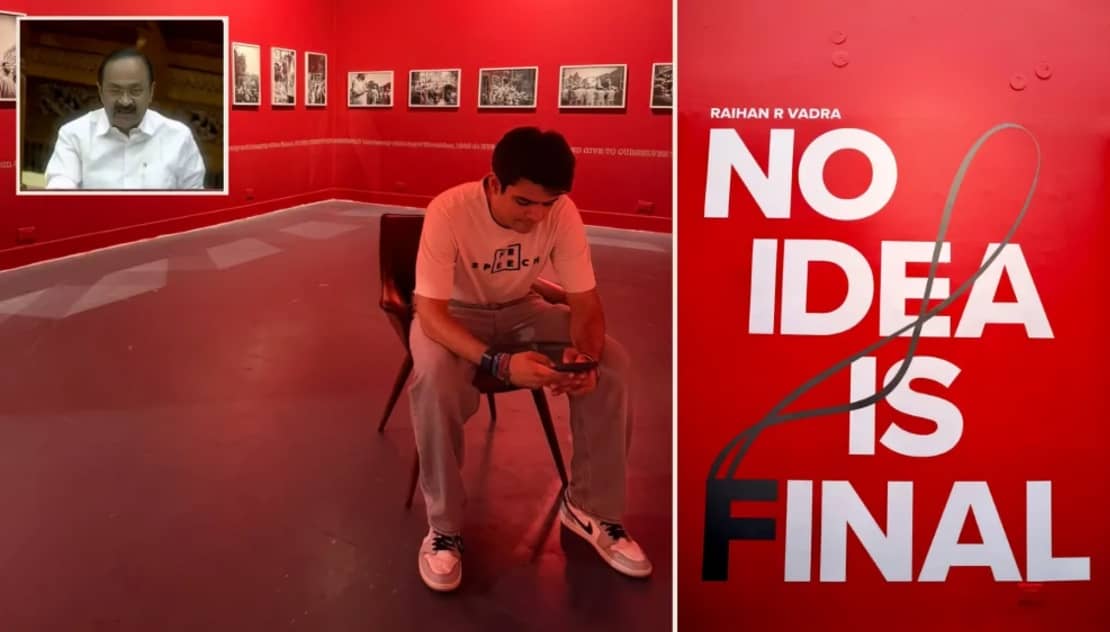
The exhibition, titled No Idea Is Final, features photographs by Raihan Vadra, a photographer and artist. The collection includes images documenting student and youth protests in Delhi over recent months. According to published reports, the exhibition was planned to display 105 photographs, but approximately 74 were removed or asked to be taken down before the show opened to visitors.
Satheesan said Kerala would be happy to host the exhibition in its entirety, without exclusions or exceptions. His announcement followed public criticism from Priyanka Gandhi Vadra and other Congress leaders over the decision to remove the photographs.
Kerala Chief Minister Makes Hosting Offer
Satheesan announced his offer in a social media post on October 22, addressing Raihan and his mother, Priyanka Gandhi Vadra. He expressed the state’s willingness to host the complete exhibition, including the photographs that were removed from the Delhi show.
The offer came amid a wider debate over the boundaries between venue policies, political content and artistic expression. Although Satheesan has offered to host the exhibition, a final venue and exhibition dates in Kerala had not been announced in the reports available as of October 24.
The proposal could provide an opportunity for the full collection to be displayed elsewhere. However, the actual arrangements will depend on further coordination with the artist and the organisers.
Why Were Photographs Removed at Bikaner House?
The controversy began shortly before the exhibition was scheduled to open at Bikaner House in New Delhi. Raihan Vadra said the venue’s administration asked him to remove or replace a large number of photographs depicting recent protests. He alleged that he was warned the exhibition could be cancelled if the photographs were not taken down.
Reports indicate that 74 photographs were removed from the planned collection of 105 images, leaving approximately 31 photographs out of the original selection unavailable for display. Some reports gave slightly different figures for the number of images affected, but the removal involved several dozen photographs.
Raihan maintained that the photographs were intended to document events and protests rather than communicate a political message. He also said that images featuring the Indian national flag were among those affected by the decision.
These statements reflect Raihan’s account of the incident. The precise circumstances surrounding each photograph’s removal should be understood in the context of the competing explanations offered by the artist and the venue’s administration.
Bikaner House Explains Its Position
Bikaner House officials said the disputed photographs were inconsistent with the venue’s policy. According to reports, the venue’s exhibitions are intended to focus on subjects such as culture and wildlife, and officials argued that the photographs depicting political protests did not fall within those categories.
The explanation differs from Raihan’s position that the photographs were a visual record of events. The disagreement has therefore centred not only on the removal itself but also on whether photographs documenting protests should be considered political content under the venue’s rules.
The controversy has prompted questions about how public exhibition spaces apply their policies when an artist’s work documents politically sensitive events. At the same time, the venue’s stated position is that it was applying its existing exhibition criteria. The available reports do not establish that the decision was made specifically on the instructions of any political party.
Priyanka Gandhi and Congress Leaders React
Priyanka Gandhi Vadra publicly supported her son and criticised the removal of the photographs. She argued that restricting an artist’s ability to present work documenting protests raises concerns about freedom of expression and the ability of young people to record public events.
Congress spokesperson Pawan Khera also criticised the decision. He questioned why a young artist’s expression was being restricted and argued that a state government offering to host the exhibition was not inappropriate. Khera described the removal as an attempt to prevent the documentation and display of protest-related events.
The All India Congress Committee also criticised the action and indicated that there was nothing wrong with a state inviting Raihan to display the complete collection. The party’s response has turned the exhibition dispute into a broader political discussion about artistic freedom and the treatment of protest-related material.
The BJP, meanwhile, defended the venue’s position. BJP spokesperson Pradeep Bhandari argued that Bikaner House policy did not permit political content and questioned the Congress’s criticism. The disagreement illustrates how the incident has become a point of contention between the ruling party and the opposition.
A Wider Debate on Art and Freedom of Expression
The dispute raises a broader question about how exhibition venues should handle photographs that document political demonstrations. Artists may view such images as records of public events, while venue administrators may assess them according to the stated scope and rules of a particular exhibition space.
In this case, Raihan has said the images documented protests rather than promoted a political position. Bikaner House officials have said the disputed material did not fit the venue’s policy. The two positions remain central to the disagreement.
Kerala’s offer has added another dimension to the debate by proposing an alternative location where the complete collection could potentially be presented. If arrangements are finalised, the exhibition could give visitors an opportunity to view the photographs that were not displayed in Delhi.
What Happens Next?
As of October 24, 2026, Kerala has offered to host the complete No Idea Is Final exhibition, but the venue and dates have not been publicly confirmed in the reports cited here. The controversy continues to generate political reactions and discussion about artistic expression, venue policies and the documentation of public protests.
The next step will be to determine whether Raihan Vadra and the organisers accept the offer and make arrangements for the exhibition in Kerala. Until then, the proposal remains an offer rather than a confirmed exhibition schedule.
The episode highlights the competing arguments surrounding the display of protest photography in public venues. Any further developments, including a confirmed venue, dates or an official response from the organisers, will help clarify how the dispute proceeds.