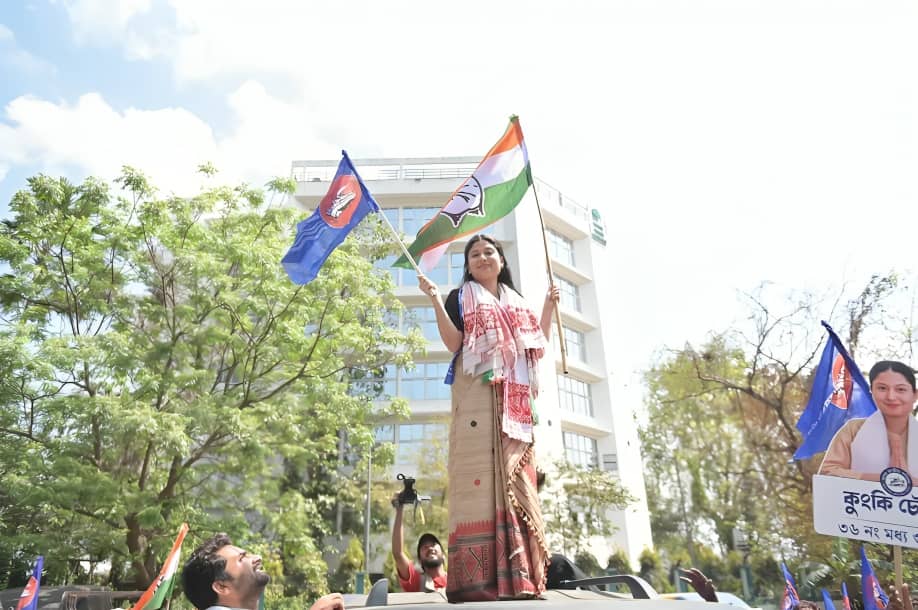

The Assam Assembly elections have brought forward several notable developments, including the emergence of young candidates attempting to make their mark in politics. Among them was Kunki Chowdhury, a 27 year old candidate who contested from the Guwahati Central constituency. Despite her efforts and growing attention as one of the youngest participants in the election, she faced defeat against a seasoned opponent.
Kunki Chowdhury’s candidature was seen as part of a broader trend of increased youth participation in Indian politics. Representing a new generation, she entered the electoral field with the aim of addressing issues relevant to younger voters, including employment opportunities, education and urban development. Her campaign attracted interest from various sections of society, particularly among young voters.
However, the electoral contest in Guwahati Central proved to be challenging. She was up against Vijay Kumar Gupta, a senior leader of the Bharatiya Janata Party with significant political experience and a well established support base. The results showed a clear margin of victory in favor of Gupta, reflecting the influence of experience and organizational strength in electoral outcomes.
Despite the defeat, Kunki Chowdhury’s participation is being viewed positively by political observers. Analysts believe that the presence of young candidates like her adds diversity to the political landscape and encourages greater engagement among the youth. It also highlights the willingness of younger generations to take part in governance and decision making processes.
The Assam elections overall witnessed active participation from voters, with various parties focusing on development, infrastructure and welfare as key campaign themes. In this environment, new candidates faced the dual challenge of building recognition and competing against established political figures.
Kunki Chowdhury’s campaign also underscored the importance of connecting with local issues and building grassroots support. While her efforts did not translate into electoral victory, they contributed to a broader conversation about youth representation in politics.
The role of young leaders in shaping the future of politics continues to be a topic of discussion across the country. With changing demographics and increasing political awareness among younger populations, there is a growing expectation for more inclusive representation.
In Guwahati Central, the outcome reaffirmed the strength of established political networks. Vijay Kumar Gupta’s victory demonstrated the continued relevance of experienced leadership in influencing voter decisions. At the same time, the presence of candidates like Kunki Chowdhury indicates that the political space is gradually opening up to new voices.
Looking ahead, it remains to be seen how young candidates will build on such experiences to strengthen their political journeys. Many experts suggest that sustained engagement, organizational development and continued outreach will be key factors in achieving success in future elections.
Overall, while the election result did not favor Kunki Chowdhury, her candidature represents an important step in the evolving landscape of Indian politics. It highlights the increasing role of youth participation and sets the stage for future opportunities in public life.