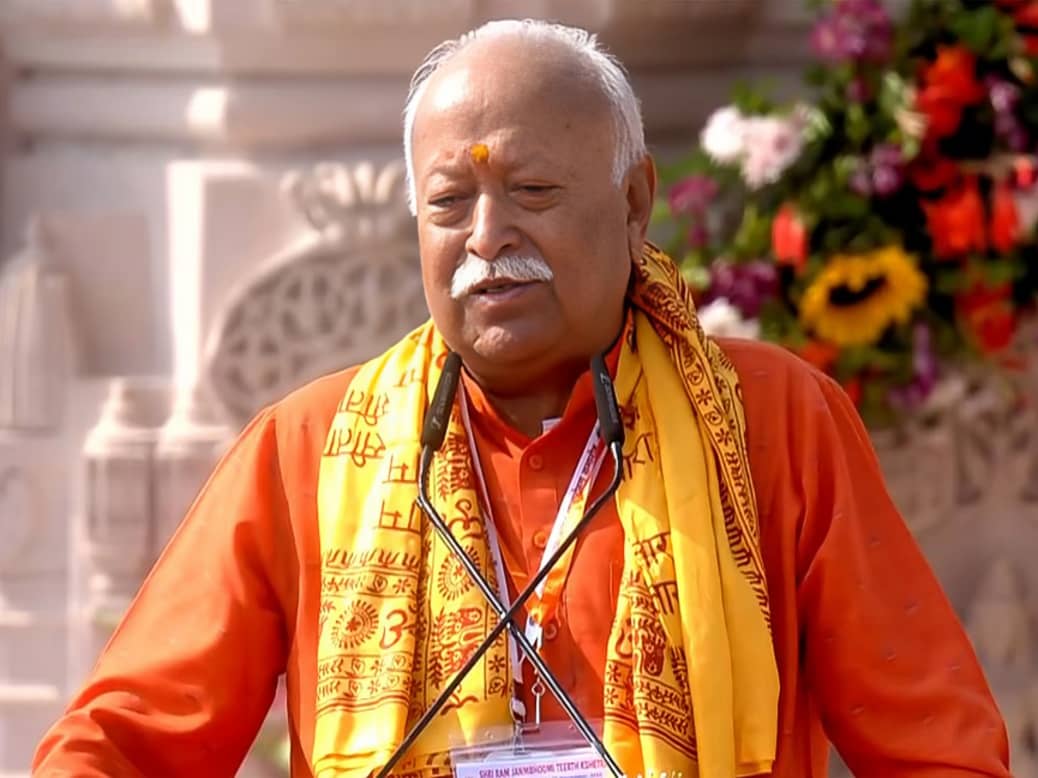

Rashtriya Swayamsevak Sangh Chief Mohan Bhagwat has called for a deeper understanding of India's cultural heritage, stating that the country's traditions, values, and knowledge systems should be studied and appreciated by future generations. Speaking at a public event, he said historical developments, including foreign invasions and the period of British colonial rule, had a significant impact on Indian society and influenced the way people viewed their own cultural identity.
Bhagwat said India's civilizational history extends over thousands of years and includes a rich tradition of philosophy, literature, science, spirituality, and social thought. According to him, this long history deserves greater attention and should be presented comprehensively so that younger generations gain a better understanding of the country's historical and cultural evolution.
During his address, Bhagwat observed that repeated foreign invasions brought social and political changes that affected many aspects of Indian society. He said these developments resulted in the adoption of practices and ideas that differed from traditional Indian thought. Referring to the colonial period, he stated that British rule also influenced the mindset of many people and altered perceptions about India's own traditions and cultural practices.
He stressed that understanding history requires examining the circumstances under which societies evolved over time. Bhagwat said learning about India's past should help people appreciate the country's heritage while also encouraging objective study and informed discussion. He emphasized that knowledge of history plays an important role in shaping national identity and cultural confidence.
Bhagwat also highlighted the importance of preserving traditional knowledge systems alongside modern education. He said India's ancient contributions in fields such as philosophy, mathematics, medicine, literature, and governance continue to hold relevance and should be studied with an open and balanced perspective. According to him, combining traditional knowledge with contemporary education can contribute to the overall development of society.
Addressing the younger generation, Bhagwat encouraged students and citizens to explore India's history through research, reading, and meaningful dialogue. He said a better understanding of the country's cultural roots can strengthen awareness of its diversity and long-standing traditions.
He further noted that historical discussions should promote learning rather than division. Bhagwat said every generation has the responsibility to preserve valuable aspects of its cultural heritage while adapting to changing times. He added that societies become stronger when they understand their past and use that knowledge to build a better future.
The RSS chief also emphasized the role of families, educational institutions, and cultural organizations in passing on historical knowledge and traditional values. He said these institutions play a significant role in helping young people develop an appreciation for India's cultural legacy while encouraging critical thinking and informed perspectives.
His remarks come amid ongoing public discussions on history, education, and cultural identity in India. These subjects continue to generate debate among historians, educators, policymakers, and political leaders, reflecting the diversity of viewpoints on how the country's past should be interpreted and taught.
Bhagwat concluded by urging people to study India's history in a comprehensive manner and to recognize the country's enduring cultural traditions. He said understanding historical experiences and preserving cultural heritage are important for building an informed society that values both its past and its future.