PM Modi Criticises Congress at NDTV World Summit
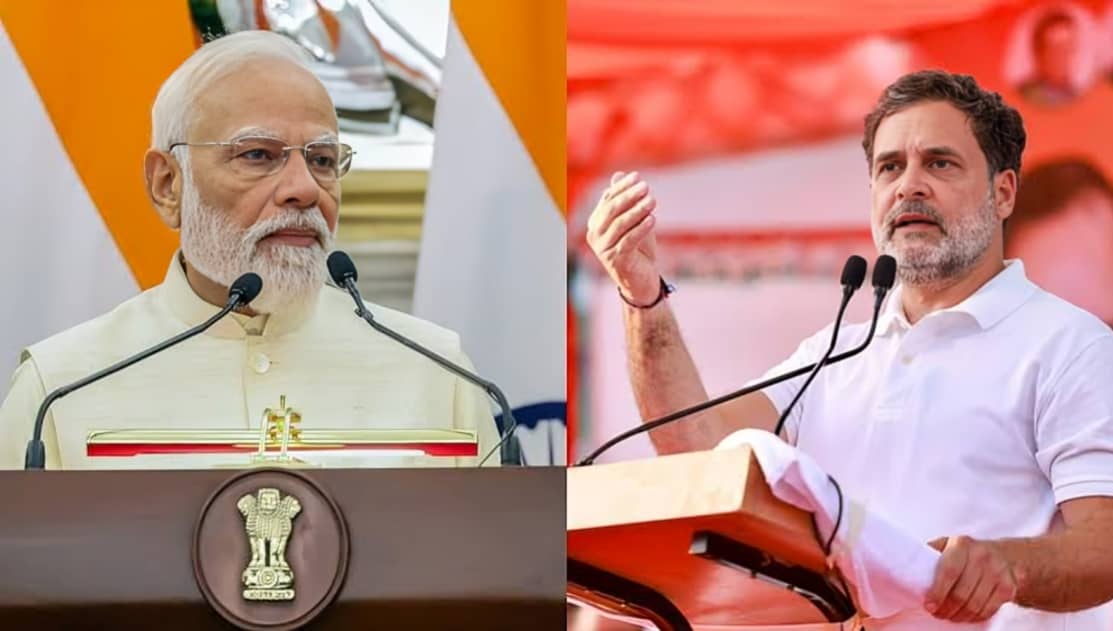
Prime Minister Narendra Modi criticised the Congress party and its leadership during his address at the NDTV World Summit in New Delhi. His remarks focused on Rahul Gandhi, the Nehru-Gandhi family’s role in Congress, the opposition party’s electoral performance and its approach to parliamentary proceedings.
Modi accused Congress of placing the political interests of the Nehru-Gandhi family ahead of broader national priorities. He alleged that the party’s political strategy was weakening its ability to contribute constructively to public debate and national development. These remarks formed part of his wider criticism of the opposition’s leadership and political direction.
Modi Targets Rahul Gandhi and Congress Leadership
During the summit, Modi used sharp language to criticise Congress and Rahul Gandhi. He compared the party’s repeated efforts to establish Rahul Gandhi as its leading political figure with unsuccessful launch attempts, drawing a comparison with satellite launches from Sriharikota, the space launch centre used by the Indian Space Research Organisation.
The prime minister also questioned how long Congress would continue to prioritise its leadership ambitions over the country’s future. He used the metaphor of sour grapes to describe what he portrayed as the party’s response to electoral setbacks. Modi further claimed that the Nehru-Gandhi family had become a burden on Congress and suggested that some experienced party members were dissatisfied but reluctant to speak openly.
These comments reflected the BJP’s criticism of the Congress leadership and its emphasis on the role of the Gandhi family in the opposition party. Congress’s electoral performance and leadership choices remain important subjects of political debate in India.
Remarks on Alleged Foreign Intervention
Modi also raised concerns about statements and activities by opposition leaders outside India. He alleged that some individuals were seeking foreign intervention to undermine the country’s reputation. According to the prime minister, India should project stability and confidence internationally, particularly during a period of uncertainty and conflict in different parts of the world.
The allegation that Congress leaders were attempting to damage India’s image through foreign support was presented as part of Modi’s political criticism. Such claims should be understood as the prime minister’s stated position rather than as independently established findings.
The issue of how Indian political leaders engage with international audiences has frequently featured in political exchanges between the BJP and Congress. Opposition leaders have also used international platforms to raise concerns about government policies, democratic institutions and political developments. The competing positions reflect a continuing debate over political criticism, national interests and India’s global image.
Congress and Parliamentary Disruptions
The prime minister also criticised Congress over disruptions in Parliament. He claimed that several opposition members wanted opportunities to raise their concerns but that the party’s focus on its central leadership prevented Parliament from functioning effectively.
Modi acknowledged that protests and public demonstrations could play an important role in a democracy when they highlight shortcomings in government policy or call for reforms. However, he argued that political action should aim to improve institutions rather than obstruct their functioning.
Parliamentary disruptions remain a recurring point of disagreement between the ruling party and opposition parties. The government and opposition often differ over how debates should be conducted, which issues deserve priority and whether protests are justified under particular circumstances. Effective parliamentary functioning depends on opportunities for discussion, scrutiny of government decisions and adherence to established procedures.
Political Significance of the Remarks
Modi’s address added to the continuing political contest between the BJP and Congress. The two parties frequently differ over leadership, economic and social policies, democratic institutions and their competing visions for India’s future.
The prime minister’s remarks focused particularly on the Congress leadership and the prominence of the Nehru-Gandhi family. His criticism also linked the party’s electoral record to its broader political strategy and its conduct in Parliament.
For Congress, leadership decisions, electoral outcomes and its role as a national opposition party remain significant political questions. The party’s response to criticism from the prime minister and the BJP forms part of the wider political debate over its organisation and future direction.
The remarks at the NDTV World Summit are therefore best understood as part of an ongoing exchange between India’s ruling party and its principal national opposition party. The statements reflect Modi’s assessment of Congress and its leadership; the allegations and political comparisons should be attributed to him rather than presented as established facts.