RTI Reveals Cabinet Secretariat's Response to Complaints by Two Election Commissioners
A response to a Right to Information application has revealed that the Cabinet Secretariat did not initiate direct action on complaints submitted by two Election Commissioners against a senior official of the Election Commission of India. The documents show that officials considered the complaints to have been submitted in the commissioners' individual capacities rather than as a formal communication from the Commission as a whole.
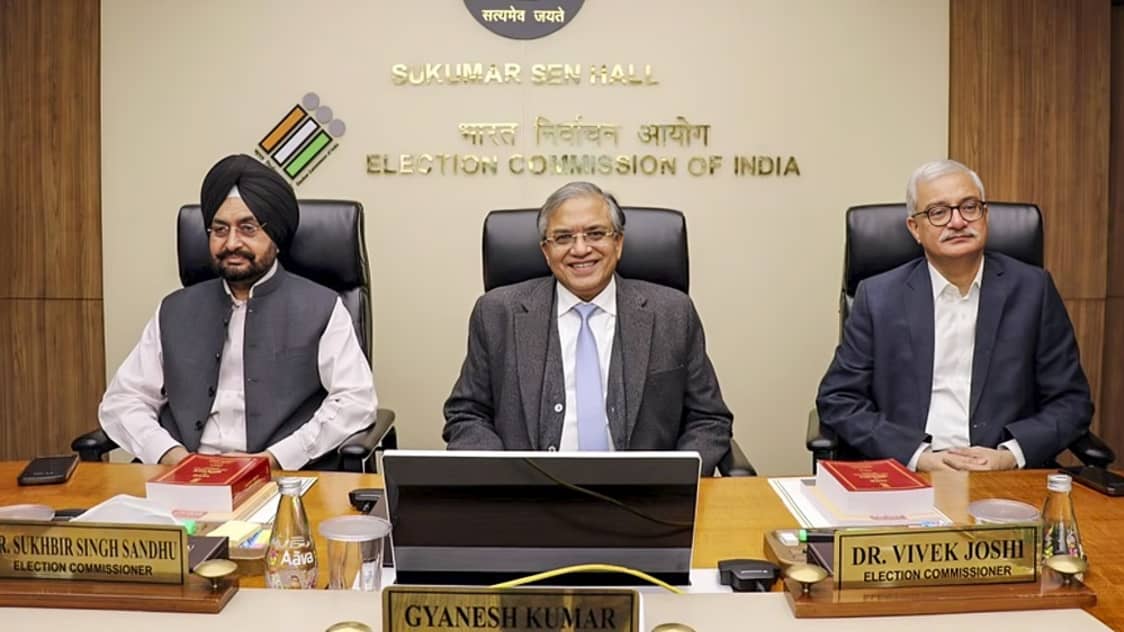
Election Commissioners Sukhbir Singh Sandhu and Vivek Joshi separately wrote to Cabinet Secretary T V Somanathan on July 29, 2026. Their letters raised concerns about the conduct and working arrangements of Senior Deputy Election Commissioner Maneesh Garg, an Indian Administrative Service officer appointed to the Election Commission by the Appointments Committee of the Cabinet in September 2024.
The details emerged through records disclosed under the Right to Information Act following an application by transparency activist and retired Commodore Lokesh K Batra. The documents provide insight into how the Cabinet Secretariat considered the complaints and why it decided against taking direct action at that stage.
Dispute Over a Work Allocation Order
According to the records reported by media outlets, the complaints concerned a work allocation order issued by Garg on July 28, 2026, after he assumed additional responsibility for the Administration Division while the officer normally handling that division was on leave.
The order reportedly revised the allocation of responsibilities among senior deputy election commissioners, deputy election commissioners, directors general and officers of equivalent rank.
Sandhu and Joshi alleged that the changes were made without prior discussion with, or approval from, the Commission and the officers concerned. They also stated that the changes came despite earlier oral and written instructions against making such decisions without consultation.
Joshi reportedly raised a further concern that a file he had requested from the Administration Division had not been provided to him.
The commissioners argued that the process was inconsistent with established procedures and raised questions about compliance with the Chief Election Commissioner and Other Election Commissioners (Appointment, Conditions of Service and Term of Office) Act, 2023.
The work allocation order subsequently became the subject of internal action within the Election Commission. In a statement issued on September 26, the Commission said the redistribution orders had not been implemented following directions from the two commissioners.
Why the Cabinet Secretariat Did Not Take Direct Action
The Cabinet Secretariat's internal file notes show that officials considered the implications of acting on complaints submitted separately by two members of the three-member Election Commission.
A note dated August 3 proposed seeking the opinion of Chief Election Commissioner Gyanesh Kumar on the matter. The following day's assessment emphasised that the Election Commission is a constitutional body intended to function independently of executive interference.
The notes stated that the letters had been submitted by the commissioners in their individual capacities and did not amount to a formal communication from the Commission as a whole.
Officials considered that taking action without an official communication from the Commission could be seen as interference in the functioning of a constitutional institution. The Secretariat therefore decided that acknowledging the letters and informing the relevant offices would be appropriate at that stage.
The Cabinet Secretary acknowledged receipt of the letters on August 5. Copies were marked to the office of the Chief Election Commissioner, the Department of Personnel and Training and the Establishment Officer.
The records also indicated that the matter would be placed on file for consideration in future decisions concerning the officer.
The response therefore shows that the complaints were acknowledged and circulated to relevant offices, but no direct action was initiated by the Cabinet Secretariat against the officer on the basis of those letters.
Role of the Election Commission as a Collegial Body
The Election Commission of India is a constitutional authority responsible for administering elections to Parliament, state legislatures and the offices of the President and Vice-President.
Its independence is central to public confidence in the electoral process. The Commission operates as a multi-member body, and its decisions are governed by applicable constitutional provisions, legislation and established procedures.
Section 18 of the Chief Election Commissioner and Other Election Commissioners Act, 2023, addresses how the Commission conducts its business. The Cabinet Secretariat's notes referred to the principle that the Commission should seek unanimity as far as possible, with differences of opinion resolved by majority.
The Secretariat relied on this institutional framework when considering whether it should intervene in a matter involving the conduct of an officer working within the Commission.
The issue highlights a distinction between an individual commissioner raising concerns and the Commission formally adopting a position as a collective institution. It also raises broader questions about the appropriate process for dealing with disagreements within an independent constitutional body.
Transparency and Accountability Questions
The disclosure has renewed attention on administrative accountability within the Election Commission and the procedures available when commissioners raise concerns about an official's conduct.
The RTI documents establish that Sandhu and Joshi wrote to the Cabinet Secretary and that the Secretariat considered their communications before deciding how to respond. They also outline the reasons officials gave for not initiating direct action at that stage.
However, the decision not to act directly should not be interpreted as a finding that the allegations against Garg were either proven or disproven. The complaints represented the concerns raised by the two commissioners, while the Secretariat's response focused on jurisdiction, institutional independence and the absence of a formal communication from the Commission as a whole.
The Election Commission had separately stated that the disputed work redistribution orders were not implemented after the commissioners' directions. This is an important part of the sequence of events and should be distinguished from the Cabinet Secretariat's decision.
The matter has also highlighted the role of the Right to Information Act in making government decision-making processes more transparent. By obtaining internal file notes and official correspondence, the applicant brought to public attention the reasoning behind the Secretariat's response.
What Happens Next
The documents indicate that the Cabinet Secretariat acknowledged the complaints and forwarded copies to the relevant offices, including the Chief Election Commissioner's office. The matter was also placed on record for potential consideration in future decisions involving the officer.
The available reports do not establish that the Cabinet Secretariat conducted a separate investigation into the allegations. Nor do they establish a final finding of misconduct against Garg.
The episode underscores the procedural challenges that can arise when members of a constitutional body raise concerns about an officer's administrative decisions. It also illustrates the need to distinguish individual complaints, collective decisions of the Commission and the responsibilities of other government offices.
The wider significance of the disclosure lies in the questions it raises about institutional independence, internal accountability and transparent administrative processes. Further developments will depend on any subsequent official action or clarification from the Election Commission and the relevant government departments.