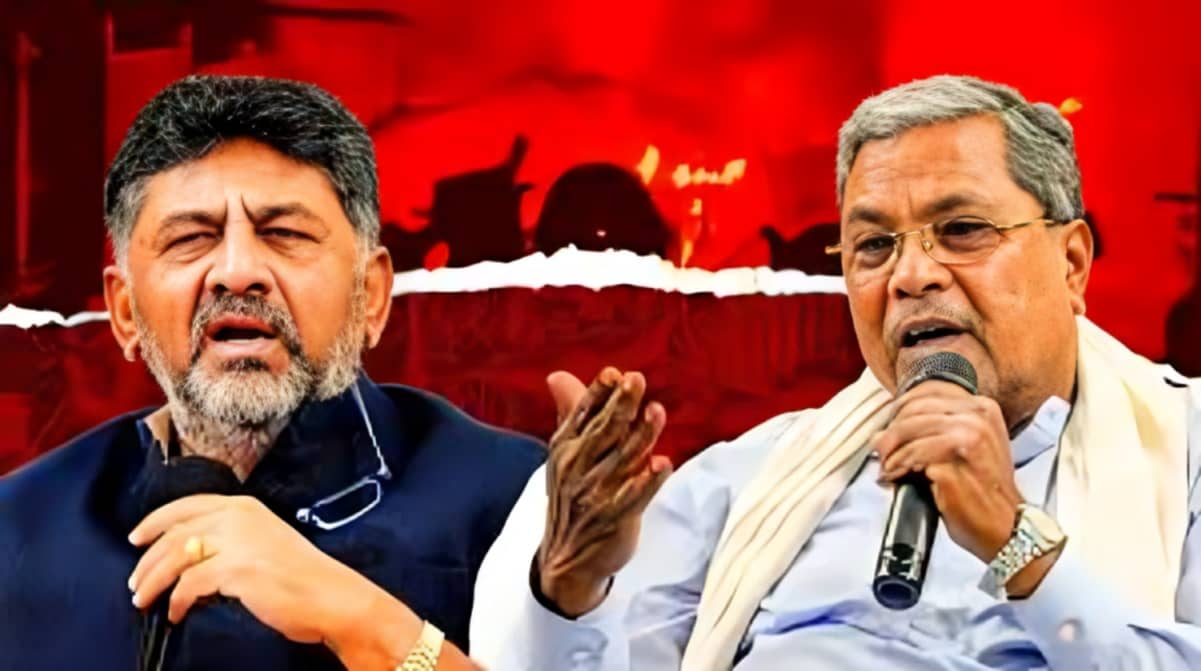

Recent political changes within the Congress party in Karnataka have sparked wider discussions across southern Indian political circles, especially in neighboring Kerala. Following the reported leadership transition involving Siddaramaiah and the growing prominence of D. K. Shivakumar, political observers have started speculating about possible implications for Congress leadership structures in other states.
The discussion has particularly centered around Kerala politics and the role of senior Congress leader V. D. Satheesan. Analysts and political commentators are debating whether the Congress high command may adopt similar leadership strategies in Kerala in the future, especially ahead of important electoral developments.
In Karnataka, the Congress party has witnessed continuous internal discussions regarding leadership balance, administrative control and political representation among senior leaders. The developments involving Siddaramaiah and D K Shivakumar have remained closely followed because both leaders hold significant influence within the party and the state’s political structure.
Political experts believe that leadership management within national parties often involves balancing regional influence, electoral strategy and organizational unity. In states where multiple senior leaders hold strong public support, party high commands sometimes play a key role in maintaining internal stability and political coordination.
The recent Karnataka developments have therefore led to comparisons with Kerala, where the Congress party is preparing for future political challenges against the ruling Left Democratic Front led by Pinarayi Vijayan. Opposition leader V D Satheesan currently plays a major role in the Kerala Congress unit and is viewed as one of the prominent faces of the party in the state.
However, there has been no official indication from the Congress leadership suggesting any immediate organizational change in Kerala. Party leaders have publicly maintained that internal matters are handled collectively and according to political requirements in each state.
Political commentators note that speculation regarding leadership changes is common within major political parties, particularly during periods of organizational restructuring or after significant political events in neighboring states. They also point out that each state unit operates under different political conditions and electoral realities.
The Congress party has recently focused on strengthening its regional leadership structures ahead of upcoming elections in multiple states. Senior party leaders continue to emphasize unity and coordination between state units and the national leadership.
Meanwhile, discussions surrounding the Karnataka model have gained attention on television debates and social media platforms, where supporters and critics are interpreting recent events through different political perspectives. Some observers believe strong regional leaders help improve electoral performance, while others argue that centralized leadership decisions are necessary for maintaining party discipline and long term strategy.
As political discussions continue, Congress leaders in Kerala are expected to remain focused on state level political campaigns and organizational activities. Analysts believe the coming months may provide greater clarity regarding how the party approaches leadership management in different states ahead of future elections.