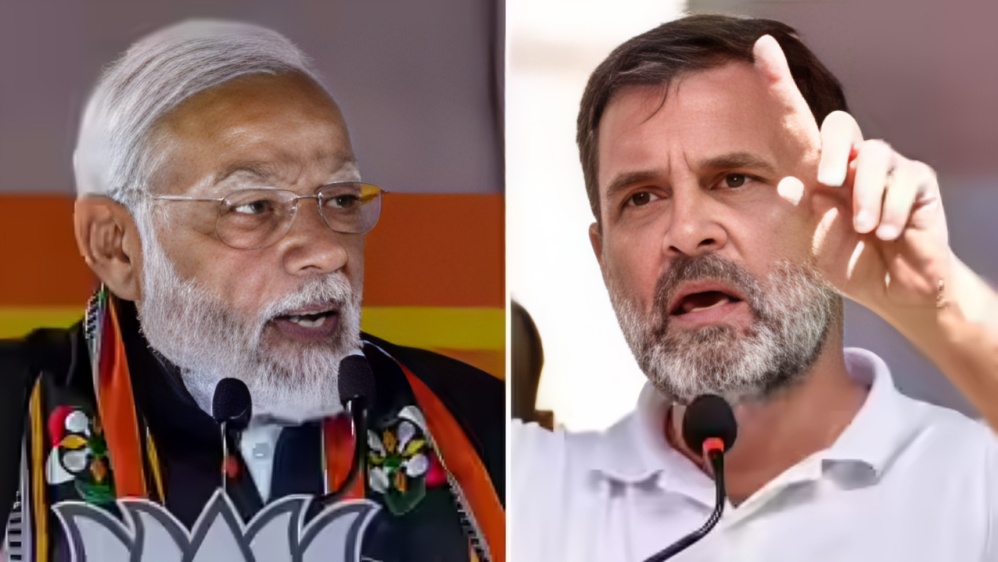
Rahul Gandhi has formally registered his dissent regarding the selection process for the next director of the Central Bureau of Investigation. The Congress leader raised concerns about transparency and procedural fairness during the meeting of the high level committee responsible for appointing the head of India’s premier investigative agency.
According to reports, Rahul Gandhi wrote to Prime Minister Narendra Modi expressing dissatisfaction with the manner in which the selection process was conducted. In his communication, he stated that important documents, including self appraisal reports of the shortlisted candidates, were not shared with him before the meeting. He argued that without access to complete information, it was difficult to conduct a fair evaluation of the candidates being considered for the top position.
Rahul Gandhi reportedly stated that the role of the Leader of Opposition in such committees should not be treated as a symbolic or formal position. He emphasized that members of the committee must be provided with adequate information to participate meaningfully in the decision making process.
The appointment committee for the CBI director consists of the Prime Minister, the Chief Justice of India or a Supreme Court judge nominated by the Chief Justice, and the Leader of Opposition in the Lok Sabha. The committee is responsible for selecting the director of the Central Bureau of Investigation, which is one of India’s most important investigative agencies handling corruption, financial crimes, and major criminal investigations.
At present, the committee includes Prime Minister Narendra Modi, Chief Justice of India Surya Kant, and Rahul Gandhi in his capacity as Leader of Opposition in the Lok Sabha.
The Congress party has often raised concerns regarding transparency and institutional independence in appointments to important constitutional and investigative bodies. Rahul Gandhi’s latest objection has added to the ongoing political debate surrounding the functioning and independence of investigative agencies in India.
Political observers believe the issue highlights the importance of transparency and accountability in high level government appointments. Experts note that the process of selecting the CBI director carries significant importance because the agency is responsible for investigating sensitive and high profile cases across the country.
The Central Bureau of Investigation functions under the Department of Personnel and Training and plays a key role in criminal investigations involving corruption, economic offences, and cases referred by courts or state governments. The director of the agency is considered one of the most influential law enforcement officials in the country.
Legal experts state that providing committee members with complete background information about candidates is generally considered an important part of institutional decision making. They believe transparency during appointments can help maintain public trust in important investigative agencies.
Meanwhile, political reactions have continued from both ruling and opposition parties following Rahul Gandhi’s remarks. Supporters of the opposition argue that all committee members should have equal access to information during appointments, while ruling party representatives maintain that the process follows established procedures.
The issue has also triggered wider discussions regarding the role of opposition leaders in parliamentary committees and institutional appointments. Analysts say such debates are common in democratic systems where checks and balances are considered important for governance and accountability.
Overall, Rahul Gandhi’s dissent over the CBI director selection process has brought attention to questions of transparency, institutional procedure, and the role of opposition leaders in key government appointments. The development is expected to remain a subject of political and public discussion in the coming days.