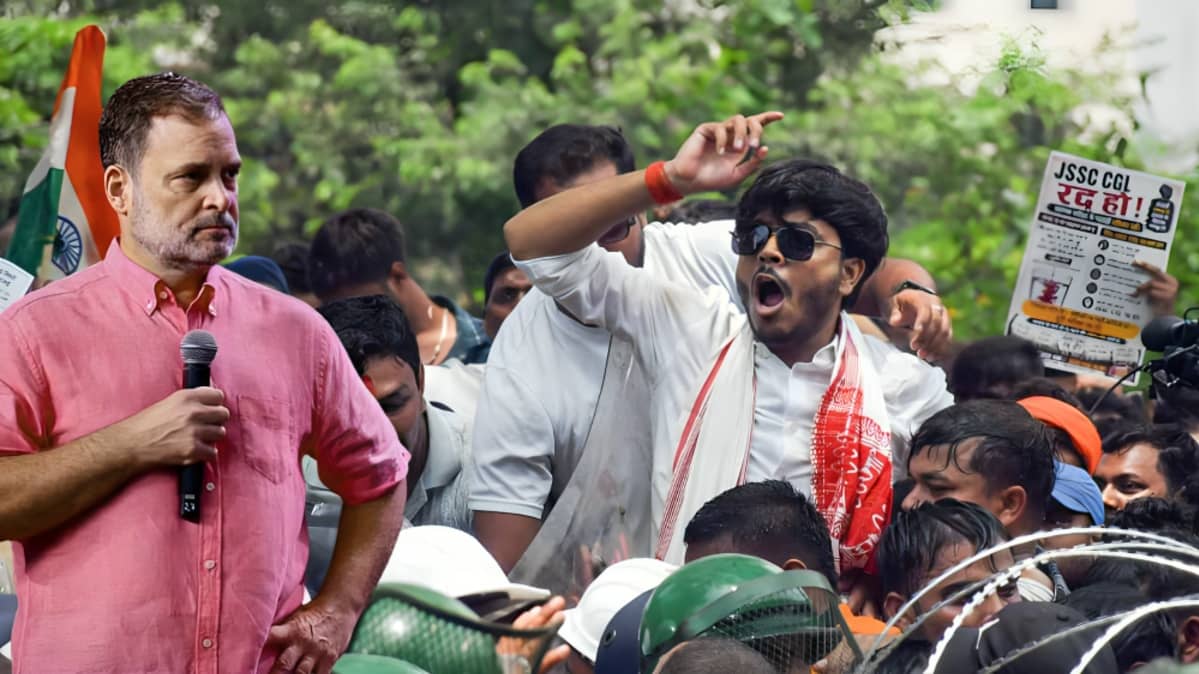
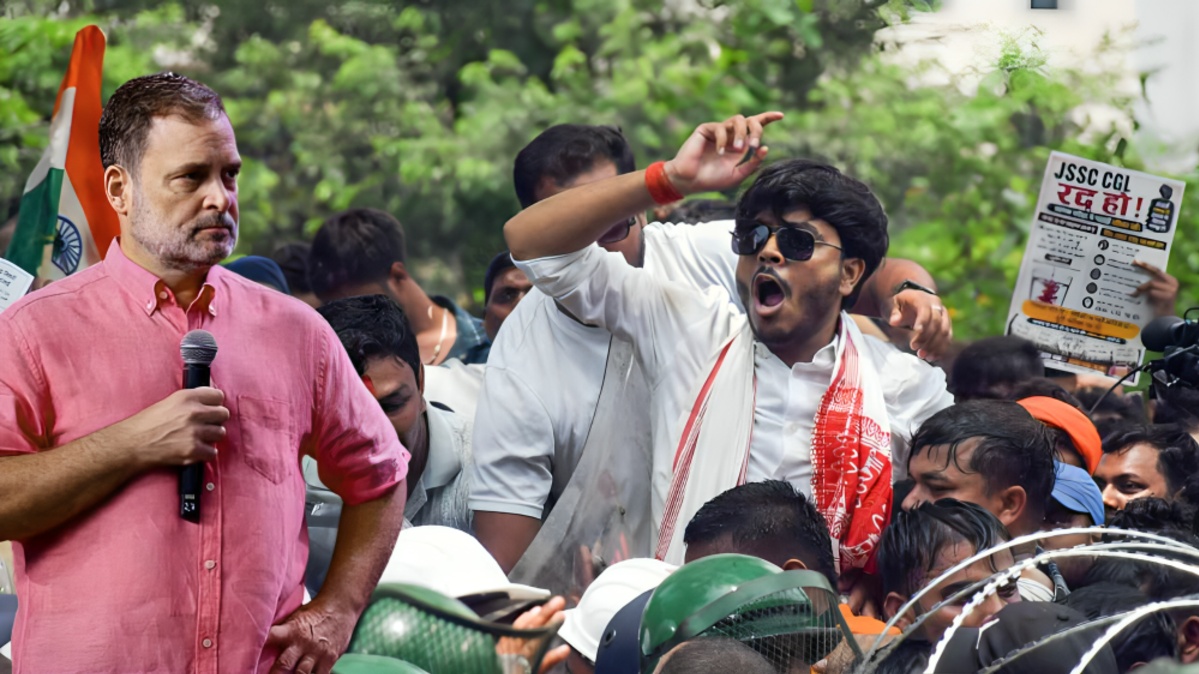
Congress leader and Leader of the Opposition in the Lok Sabha Rahul Gandhi has urged Jharkhand Chief Minister Hemant Soren to personally meet students who are protesting alleged irregularities in recruitment examinations conducted by the Jharkhand Public Service Commission and Jharkhand Staff Selection Commission.
Gandhi made the appeal in a letter dated August 14, which was reported publicly on August 17. In the letter, he highlighted the concerns being raised by students and called for direct engagement with the protesters. He also described their demonstrations as peaceful and emphasised the importance of respecting peaceful protest as part of the democratic process.
The protests in Jharkhand have been continuing over allegations concerning the conduct and results of various recruitment examinations. Students and job aspirants have raised questions about transparency and the recruitment process involving JPSC and JSSC.
The issue has attracted considerable attention because government recruitment examinations are important for thousands of young people preparing for public sector employment. Candidates invest considerable time and resources in preparing for competitive examinations, making transparency and credibility in the examination process a significant concern.
The student agitation has been centred in Ranchi, where protesters have organised demonstrations and sought action from the state government. Their demands have included greater transparency in recruitment examinations and investigations into alleged irregularities. Some student groups have also demanded the cancellation of certain examinations and a Central Bureau of Investigation probe into the allegations. These are demands raised by the protesters and do not by themselves establish that irregularities occurred.
The controversy has also developed into a political issue, with opposition parties criticising the Hemant Soren government over its handling of the protests. At the same time, the state government has attempted to engage with student representatives through discussions.
The Jharkhand government has invited protesting students for another round of talks. Reports indicate that several rounds of discussions have already taken place, although the two sides have not yet reached a final resolution on all the students’ demands. The latest dialogue has been viewed as another effort to find a solution through negotiations.
Rahul Gandhi’s intervention adds another political dimension to the ongoing dispute. Rather than calling for confrontation, he has urged the Chief Minister to meet the students directly and listen to their concerns. His appeal places emphasis on dialogue and finding a solution acceptable to the students and the state administration.
The Congress leader has also expressed solidarity with the protesting students. His position comes at a time when the agitation has continued for several weeks and political pressure on the state government has increased.
The protests have not been limited to a single examination. Students have raised broader concerns about the functioning of recruitment bodies and the transparency of competitive examinations. The JPSC and JSSC conduct examinations that are important routes into government employment in Jharkhand.
The controversy surrounding JPSC examinations has previously involved questions about examination procedures, results and administrative decisions. The issue surrounding the 14th JPSC examination has also received political and public attention, with candidates and political groups demanding greater clarity about the recruitment process.
In recent days, the situation has remained tense. Some protesting students have continued hunger strikes, while student leaders have warned that the agitation could intensify if their concerns are not addressed. At the same time, the government has continued efforts to bring representatives to the negotiating table.
The latest developments indicate that both sides still have an opportunity to resolve the dispute through dialogue. For the students, a transparent recruitment process and clear answers to their allegations remain key concerns. For the government, addressing the issue effectively could help restore confidence among candidates preparing for future examinations.
The controversy also highlights the wider importance of maintaining trust in public recruitment systems. Competitive examinations must be conducted according to established rules, with clear procedures and adequate safeguards. Any allegations of irregularities should be examined through appropriate mechanisms, and verified findings should be communicated clearly to candidates and the public.
Rahul Gandhi’s request for a personal meeting between the Chief Minister and the protesting students comes against this backdrop. A direct meeting could provide an opportunity for both sides to present their positions and discuss possible solutions.
The Jharkhand government’s continuing dialogue with student representatives is therefore being closely watched. Whether the discussions lead to an agreement will depend on the government’s response to the students’ demands and the willingness of protesters to accept a mutually agreed resolution.
For now, the student movement remains focused on recruitment examination concerns involving JPSC and JSSC. Rahul Gandhi has called for direct engagement, while the state government has continued its efforts to hold discussions with the protesters. The coming days are expected to be important in determining whether the ongoing dispute can be resolved through dialogue and whether further protests will take place if the talks fail to satisfy the students