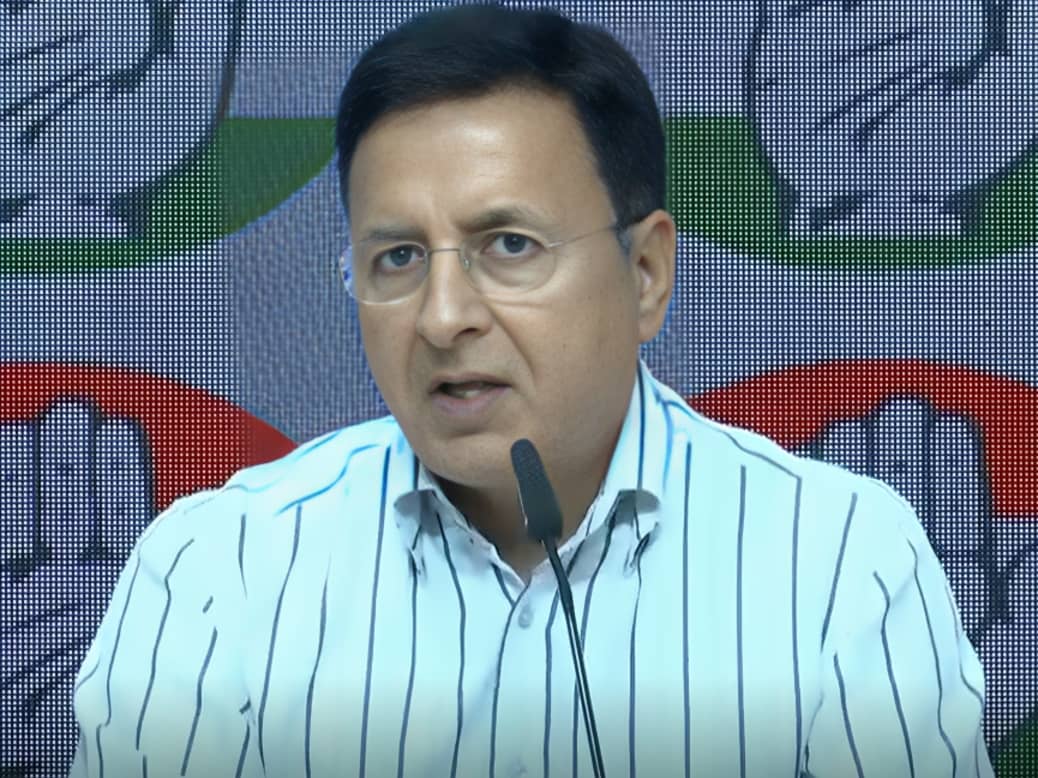

Congress Member of Parliament Randeep Surjewala has submitted an adjournment notice in the Rajya Sabha seeking an urgent discussion on the NEET UG 2026 paper leak controversy and the broader challenges facing the country's examination system. The move comes during the ongoing Monsoon Session of Parliament, where examination reforms and student welfare have emerged as major topics of political debate.
In his notice, Surjewala emphasized the need for Parliament to discuss issues affecting millions of students who appear for competitive examinations every year. He stated that repeated allegations of examination irregularities have raised concerns about the credibility and transparency of the recruitment and admission process.
The Congress leader referred to the NEET UG 2026 paper leak controversy, describing it as a matter of national importance because of its impact on students aspiring to pursue higher education in the medical field. He argued that Parliament should examine the circumstances surrounding such incidents and consider measures to prevent similar occurrences in the future.
Apart from the NEET controversy, Surjewala also raised concerns regarding the Central Board of Secondary Education evaluation process, particularly issues related to the implementation of the on screen marking system. He called for a review of examination evaluation procedures to ensure greater accuracy, consistency, and fairness for students across the country.
The adjournment notice also referred to reports of police action during demonstrations organized by students protesting against examination related issues. Surjewala stated that the concerns expressed by students deserve careful consideration and should be addressed through dialogue and policy reforms.
The Congress leader argued that examination reforms should extend beyond addressing individual incidents of paper leaks. According to him, the country requires a comprehensive framework that strengthens examination security, enhances evaluation systems, improves transparency, and restores public confidence in competitive examinations.
The issue of examination integrity has remained at the center of political discussions in recent months, with several Opposition parties demanding accountability and systemic reforms. Opposition leaders have repeatedly called for debates in Parliament to discuss examination security, recruitment transparency, and measures to protect students from the consequences of examination malpractice.
The Central Government has maintained that it is committed to ensuring the integrity of public examinations. Government representatives have stated that strict legal action is being taken against individuals involved in paper leak cases and that stronger laws and security mechanisms have been introduced to prevent examination related offences.
The government has also emphasized its commitment to protecting the interests of students through improved examination procedures and timely investigations into allegations of malpractice. Measures aimed at strengthening the examination process and enhancing institutional accountability have been highlighted as part of ongoing reforms.
Education experts have noted that examination credibility is essential for maintaining public trust in competitive recruitment and admission systems. They have suggested that continuous improvements in technology, secure examination processes, transparent evaluation methods, and effective oversight mechanisms are necessary to safeguard the interests of students.
As Parliament continues its Monsoon Session, examination reforms are expected to remain an important issue for both the government and the Opposition. Discussions surrounding the NEET UG 2026 controversy, evaluation practices, student welfare, and institutional accountability are likely to continue as lawmakers debate measures to strengthen India's education and examination framework.