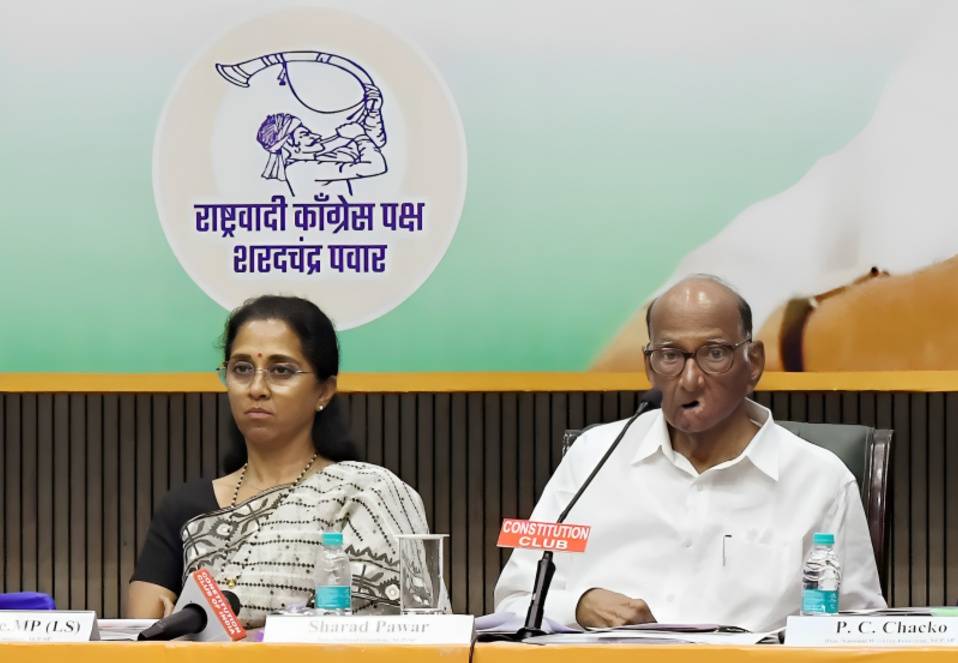
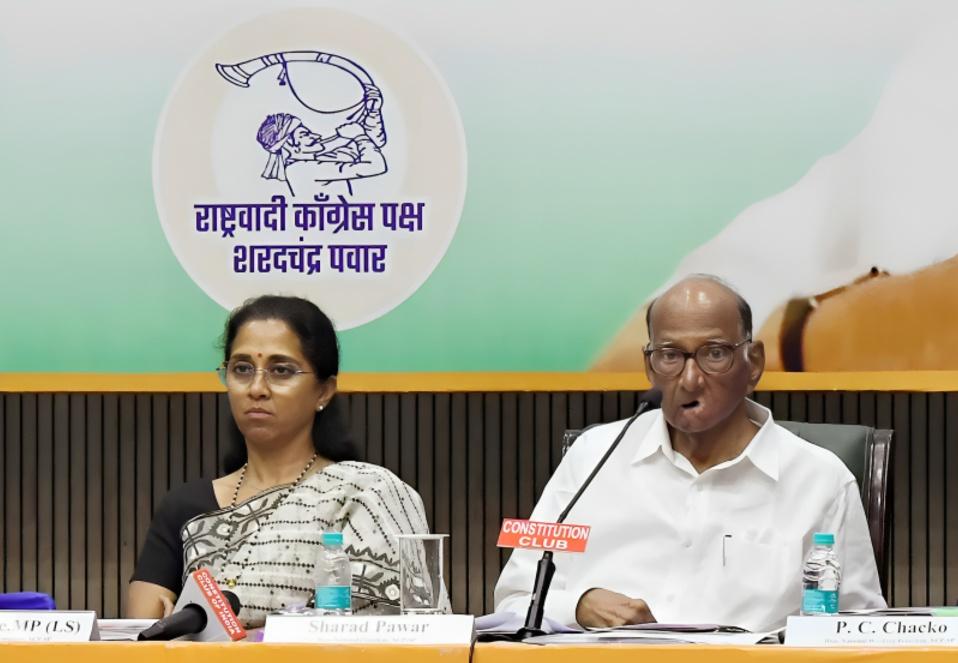
Nationalist Congress Party Sharadchandra Pawar MP Supriya Sule has urged the Central Government to introduce the proposed Delimitation Bill in Parliament, emphasising that lawmakers should have access to its complete provisions before forming an opinion on the legislation.
Speaking to reporters in New Delhi on Wednesday, Sule stated that the proposed legislation could be beneficial and highlighted the importance of examining its contents before political parties begin discussions or announce their respective positions.
Her remarks come amid an ongoing political debate surrounding constituency delimitation and the implementation of women’s reservation in legislative bodies.
Supriya Sule Seeks Full Details of Delimitation Bill
Supriya Sule emphasised that the government should first introduce the proposed Delimitation Bill and provide members of Parliament with an opportunity to examine its provisions.
She suggested that political parties should avoid reaching premature conclusions about the legislation without reviewing its complete contents.
According to Sule, a detailed examination would enable lawmakers to understand the objectives, provisions and potential implications of the proposed legislation.
The NCP SCP leader also expressed optimism that the bill could contain beneficial provisions. However, her remarks did not indicate unconditional support for the proposed legislation.
Her position focused on the importance of informed parliamentary discussion before political parties make their final decisions.
Emphasis on Cooperation Between Government and Opposition
During her interaction with reporters, Supriya Sule highlighted previous instances in which the ruling party and opposition had worked together on legislation concerning national interests.
She indicated that political differences should not prevent constructive discussions on important legislative matters.
Parliamentary cooperation allows lawmakers from different political parties to examine proposed legislation, raise concerns and suggest amendments where necessary.
Such discussions can help identify potential challenges and improve the legislative framework before a bill is considered for approval.
Sule’s remarks emphasised the importance of dialogue between political parties rather than forming conclusions based on incomplete information.
Understanding Constituency Delimitation in India
Delimitation refers to the process of determining or redrawing the boundaries of electoral constituencies based on population data and applicable constitutional provisions.
The process is intended to ensure appropriate electoral representation while accounting for demographic changes across different regions.
Population growth, migration and changes in settlement patterns can influence the distribution of voters across constituencies over time.
Delimitation may involve changes to constituency boundaries and, depending on the applicable legal framework, the allocation of legislative seats.
The process has significant implications for parliamentary representation, state legislative assemblies and the functioning of representative democracy.
Any proposed changes must be examined within the relevant constitutional and statutory framework.
Debate Over Women’s Reservation
The discussion surrounding the proposed Delimitation Bill has gained importance because of its connection with the implementation of women’s reservation in legislative bodies.
The Constitution Amendment Act of 2023 provides for one third reservation for women in the Lok Sabha, state legislative assemblies and the Legislative Assembly of Delhi.
Under the constitutional provisions, implementation is linked to a delimitation exercise conducted after the publication of relevant figures from the first census undertaken following the commencement of the amendment.
The relationship between women’s reservation, census data and constituency delimitation has generated discussions among political parties regarding the implementation timeline and electoral representation.
Lawmakers have an important role in examining how any proposed legislation would operate within the existing constitutional framework.
The complete provisions of the proposed Delimitation Bill were not included in the available information.
Concerns Regarding Representation Across States
Delimitation has also been a subject of wider political discussion because of differences in population growth across Indian states.
Some states have expressed concerns that population based changes in parliamentary representation could affect their relative political influence.
Other perspectives emphasise the importance of ensuring that electoral representation reflects demographic realities and changes in population distribution.
These competing considerations highlight the complexity of determining an appropriate framework for constituency delimitation.
Any proposed legislation would require careful examination of its implications for federal representation, electoral equality and the interests of different states.
However, the specific measures that may be included in the proposed bill remain unclear from the information provided.
Importance of Parliamentary Scrutiny
Parliamentary scrutiny plays an important role in examining proposed laws and their potential consequences.
Members of Parliament can raise questions, identify concerns and recommend changes during the legislative process.
Making the complete text of a bill available allows lawmakers to assess its legal provisions, administrative requirements and possible effects on citizens.
Depending on parliamentary decisions, proposed legislation may also undergo examination by an appropriate parliamentary committee.
Supriya Sule’s request for the government to introduce the bill reflects her stated preference for examining its contents before determining whether to support or oppose it.
Her remarks highlight the distinction between constructive legislative scrutiny and opposition to a proposal whose complete details are not yet available.
Further Developments Awaited on Delimitation Bill
Supriya Sule has called for the proposed Delimitation Bill to be introduced in Parliament so that lawmakers can examine its provisions and participate in informed discussions.
She has also highlighted the possibility of cooperation between the government and opposition on legislation serving the national interest.
The available information does not specify the date on which the government intends to introduce the bill or provide details regarding its proposed provisions.
Further clarity is expected once the government makes the legislative text available and outlines its objectives.
The subsequent parliamentary discussions will help determine the positions of political parties and provide a clearer understanding of the proposed legislation’s implications for electoral representation and women’s reservation.