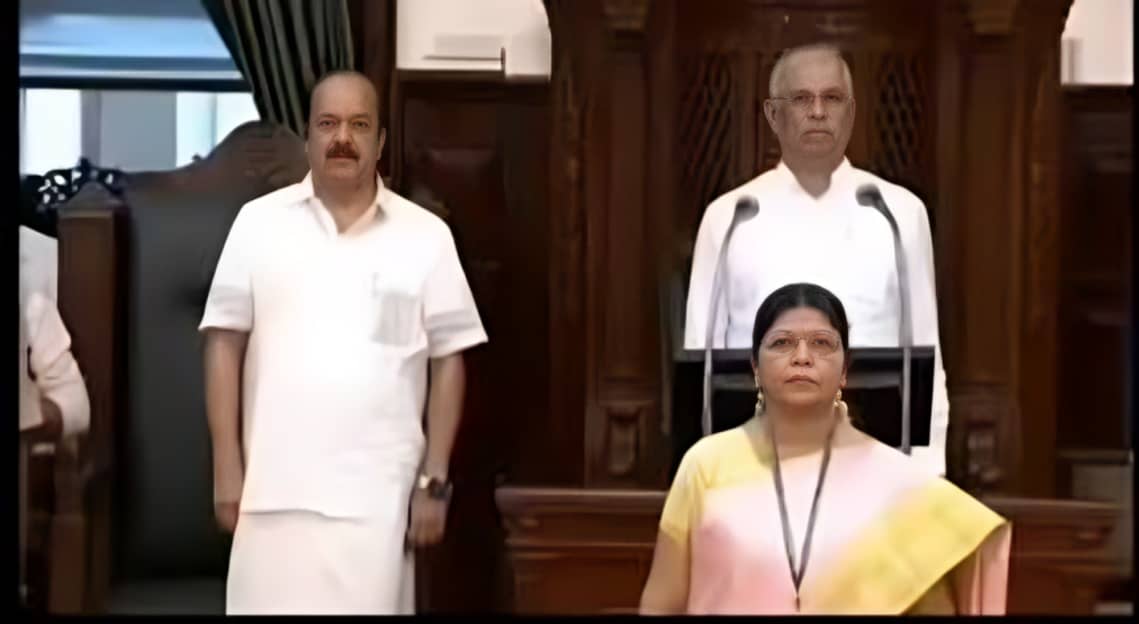
The Tamil Nadu government has decided to mandate the singing of Tamil Thai Vazhthu at official state government events, giving the state song a formal place at government programmes.
Tamil Thai Vazhthu is a widely recognised Tamil cultural song and is traditionally performed at the beginning of official functions in Tamil Nadu. The latest decision seeks to provide a formal framework for its observance at government events across the state.
According to the information available, a resolution was introduced to make Tamil Thai Vazhthu the opening song at official state programmes. The proposal was reported to have received support from legislators across party lines, highlighting the significance attached to the song and Tamil linguistic identity.
Under the proposed arrangement, Tamil Thai Vazhthu will be sung at the beginning of official functions organised by the Tamil Nadu government. The decision is expected to apply to government programmes and other official state events covered by the order.
The move has cultural as well as administrative significance. Tamil Nadu has a strong linguistic identity, and Tamil has played a central role in the state's cultural, literary and social history. Tamil Thai Vazhthu has consequently become closely associated with public and government functions in the state.
The government's decision also comes in the context of discussions over the observance of national and state songs at official programmes. The Union Home Ministry has issued guidance concerning the protocol for national and state anthems and songs, making the issue relevant to government functions across India.
The Tamil Nadu government's decision seeks to establish a clear practice for the use of Tamil Thai Vazhthu during official state events. Supporters of the move have described it as an acknowledgement of Tamil language and culture and an expression of the state's identity.
The resolution's reported support across political parties is also significant. Matters relating to language and cultural identity can often generate political debate, but the reported backing for the resolution indicates broad legislative support for giving the state song a formal place at government functions.
Tamil Thai Vazhthu was written by Manonmaniam Sundaranar as part of his Tamil literary work. The song has subsequently become an important symbol of Tamil linguistic and cultural identity. Its performance at official programmes has been a longstanding practice in the state.
The formalisation of the practice could bring greater consistency to government events. Officials organising state functions will have a clear protocol regarding the position of Tamil Thai Vazhthu in the programme.
The decision is also expected to reinforce the importance of Tamil in public administration and official occasions. For many people in Tamil Nadu, the language represents an important part of the state's historical and cultural identity.
At the same time, the implementation of any government resolution will depend on the precise wording of the order and the categories of events to which it applies. Government departments and officials may receive detailed instructions on how the new protocol should be followed.
The development comes at a time when questions surrounding language, cultural identity and the relationship between state and national symbols continue to attract public attention in Tamil Nadu. The state has historically maintained a strong focus on protecting and promoting the Tamil language.
The decision to mandate Tamil Thai Vazhthu at official state programmes therefore carries significance beyond the ceremonial practice itself. It represents an effort to formally recognise a cultural tradition within the functioning of the state government.
Further details are expected to emerge through the government's official order, including the specific events covered by the mandate and the protocol to be followed during such programmes.
For now, the key development is the Tamil Nadu government's decision to give Tamil Thai Vazhthu a formal place at official state events. The move is expected to ensure that the song is performed at the beginning of covered government programmes while reinforcing its role as an important symbol of Tamil linguistic and cultural identity.