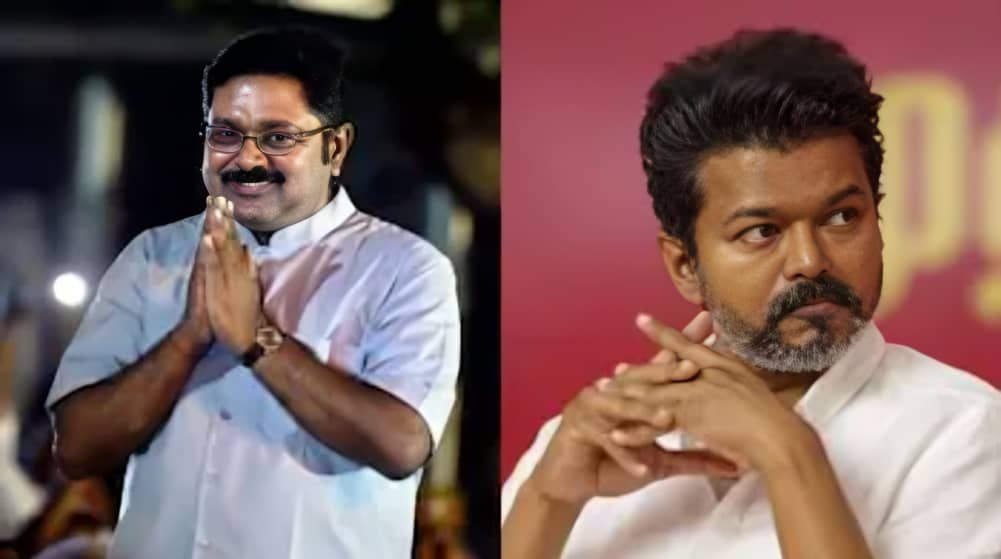
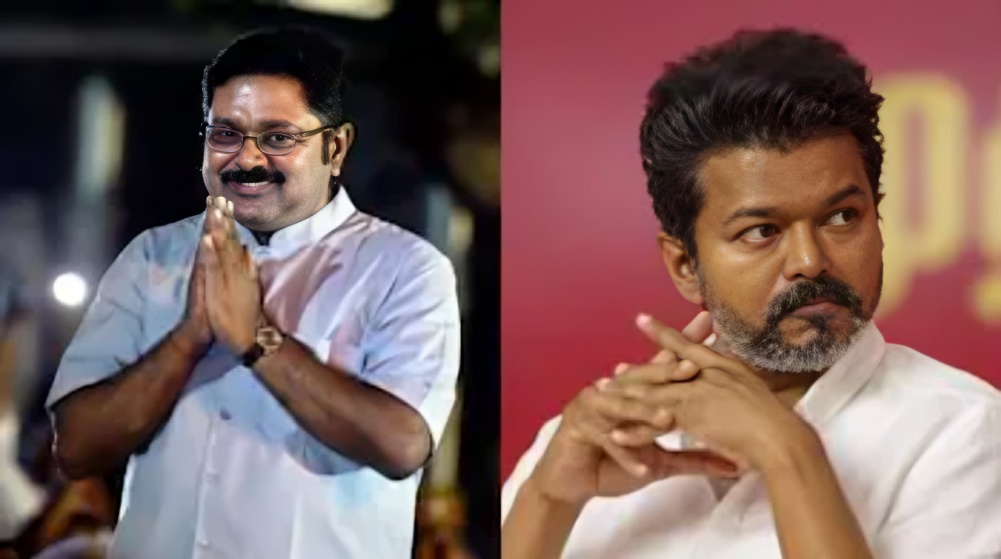
Political tensions have intensified in Tamil Nadu after Amma Makkal Munnetra Kazhagam leader T. T. V. Dhinakaran strongly criticised Tamilaga Vettri Kazhagam and its leader Vijay over recent developments related to government formation in the state. The controversy has sparked widespread political debate and renewed discussions about alliance politics, democratic procedures and emerging political movements in Tamil Nadu.
The latest political confrontation began after reports suggested that TVK chief Vijay had staked claim to form the government. Following these reports, Dhinakaran accused the party of engaging in political horse trading to gain support from legislators. He described the alleged developments as a “mockery of democracy” and claimed that such political practices weaken democratic institutions and constitutional values.
Dhinakaran further urged the Governor to invite AIADMK general secretary Edappadi K. Palaniswami to form the government instead. According to him, the AIADMK remains one of the strongest political parties in Tamil Nadu and should be considered based on legislative strength and democratic conventions. He stressed that government formation should follow constitutional norms and transparent political procedures.
The allegations have triggered strong reactions across political circles in Tamil Nadu. Supporters of TVK have rejected the accusations and stated that the party is working democratically within the political framework. TVK leaders have consistently maintained that the party aims to provide an alternative political vision focused on governance reforms, youth participation and public welfare.
Since actor Vijay formally launched Tamilaga Vettri Kazhagam, the party has gained significant attention among younger voters and urban populations. Political analysts believe that TVK’s growing influence has started reshaping political discussions in the state. The emergence of new political movements has increased competition among established parties and created fresh electoral calculations ahead of future elections.
Political observers note that allegations of horse trading often arise during periods of political uncertainty or leadership contests. Such claims usually attract public attention because they involve concerns regarding political ethics, legislative stability and democratic accountability. Experts say the Governor’s role becomes particularly important in ensuring constitutional procedures are followed during any government formation process.
Meanwhile, the AIADMK has also been closely watching the political developments. Senior party leaders have reiterated that constitutional guidelines must be respected in any decision related to forming the government. Political experts believe the current controversy may influence future alliance discussions and political strategies in Tamil Nadu.
Tamil Nadu politics has historically been dominated by major Dravidian parties, but the rise of newer political formations such as TVK has introduced a changing political dynamic. Analysts believe younger voters are increasingly open to alternative political leadership, leading to a more competitive political environment in the state.
Public discussions surrounding the controversy have also gained momentum on social media platforms, where supporters of different parties continue to debate the allegations and political implications. Many political observers believe that the developments could shape public perception ahead of future electoral contests.
As the political situation continues to evolve, attention remains focused on the responses from TVK leadership, the Governor’s constitutional role and the reactions of other political parties. The ongoing debate is expected to play a significant role in shaping Tamil Nadu’s political narrative in the coming months.
Overall, the controversy has added fresh intensity to the state’s political atmosphere and highlighted the increasing competition between traditional parties and emerging political movements.