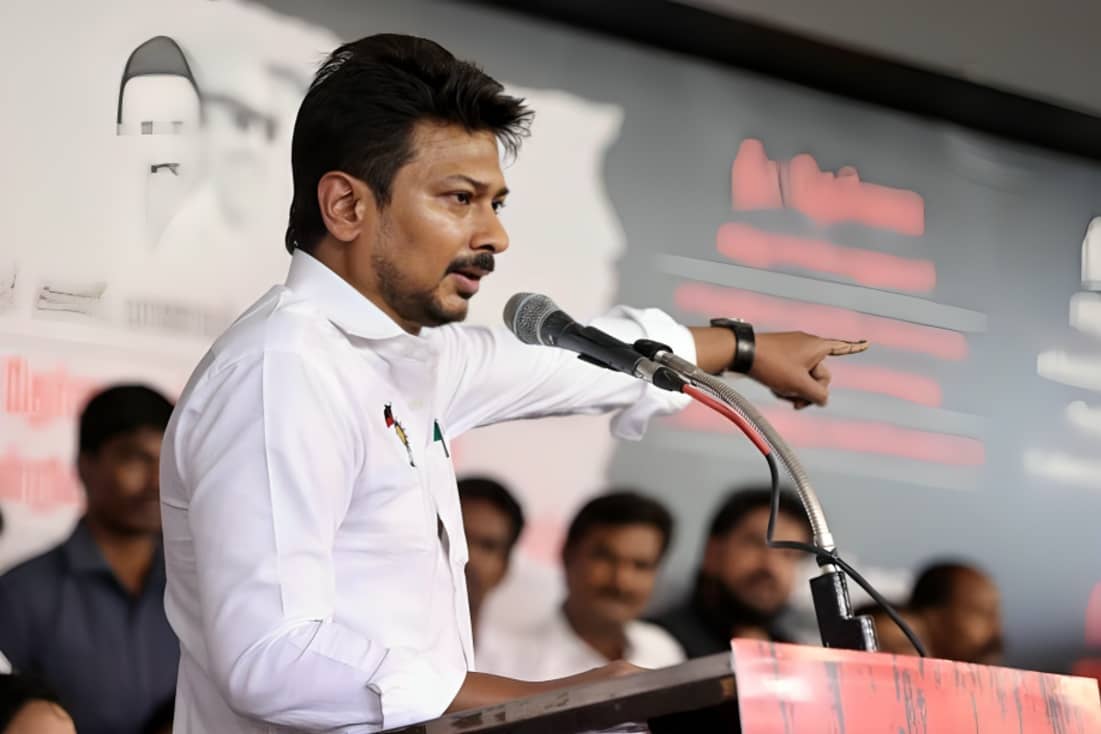

DMK Leader of Opposition Udhayanidhi Stalin has extended his party’s support to the Tamil Nadu government’s resolution opposing the proposed delimitation exercise. He said Tamil Nadu’s representation in the Lok Sabha should not be reduced as part of any future redistribution of parliamentary constituencies.
The issue of delimitation has become an important political subject in Tamil Nadu, particularly among parties that are concerned about the possible impact of population based redistribution of Lok Sabha seats. The state government and several political parties have argued that states that have successfully implemented population control measures should not be disadvantaged through a reduction in their parliamentary representation.
Udhayanidhi Stalin said the number of Members of Parliament representing Tamil Nadu should remain protected and called for the proposed exercise to be postponed for 25 years. His position is in line with the broader demand in Tamil Nadu for a fair delimitation process that does not reduce the political representation of southern states.
The resolution has also received support from the Tamilaga Vettri Kazhagam, which has been raising concerns over the possible consequences of delimitation. The issue has brought different political groups in Tamil Nadu together around the demand that the state’s existing representation should not be reduced.
Delimitation refers to the process of redrawing the boundaries of electoral constituencies and determining the distribution of seats based on constitutional provisions and population data. The next delimitation exercise has become particularly significant because of the expected role of population figures in determining future parliamentary representation.
Tamil Nadu has historically invested heavily in population control, education, healthcare and social development. Political leaders in the state argue that reducing parliamentary representation because of lower population growth could create a disadvantage for states that implemented population stabilisation measures earlier.
The debate is not limited to Tamil Nadu. Several southern states have expressed similar concerns about maintaining their political representation during the future delimitation process. The issue has therefore developed into a broader discussion about federalism, equitable representation and the balance between population and political representation.
Udhayanidhi Stalin’s support for the resolution indicates that the DMK intends to continue its opposition to any delimitation exercise that could reduce Tamil Nadu’s representation in Parliament. He has argued that the state should not lose Lok Sabha seats because of its demographic achievements.
The demand for a 25 year postponement is aimed at providing more time for political discussions and for arriving at a framework acceptable to different states. Supporters of the proposal believe that any changes to parliamentary representation should take into account factors beyond population alone.
The delimitation debate has gained renewed attention as political parties prepare for discussions about the future composition of Parliament. The issue is particularly sensitive because changes in the number of Lok Sabha constituencies could influence the political balance between different regions of the country.
Tamil Nadu currently has 39 Lok Sabha constituencies. Political leaders in the state have repeatedly raised concerns that a population based delimitation could alter the distribution of seats between northern and southern states. Earlier parliamentary discussions have also reflected concerns about the possible reduction of representation for southern states.
At the same time, supporters of delimitation argue that electoral constituencies should reflect changes in population and ensure broadly equal representation among citizens. The constitutional framework governing delimitation and the timing of the next exercise remain central to the wider national discussion.
The debate therefore involves two competing principles. One is the need to ensure representation based on population, while the other is the concern that states should not be politically penalised for implementing successful population control policies.
Tamil Nadu’s political leadership has maintained that both principles can be balanced through a carefully designed delimitation process. The state has therefore sought discussions among political parties and other southern states to develop a common position.
Udhayanidhi Stalin’s latest statement adds further political weight to the Tamil Nadu government’s position. By supporting the resolution and calling for a 25 year delay, he has reiterated that protecting the state’s parliamentary representation remains a major political priority.
The issue is expected to remain a subject of political discussion in Tamil Nadu and at the national level. Any future delimitation exercise will require detailed consideration of constitutional provisions, population data and the concerns raised by different states.
For now, the Tamil Nadu government and its political supporters are seeking assurances that the state’s Lok Sabha representation will not be reduced because of the delimitation process. The coming discussions are likely to determine how the concerns of Tamil Nadu and other southern states are addressed within the national framework.