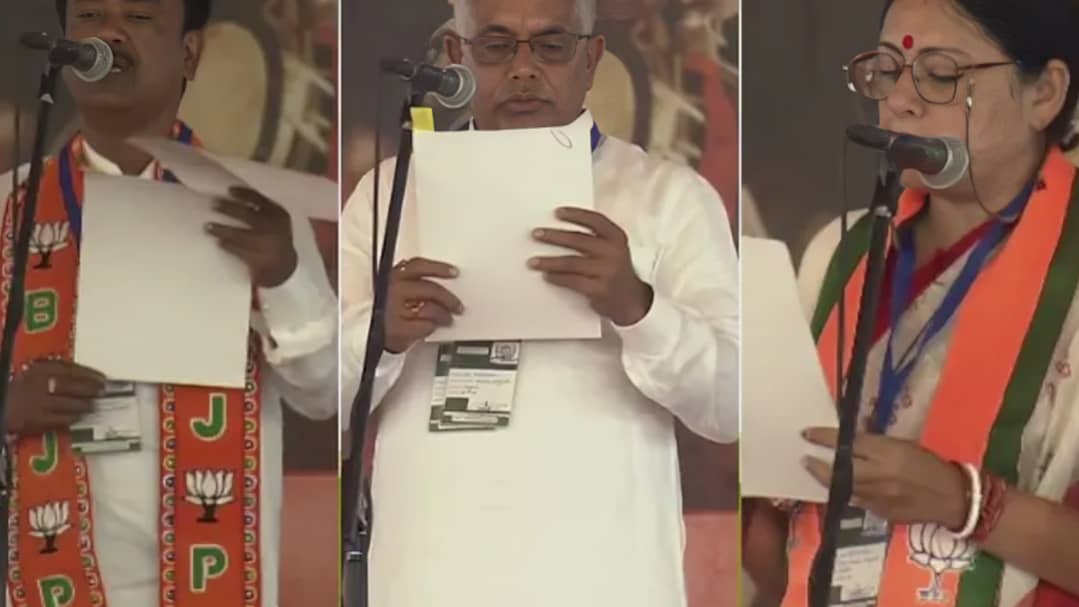
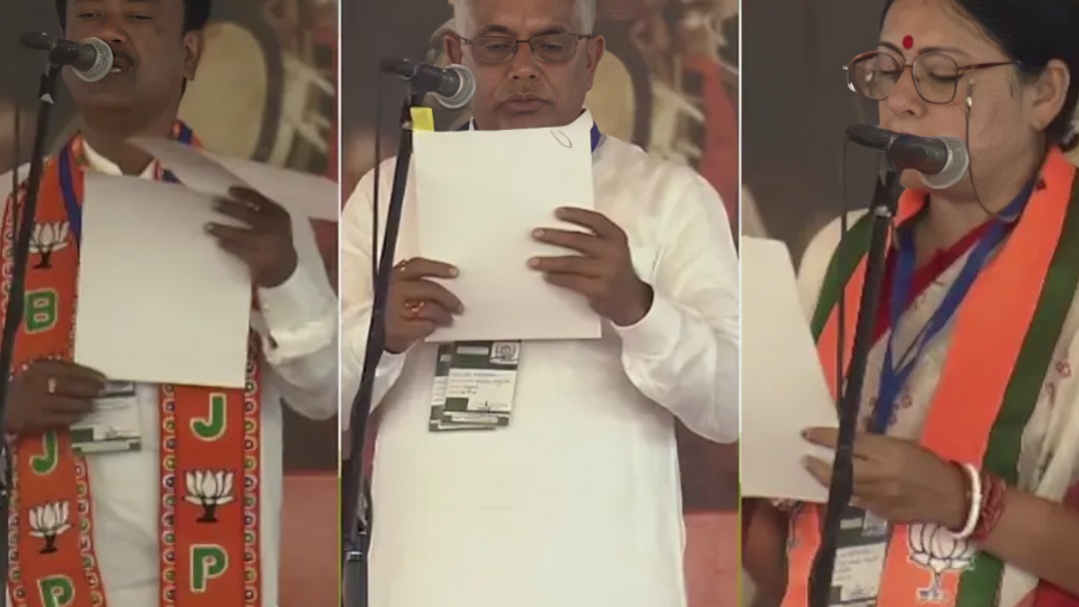
The West Bengal government witnessed a significant political development on Monday as Chief Minister Suvendu Adhikari expanded his cabinet with the induction of 35 new ministers. The swearing in ceremony was held at Nabanna, the state secretariat, where Governor R. N. Ravi administered the oath of office and secrecy to the newly appointed ministers.
With the latest expansion, the total strength of the West Bengal Council of Ministers has risen to 41 members. The development marks one of the largest cabinet expansions in the state in recent years and is expected to play an important role in the administration's governance agenda.
The expansion follows the formation of the new government earlier this month. On May 9, Chief Minister Suvendu Adhikari and five other Bharatiya Janata Party legislators were sworn in after the formation of the government. Since then, political observers had been closely watching the composition of the full cabinet and the distribution of ministerial responsibilities.
According to constitutional provisions, the West Bengal Legislative Assembly is permitted to have a maximum of 44 ministers, including the Chief Minister. With 41 ministers now in office, the government remains within the constitutional limit while ensuring representation from different regions and communities across the state.
Political analysts believe that cabinet expansions often serve multiple purposes, including improving administrative efficiency, ensuring regional representation and strengthening coordination between various departments. The inclusion of additional ministers is expected to help the government manage a wide range of policy areas and public welfare initiatives more effectively.
The newly inducted ministers are expected to be assigned portfolios covering sectors such as education, health, agriculture, industry, infrastructure, transport, rural development and social welfare. Official announcements regarding portfolio allocations are anticipated in the coming days.
The expansion is also viewed as an effort to balance political representation within the ruling party. Cabinet formation is often a crucial exercise that takes into account experience, legislative performance, regional interests and administrative requirements. The government is expected to utilize the expanded team to accelerate decision making and implement key development projects across the state.
Political reactions to the cabinet expansion have started emerging from both ruling and opposition parties. Supporters of the government have described the move as a step toward strengthening governance and improving service delivery. Opposition parties, meanwhile, are expected to closely monitor the performance of the newly constituted cabinet and its policy decisions.
The swearing in ceremony was attended by senior government officials, elected representatives and party leaders. The event marked a major milestone in the formation of the new administration and signaled the beginning of a broader governance framework under the current leadership.
West Bengal remains one of India's most politically significant states, and developments within its government often attract national attention. The expanded cabinet is expected to focus on economic growth, infrastructure development, employment generation and public welfare programmes in the months ahead.
As the new ministers assume their responsibilities, attention will now shift to policy implementation and the government's priorities for the remainder of its term. The effectiveness of the expanded cabinet will be closely watched by political observers, stakeholders and citizens across the state.