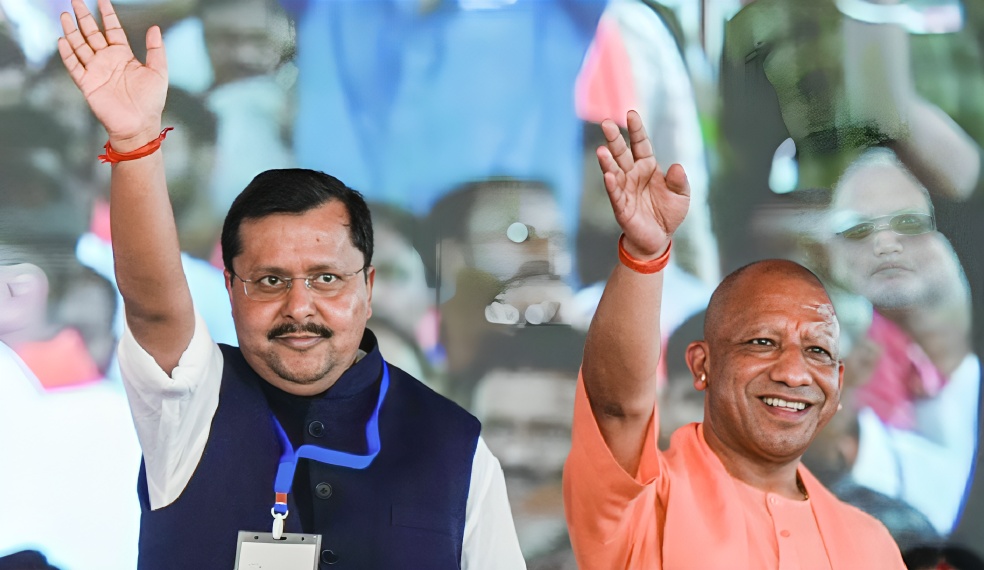
The Uttar Pradesh government led by Chief Minister Yogi Adityanath has expanded its cabinet in a move widely seen as part of the Bharatiya Janata Party’s long-term electoral strategy ahead of the 2027 Assembly elections in the state.
According to political observers, the cabinet expansion focuses heavily on providing representation to smaller caste groups within the Other Backward Classes and Scheduled Caste communities. Analysts believe the BJP is attempting to strengthen its support base by building what is often described as a micro-social coalition strategy.
The newly expanded cabinet is understood to reflect both caste and regional balancing. Leaders from different geographic areas and social backgrounds have reportedly been included in an effort to widen the party’s appeal across Uttar Pradesh. The BJP leadership has consistently emphasized social representation as an important component of its political planning in the state.
Political experts note that Uttar Pradesh remains one of the most politically significant states in India, and decisions taken by the ruling party there often carry national importance. The BJP has maintained a strong electoral presence in the state in recent years and is expected to continue focusing on social coalition building to retain voter support.
The latest cabinet expansion is also being viewed as a political response to the outreach efforts of opposition leaders, particularly Akhilesh Yadav. The Samajwadi Party has been actively promoting broader social alliances and attempting to consolidate support among backward classes, Dalits and minority communities through its political campaigns.
Observers believe the BJP’s renewed attention toward smaller caste groups is aimed at countering opposition attempts to reshape the state’s social and electoral equations. By expanding representation among underrepresented communities, the ruling party hopes to maintain its influence across both urban and rural constituencies.
The cabinet reshuffle has generated extensive political discussion in Uttar Pradesh, with leaders from different parties interpreting the move in different ways. BJP representatives described the expansion as a reflection of inclusive governance and balanced representation. Party leaders stated that the government remains committed to development, welfare programmes and social justice initiatives across all sections of society.
Opposition parties, however, argued that the expansion was politically motivated and linked directly to electoral calculations ahead of the next Assembly elections. Critics claimed that caste representation alone would not address concerns related to unemployment, inflation and rural development.
Political analysts say caste dynamics continue to play a major role in Uttar Pradesh politics, influencing both candidate selection and electoral strategy. Major political parties often attempt to build alliances among various social groups to maximize voter support during elections.
The BJP’s focus on micro-caste outreach has been visible in previous elections as well, where the party sought support from non-dominant OBC and Dalit communities in addition to its traditional voter base. Analysts believe the latest cabinet expansion indicates that the party intends to continue this approach in the lead-up to 2027.
The move has also triggered discussions about future electoral alliances, regional leadership dynamics and campaign strategies in Uttar Pradesh. Political activity in the state is expected to intensify over the next several months as parties begin preparations for upcoming elections.
With Uttar Pradesh continuing to remain central to national politics, the latest cabinet expansion is likely to influence political debates not only within the state but also at the national level.