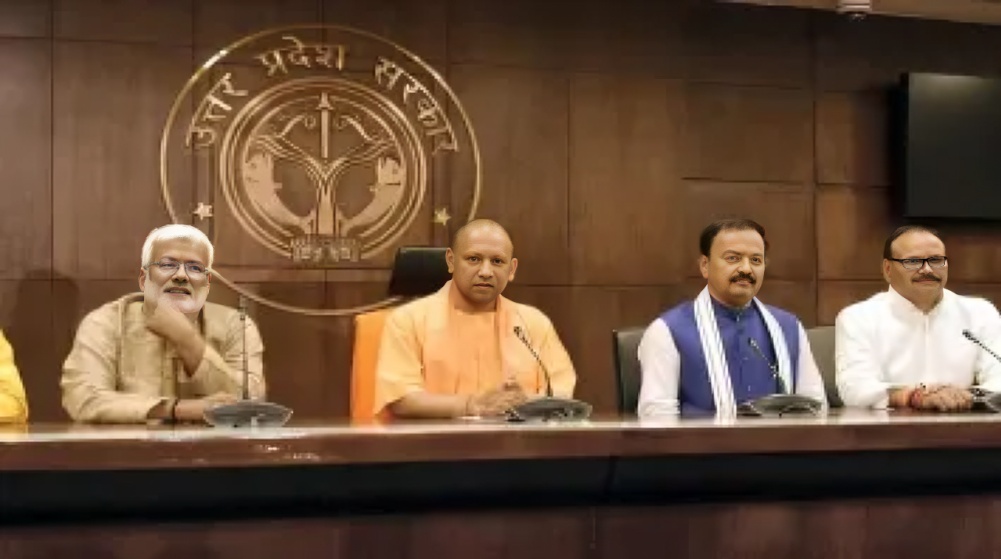
Yogi Adityanath has reinforced his leadership position in the state government following the recent expansion of the Uttar Pradesh cabinet. The allocation of portfolios after the cabinet reshuffle indicates a clear emphasis on maintaining continuity, stability and administrative control as the state moves closer to the next Assembly elections.
According to political observers, the latest cabinet expansion was carefully planned to accommodate new faces while ensuring that the overall balance of power within the government remains unchanged. Several ministers were given responsibilities in different departments, but key portfolios continue to remain under the direct control of the Chief Minister.
Important departments linked to governance, administration and policy implementation have reportedly been retained by Yogi Adityanath, reflecting the Bharatiya Janata Party leadership’s confidence in his administrative style and political authority. Analysts believe this move is intended to avoid major disruptions within the party structure and maintain consistency in government functioning ahead of crucial political developments.
The cabinet expansion also aimed to provide representation to different social and regional groups across Uttar Pradesh. Political experts say such adjustments are common ahead of elections, as parties attempt to strengthen their support base among various communities and regions.
Despite the induction of new ministers, the portfolio allocation suggests that the BJP leadership does not want any major shift in the administrative setup at this stage. Maintaining continuity in governance is considered important as the government continues to focus on infrastructure projects, welfare schemes and law and order initiatives across the state.
The development comes at a politically significant time for the BJP in Uttar Pradesh, which remains one of the most important states in Indian politics. The party is expected to intensify preparations for future elections, and political stability within the government is viewed as a major priority.
Sources within the party indicate that the leadership wanted to balance political representation without creating competing power centres inside the cabinet. By retaining major departments, the Chief Minister continues to play a central role in policy decisions and administration.
Opposition parties, however, have criticised the cabinet allocation, claiming that the reshuffle has not brought significant changes in governance. Some opposition leaders argued that concentrating key departments under the Chief Minister reflects excessive centralisation of power within the administration.
Supporters of the government, on the other hand, have defended the move by stating that continuity in leadership is necessary for the successful implementation of development projects and welfare programmes. They argue that stable governance is essential as the state handles major infrastructure and economic initiatives.
Political analysts believe the cabinet expansion reflects a broader electoral strategy by the BJP to maintain organisational discipline and avoid internal conflicts before the Assembly elections. The leadership appears focused on presenting a united and stable image to voters while continuing administrative operations without interruption.
As Uttar Pradesh prepares for the next phase of political activity, the performance of the expanded cabinet and the functioning of the government under Yogi Adityanath are expected to remain under close public and political scrutiny in the coming months.