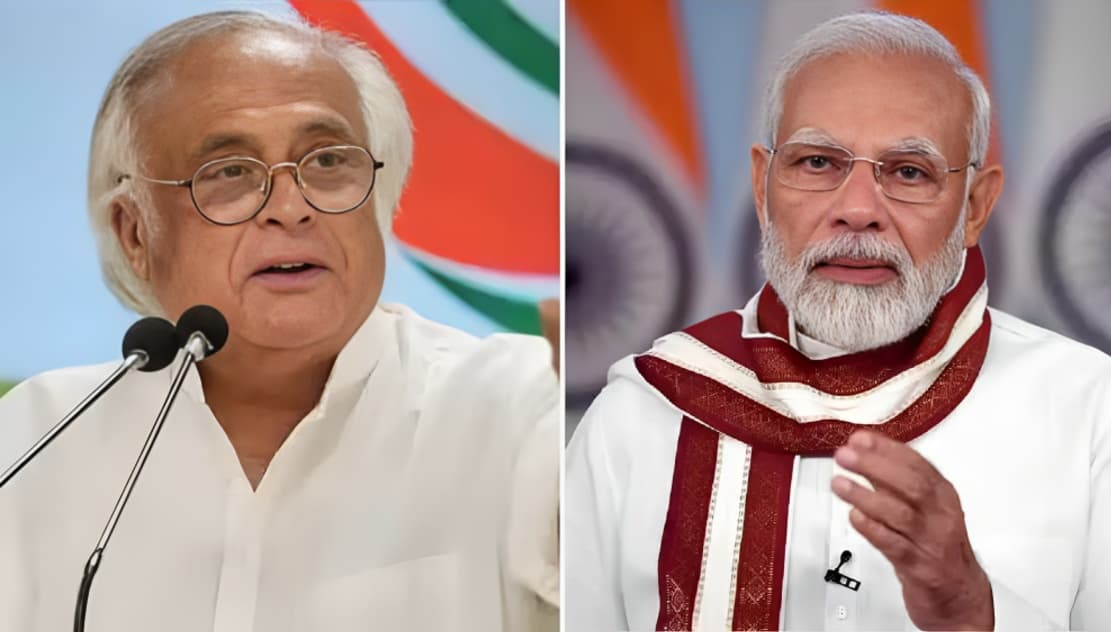
Jairam Ramesh Criticises Modi Government, Cites Varanasi and Nagpur Election Results
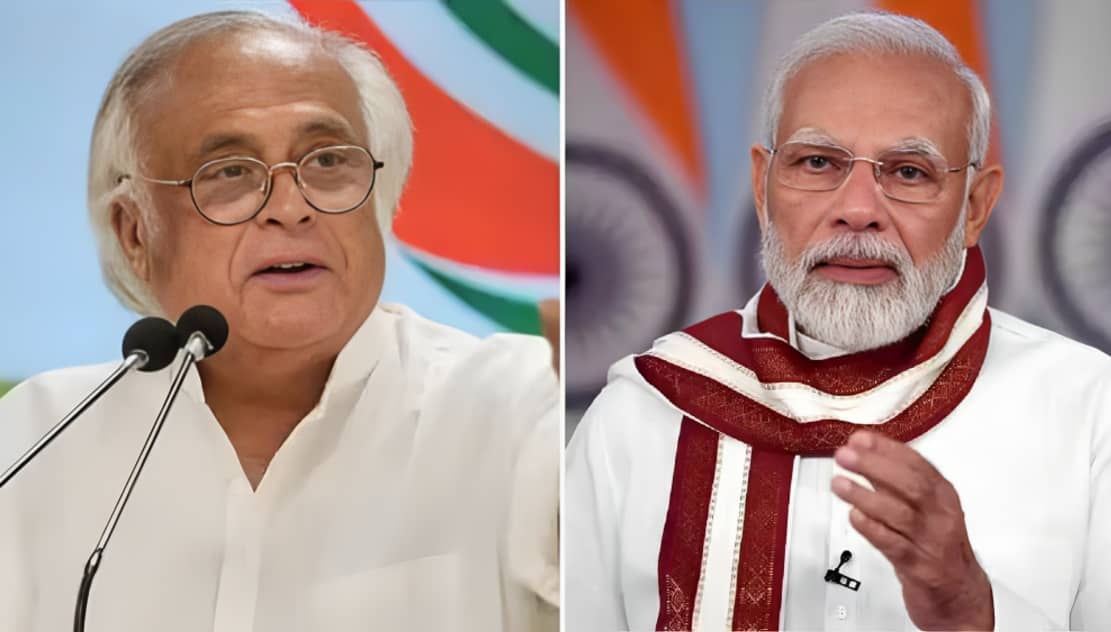
Congress leader Jairam Ramesh has criticised Prime Minister Narendra Modi and the BJP-led Central Government over unemployment, inflation and private investment. Referring to reported electoral setbacks for the Bharatiya Janata Party in Varanasi and Nagpur, Ramesh argued that the results reflected public dissatisfaction with the government's policies.
In a post on X, the Congress leader urged Modi to reflect on the party's electoral performance rather than focus on criticising the Congress. He referred to the reported BJP defeats in two constituencies in Varanasi, the Prime Minister's parliamentary constituency, and the Congress victory in Nagpur, which he described as a stronghold of the Rashtriya Swayamsevak Sangh.
Ramesh used these results to question the BJP's political position and argue that voters were expressing concerns about the government's performance. He described the electoral outcomes as a message of no confidence in the policies pursued by the ruling party. This was his political interpretation of the results rather than a formal parliamentary motion or an official declaration by voters as a whole.
The Congress leader also highlighted three major economic concerns: rising prices, unemployment and the performance of private investment. He argued that millions of families were struggling with the rising cost of living and that young people continued to face difficulties finding employment. He further questioned whether private investment was growing sufficiently to support economic activity and create jobs.
Inflation remains an important issue in public debate because increases in the prices of food, housing, transport and other essential goods can affect household budgets. For families with limited incomes, rising expenses may reduce their ability to save or spend on education, healthcare and other needs. Ramesh's remarks placed these concerns at the centre of his criticism of the government.
Unemployment is another major political and economic issue in India. Job creation, employment quality and opportunities for young people are often key concerns during elections. Ramesh argued that the government should focus more closely on these challenges rather than concentrating on political attacks against the opposition. However, a complete assessment of employment conditions requires reference to official labour statistics and other reliable economic data.
The Congress leader also questioned the level of private investment in the economy. Private investment can support industrial expansion, infrastructure development, innovation and employment generation. Businesses make investment decisions based on factors such as demand, financing costs, policy certainty and expected returns. Ramesh's comments reflected his view that the government should pay greater attention to conditions affecting investment and economic growth.
In his post, Ramesh also referred to electoral outcomes in Lucknow, Prayagraj and Patna. He presented these results alongside the developments in Varanasi and Nagpur to support his argument that the BJP should reassess its political approach. His comments were aimed at challenging the ruling party's interpretation of its electoral position and drawing attention to issues that the opposition believes are important to voters.
Varanasi holds particular political significance because Narendra Modi represents the constituency in the Lok Sabha. Ramesh's reference to the reported BJP losses in two constituencies there was intended to question the party's performance in an area closely associated with the Prime Minister. His reference to Nagpur similarly sought to highlight the Congress's reported success in a location he described as an RSS stronghold.
The electoral outcomes mentioned in the statement should be understood in their specific constituency and election context. Results in individual seats can reflect local issues, candidate selection, voter turnout, party organisation and the concerns of particular groups of voters. They do not automatically establish the views of the entire electorate or determine the outcome of future elections.
The exchange also reflects the continuing political rivalry between the Congress and the BJP. The two parties regularly debate the government's economic record, public policy decisions and electoral performance. While the BJP highlights its governance agenda and development initiatives, the Congress has frequently raised concerns about employment, prices and economic opportunities.
Ramesh's remarks add to this political debate by urging the Prime Minister to reconsider the government's approach. His statement suggests that the opposition believes economic issues could influence public opinion and future electoral contests. The BJP's response, if any, would provide additional context to the political exchange.
For voters, questions about the cost of living, employment and investment remain important subjects for public discussion. Assessing the government's performance on these issues requires reliable data, policy details and comparisons over time. Political statements can highlight concerns, but they should be distinguished from independently verified economic findings.
The controversy is likely to continue as political parties interpret election results and present their arguments about public sentiment. Ramesh has used the reported outcomes in Varanasi and Nagpur to press his criticism of the BJP, while also urging greater attention to economic challenges faced by households and young people.
The central issue raised by the Congress leader is whether the government is responding adequately to concerns about inflation, employment and private investment. His comments underline how local election results can become part of a wider national debate over economic performance and political accountability.