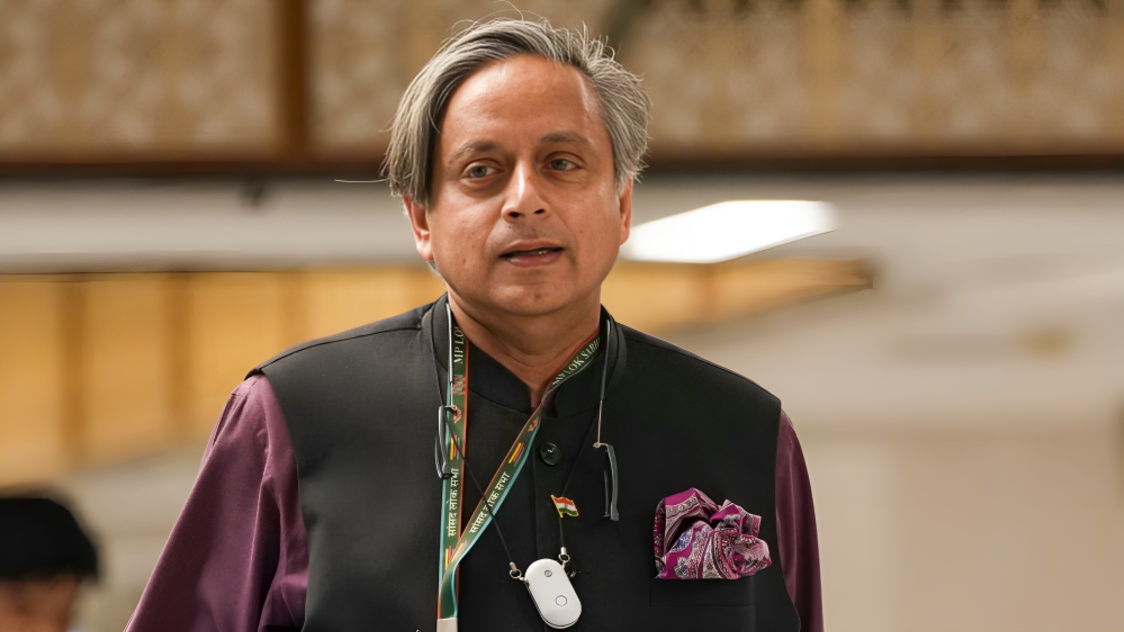
Shashi Tharoor Criticises Removal of Raihan Vadra’s Photographs from Delhi Exhibition
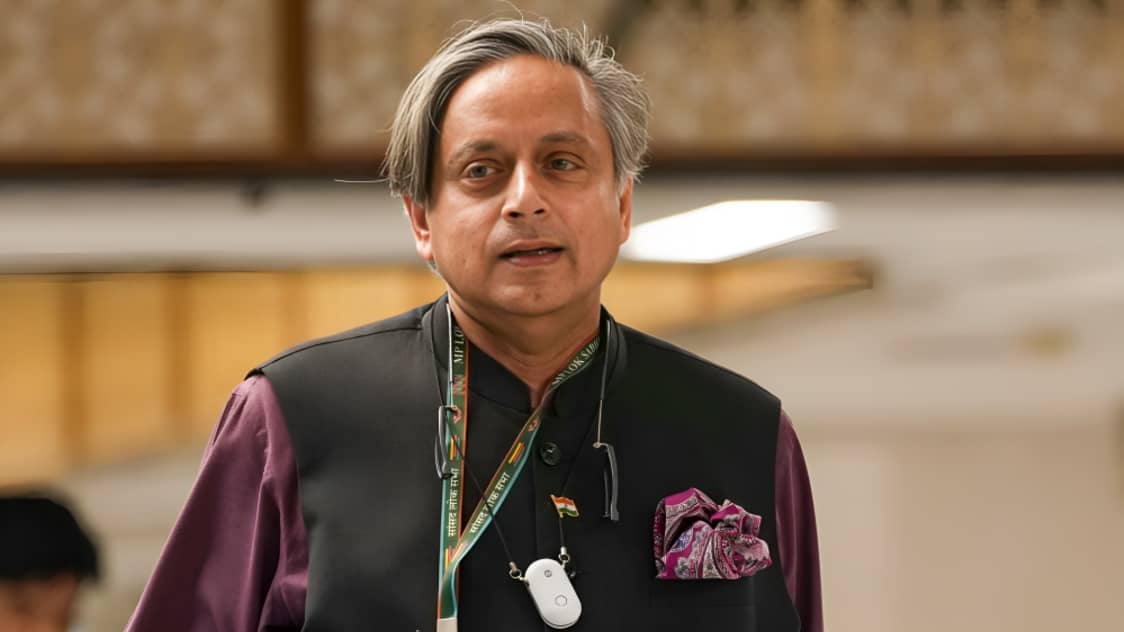
Senior Congress leader Shashi Tharoor has criticised the removal of photographs from visual artist Raihan Vadra’s exhibition at Bikaner House in New Delhi, raising concerns about freedom of expression and the treatment of artistic work in public cultural spaces.
In a post on X on Friday, Tharoor described the incident as a disgrace and argued that the decision could affect India’s international image as a democracy that values freedom. He also questioned the reasoning behind removing photographs that, according to the reports, documented protest demonstrations in the national capital.
The controversy centres on No Idea Is Final, a solo photography exhibition by Raihan Vadra, a visual artist and photographer who is the son of Congress leader Priyanka Gandhi Vadra and businessman Robert Vadra.
Photographs Removed Before the Exhibition Opened
The exhibition was scheduled to open at Bikaner House in New Delhi on October 21, 2026. According to media reports, Vadra was asked to remove or replace a substantial number of photographs shortly before the opening.
Vadra said that he had been instructed to remove 74 of the 105 photographs planned for display. Many of the affected images documented recent student and youth protests in Delhi. The exhibition also included wildlife photography, abstract works and street photography.
According to Vadra, the management raised concerns about the political nature of some photographs and argued that the timing and context made them unsuitable for display. He said the objections came shortly before the event, leaving him with limited time to make changes.
Vadra also maintained that the photographs were intended to document people and events rather than promote a political position. He said he had already removed images featuring political slogans and had shared the exhibition layout with the venue in advance.
The removal significantly changed the exhibition before visitors arrived. Reports said that blank frames were initially placed where some photographs had been displayed, but the organisers were subsequently asked to remove those as well.
Shashi Tharoor Raises Freedom of Expression Concerns
Reacting to the development, Tharoor said the incident raised serious questions about freedom of expression and the way artistic work is treated in India.
He argued that photographs documenting demonstrations should not automatically be interpreted as endorsements of a political position. In his view, recording an event through photography is different from advocating for a particular political cause.
Tharoor also expressed concern that such incidents could damage India's reputation as a country that respects democratic values and individual freedoms.
The issue has drawn attention to the broader question of whether documentary photography should be considered political content simply because it depicts protests or public demonstrations. Artists and photographers often record events as part of their work, leaving audiences to interpret the images and their significance.
The controversy has also prompted discussion about the responsibilities of public cultural institutions when reviewing exhibitions and deciding which works can be displayed.
Bikaner House Explains Its Decision
Bikaner House Management Society responded to the controversy by stating that the venue is a public cultural institution dedicated to promoting art and culture. It said exhibitions held at the premises must comply with the society’s policies.
In its statement, the management said certain photographs in Vadra’s exhibition had been found inconsistent with its policy and that their removal had therefore been requested. It added that photographs considered consistent with the policy would remain on display.
The management's explanation differs from Vadra’s account of the process and the purpose of his photographs. While the venue cited compliance with its policy, Vadra questioned the timing of the decision and the extent of the requested removals.
The disagreement has become a wider public debate about how exhibition policies should be applied, particularly when an artwork documents politically sensitive events.
At the time of the reported developments, the management's public statement did not provide a detailed photograph-by-photograph explanation of the decision.
Exhibition Continues With Fewer Photographs
Despite the removal of numerous works, the exhibition continued with the photographs that remained. The displayed collection included wildlife images, abstract work and some street photographs.
The exhibition was organised into four sections titled Breathe, Move, Listen and Speak. These sections brought together different aspects of Vadra’s photographic practice, including nature, movement and public life.
Vadra said he intended to find another venue where he could display the complete collection. This would allow the photographs removed from Bikaner House to be presented together as originally intended.
The decision to seek another venue means the dispute may continue to attract attention beyond the current exhibition. It also raises questions about how artists can plan future displays when a venue objects to some of their work shortly before an event.
Political Reactions and the Wider Debate
The controversy has drawn political attention because of Vadra’s family background and the subject of the photographs. His mother, Priyanka Gandhi Vadra, has also publicly supported him and criticised the removal of the photographs.
However, the central issue extends beyond party politics. It concerns the balance between a cultural institution’s authority to enforce its exhibition policies and an artist’s ability to document and display public events.
Documentary photography can serve as a historical record of demonstrations, social movements and interactions between citizens and authorities. Such images may carry political significance, but their presence in an exhibition does not necessarily establish that the photographer supports every demand or viewpoint expressed at the event.
At the same time, cultural venues may establish rules governing the material they host. The public debate in this case has focused on how those rules were interpreted, when the decision was communicated and whether the reasoning was sufficiently clear.
Tharoor’s criticism adds to calls for greater transparency and careful consideration of freedom of expression in public cultural spaces. The management, meanwhile, has maintained that the decision was based on its institutional policy.
The controversy highlights the importance of clear exhibition guidelines, timely communication with artists and transparent explanations when works are rejected or removed. Such measures can help cultural institutions manage their responsibilities while ensuring that artists understand the standards applied to their work.
As the discussion continues, the removal of Raihan Vadra’s photographs has become a prominent debate about artistic freedom, institutional policy and the role of documentary photography in a democratic society.