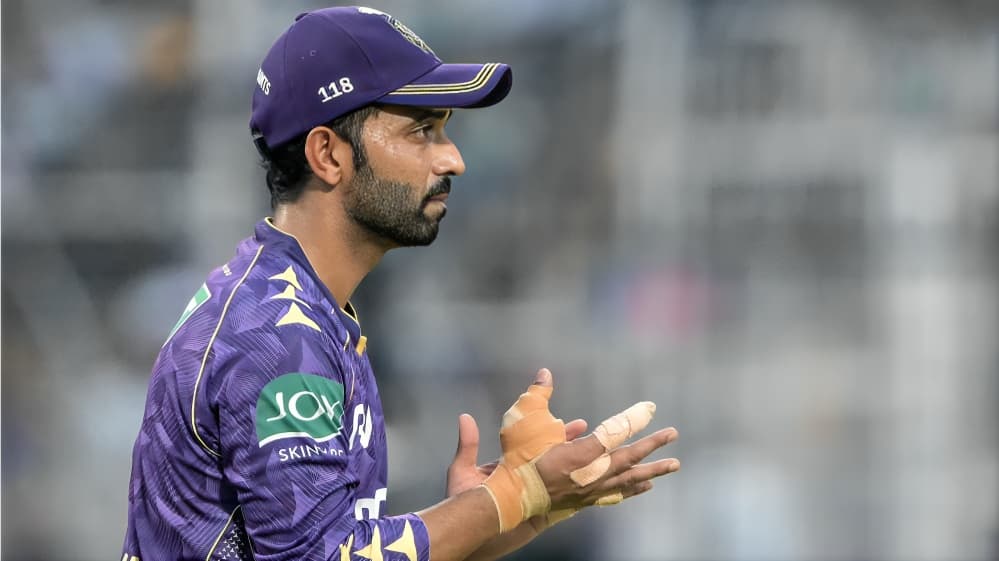
Ajinkya Rahane has addressed criticism following his recent performance in the match between Kolkata Knight Riders and Sunrisers Hyderabad. The KKR captain came under scrutiny after scoring just 8 runs in the game, which ended in a defeat for his team.
Following the match, Rahane responded to questions about his batting by stating that he has maintained one of the best strike rates in recent years, particularly since 2023. His comments drew attention as they appeared to contrast with available statistical data, which places him lower in overall strike rate rankings compared to other players in the format.
The discussion around Rahane’s statement has sparked debate among cricket fans and analysts. While some supporters agree that a player’s contribution cannot be judged solely based on a single match, others have pointed to data suggesting that his strike rate has not been among the top in the league. This difference between perception and statistics has become a key talking point.
Rahane, known for his classical batting style, has adapted his game to suit the demands of T20 cricket over the years. However, maintaining a high strike rate consistently remains a challenge for many players, especially those who rely on technique and timing rather than aggressive hitting. His role within the team often involves providing stability at the top or in the middle order, which can influence his scoring approach.
The match against Sunrisers Hyderabad added to the pressure on the KKR captain, as expectations remain high for experienced players to deliver in crucial situations. In modern T20 cricket, strike rate is considered an important metric, often used to evaluate a player’s effectiveness in accelerating the scoring rate.
Experts note that while strike rate is a key indicator, it should be considered alongside other factors such as match context, pitch conditions, and team strategy. A player’s role within the team can significantly impact their approach to batting, and this may not always align with purely statistical comparisons.
The broader conversation also reflects the increasing role of data analysis in cricket. With detailed statistics readily available, players’ performances are closely examined, and claims made in public statements are often compared with factual data. This has led to more informed discussions among fans and analysts.
Despite the criticism, Rahane remains an experienced and respected player in the cricketing world. His leadership and contributions to the team extend beyond individual performances, and he continues to play a key role in guiding younger players.
As the tournament progresses, Rahane will have opportunities to respond to criticism through his performances on the field. Consistent contributions in upcoming matches could help address concerns and reinforce his position within the team.
Overall, the situation highlights the challenges faced by players in balancing expectations, performance, and public perception. It also underscores how closely player statements and statistics are scrutinized in the modern game.