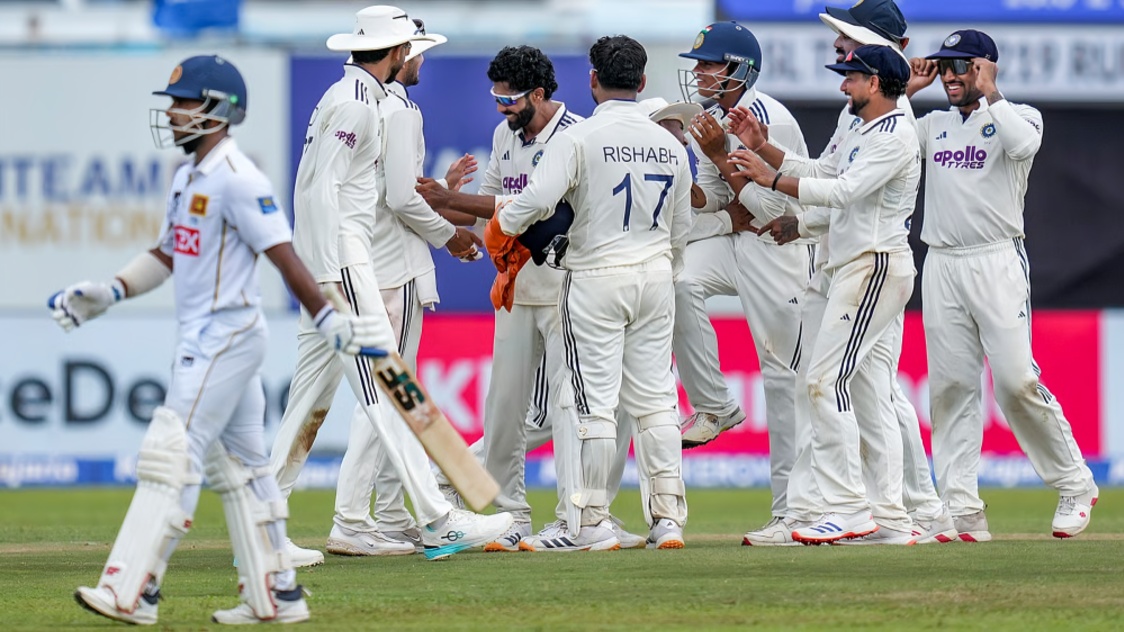
India continued to hold the upper hand against Sri Lanka in the second Test at the Sinhalese Sports Club in Colombo. After a strong batting performance, India declared their first innings at 503 for 9, putting the hosts under considerable pressure.
India entered the second Test with a 1-0 lead in the two-match series after defeating Sri Lanka by 165 runs in the opening Test at Galle. The visitors were therefore aiming to secure a series victory in Colombo, while Sri Lanka needed a strong response to keep the series level.
India's batting performance provided the foundation for their dominant position. Devdutt Padikkal was one of the major contributors, scoring an impressive 117. His century gave India a strong platform before the lower middle order took control.
Dhruv Jurel then produced one of the standout performances of the innings. The wicketkeeper-batter remained unbeaten on 115 and played a composed innings as India moved towards a formidable total. Jurel's century was his second in Test cricket and an important contribution in an overseas Test.
Rishabh Pant also played an aggressive innings, scoring 63 from 89 deliveries. His attacking approach helped India accelerate the scoring rate and strengthen the team's position before the declaration.
Pant's innings also helped him surpass former India captain Mahendra Singh Dhoni for the most Test runs by an Indian wicketkeeper away from home. Pant's tally moved beyond Dhoni's previous mark during his innings in Colombo.
Jurel and Pant combined effectively during India's middle and lower-order acceleration. Their partnership helped India move beyond the 400-run mark and eventually reach 503 for 9.
The Indian team management decided to declare the innings at that total, giving the bowlers an opportunity to attack Sri Lanka before the end of the day's play.
The decision immediately paid dividends.
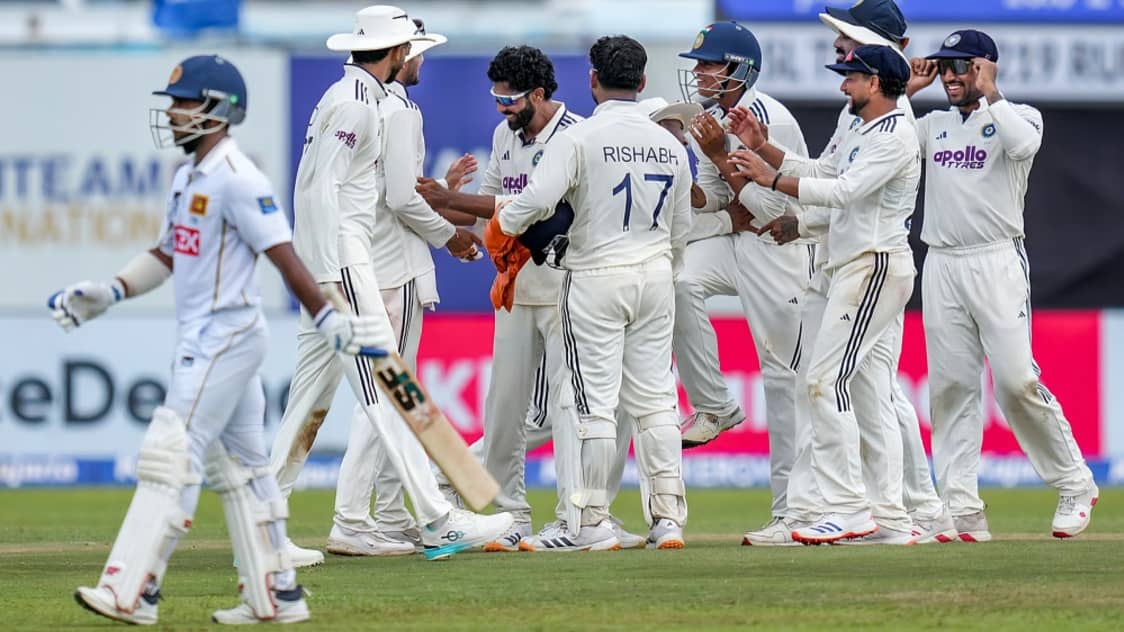
Sri Lanka's reply began under difficult circumstances, with India quickly making breakthroughs. Prasidh Krishna dismissed opener Lahiru Udara, while Manav Suthar removed nightwatchman Prabath Jayasuriya.
The early wickets left Sri Lanka struggling at 8 for 2 at the end of the second day's play. The hosts were facing a massive deficit after India's declaration.
Prasidh Krishna made the first breakthrough with a delivery that drew an edge from Lahiru Udara. Yashasvi Jaiswal completed an excellent catch to give India an early wicket.
Manav Suthar then produced another important moment. With the light fading, India's bowling options changed, and Suthar was brought into the attack. He responded by dismissing Prabath Jayasuriya.
The dismissal demonstrated Suthar's ability to adapt to the conditions. His bowling has already been one of the major talking points of India's tour of Sri Lanka.
Suthar had played a decisive role in India's victory in the first Test at Galle, taking 10 wickets in the match. His continued success has given India another effective bowling option alongside the experienced attack.
Sri Lanka's early collapse also increased the pressure on their top order. Kamil Mishara remained at the crease as the hosts attempted to rebuild their innings.
As Day 3 began, Sri Lanka's priority was to reduce the huge deficit and prevent India from gaining a decisive advantage. India, meanwhile, had the opportunity to attack with both pace and spin.
The weather remained an important factor throughout the match. Rain and interruptions had already affected proceedings in Colombo, and play on Day 3 was also impacted by a wet outfield. At one stage, Sri Lanka were reported to be trailing India by 373 runs with seven wickets remaining.
The conditions have made the Test more challenging for both teams. India's large first-innings total provides them with a significant advantage, but interruptions can reduce the amount of playing time available to force a result.
For Sri Lanka, the immediate objective is to remain at the crease for as long as possible and reduce India's chances of enforcing a follow-on or setting up a declaration-based chase.
India's bowlers, on the other hand, will be looking for regular wickets. The early success of Krishna and Suthar showed that the Sri Lankan batting lineup can be vulnerable when placed under pressure.
The Indian bowling attack includes Mohammed Siraj, Prasidh Krishna, Manav Suthar and other options capable of exploiting different conditions.
The playing XI also includes captain Shubman Gill, Ravindra Jadeja and the returning Rishabh Pant, giving India a balanced combination of batting and bowling resources.
India's batting lineup was also strengthened by contributions from several players. Padikkal's 117, Gill's 50, Pant's 63, Jadeja's 43 and Jurel's unbeaten 115 ensured that the visitors maintained pressure throughout their innings.
Jurel's innings was particularly significant because he remained unbeaten until the declaration. His patience was tested during the innings, but he eventually completed his century and continued batting aggressively alongside the lower order.
The century also placed Jurel in a notable category of Indian batters who have scored a Test hundred at number seven or lower in Sri Lanka. He became only the second Indian batter to achieve the feat after Hardik Pandya.
The result of the first Test has also increased the pressure on Sri Lanka. India won the Galle Test by 165 runs, with Suthar playing a major role in the victory.
Sri Lanka therefore needed a strong batting performance in Colombo to prevent India from controlling the series.
Instead, the early wickets after India's declaration immediately put the hosts on the defensive.
The second Test is particularly important because it is the final match of the series. A victory or draw for India would ensure that the visitors finish the series ahead, while Sri Lanka need to avoid defeat to level the contest.
India's declaration at 503 for 9 was a clear indication that the team was confident about its batting position and wanted to give the bowlers sufficient time to attack the Sri Lankan batting lineup.
The strategy was rewarded almost immediately when two wickets fell in the opening overs of Sri Lanka's reply.
On Day 3, the focus shifted towards Sri Lanka's attempt to survive India's bowling attack. The hosts needed substantial partnerships to erase the deficit and put pressure back on India.
India's advantage was strengthened by the variety in its bowling attack. Fast bowlers could exploit the new ball when conditions allowed, while Suthar and Jadeja could provide control through spin.
The wet conditions, however, remained a major concern. Any further interruptions could reduce the number of overs available and potentially affect India's ability to force a result.
Despite the weather interruptions, India remained in a commanding position because of the huge first-innings total.
The performances of Jurel, Padikkal and Pant were central to India's dominance with the bat. The bowlers then continued the momentum by taking early wickets.
Sri Lanka's response on Day 3 would therefore be crucial to the final outcome. A prolonged batting effort could keep the hosts in the contest, while another collapse could put India within reach of a major victory.
The latest scorecard showed India at 503 for 9 declared and Sri Lanka progressing through their first innings. The hosts were still facing a substantial deficit and had to concentrate on survival and building partnerships.
With India already leading the series, the visitors have placed themselves in an excellent position to secure a series win.
The remaining play will depend heavily on the weather, Sri Lanka's ability to withstand India's bowling attack and India's approach once the hosts' first innings reaches its conclusion.
For Sri Lanka, the immediate target is to stay at the crease and reduce the deficit. For India, the objective is to keep taking wickets and maintain control of the Test.
The Colombo match has therefore developed into a strong contest between India's dominant batting performance and Sri Lanka's fight for survival.
India's 503 for 9 declaration, Jurel's unbeaten century and the early wickets have given the visitors a major advantage. With the series already in India's favour, Sri Lanka face a difficult challenge to turn the match around.
The Day 3 proceedings will be closely watched as India look to strengthen their position and move closer to completing a series victory in Colombo.