

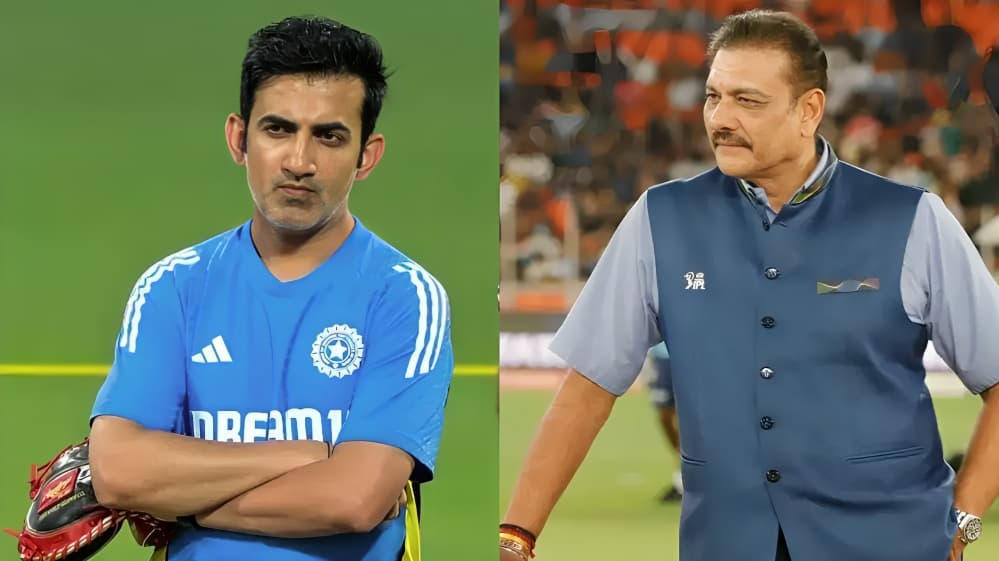
Ravi Shastri, former head coach of the Indian cricket team and a respected cricket commentator, recently addressed comments made by former cricketer Gautam Gambhir regarding India’s disappointing run in Test cricket. Shastri did not hold back in his response, offering a nuanced perspective on accountability, coaching responsibilities, and the pressures associated with leading a national side.
Gautam Gambhir, a former opening batsman for India, had criticized aspects of the current coaching setup, suggesting that leadership and management played a role in the team’s recent failures. Speaking on the issue, Shastri acknowledged the legitimacy of criticism but stressed that he personally would have handled the situation differently. “If something like this had happened under my tenure, I would have taken responsibility first,” Shastri said. His remark reflects a philosophy of accountability and personal responsibility, emphasizing that leaders must stand up in moments of adversity.
Shastri elaborated on the challenges that come with managing a national team. Coaches are not only responsible for strategy and preparation but also for maintaining team morale, managing player egos, and responding to intense scrutiny from media and fans alike. He noted that defeats in international cricket are complex and often result from a combination of factors, including player form, opposition strength, pitch conditions, and strategic decisions. Placing blame on a single individual oversimplifies these challenges.
The former coach also reflected on his experiences during his tenure, recounting how he handled high-pressure situations and learning moments. Shastri emphasized the importance of maintaining composure, supporting players, and fostering a team environment that encourages growth even in difficult periods. He contrasted this with the current scenario, suggesting that public criticism, while inevitable, should be balanced with constructive evaluation of team performance.
Shastri’s candid remarks highlight the pressures and expectations associated with coaching at the highest level. Accountability, according to him, is a critical trait that leaders must embrace, but it should coexist with empathy, strategic thinking, and long-term vision. By stating that he would have taken responsibility first, Shastri reinforced the idea that leadership involves both owning failures and guiding teams toward recovery.
The discussion also underscores the broader debate in Indian cricket about leadership, coaching effectiveness, and player management. As the Indian team navigates its current challenges in Test cricket, opinions from former players and coaches like Shastri provide insight into how past experiences can inform present decisions. His remarks remind fans and analysts that cricket outcomes are shaped by multiple variables, and accountability must be understood in context.
Ravi Shastri’s response to Gautam Gambhir’s comments offers a combination of reflection, wisdom, and perspective. It serves as a reminder that managing a national cricket team requires not only tactical acumen but also emotional intelligence, resilience, and the willingness to take responsibility in challenging times.


