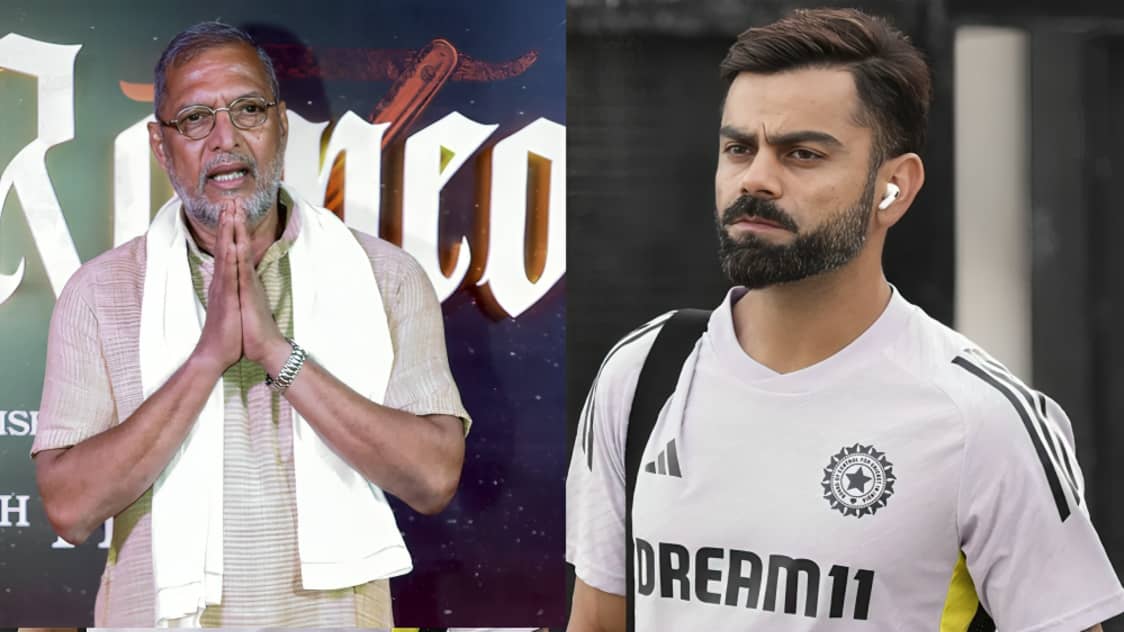
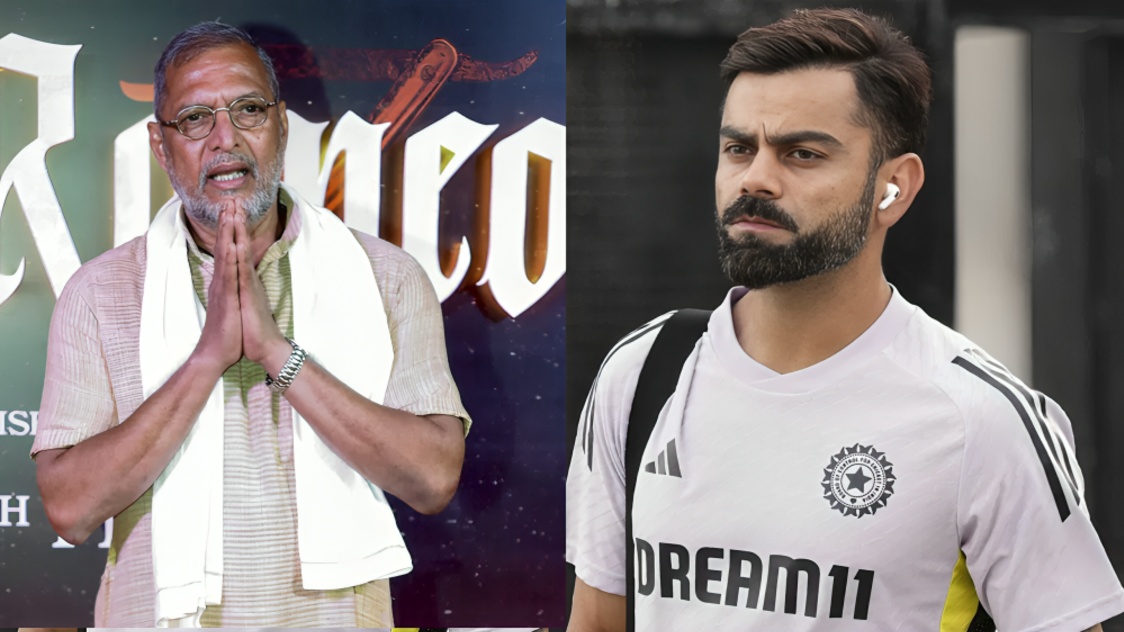
Veteran actor Nana Patekar’s death has led to an outpouring of tributes from across Indian cinema, sports and public life. Among those remembering the acclaimed actor was Indian cricket star Virat Kohli, who described Patekar as a true legend of Indian cinema and said that his work and legacy would continue to live on for generations.
Patekar died on Thursday, October 8, 2026, at the age of 75. He was found unresponsive at his residence in Goa and was taken to Manipal Hospital. Doctors confirmed that he had suffered a cardiac arrest. According to reports, the specific underlying cause of the cardiac arrest was not immediately known.
Kohli shared his tribute on social media after news of Patekar’s death emerged. In his message, the former India captain referred to the actor as a true legend of Indian cinema and highlighted the lasting value of his work. Kohli also expressed his condolences and offered his respects to the late actor.
The tribute has attracted attention because Patekar was also known to be an admirer of cricket and, in particular, Kohli. Earlier reports have highlighted Patekar’s interest in the Indian batting star, adding a personal connection to Kohli’s tribute following the actor’s death.
Kohli was not the only cricketer to remember Patekar. Several members of the wider cricket fraternity also expressed their condolences. Sachin Tendulkar, Shikhar Dhawan, Ajinkya Rahane and other sports personalities paid their respects to the actor and remembered his contribution to Indian cinema.
Patekar built a career that spanned nearly five decades across Hindi and Marathi cinema. He began his journey in theatre before moving into films. His film career included a wide range of roles, from intense dramatic characters to villains and comic performances. His distinctive voice, dialogue delivery and powerful screen presence made him one of the most recognisable actors in Indian cinema.
Patekar made his Hindi film debut with Gaman in 1978 and later gained widespread recognition for performances in films such as Parinda, Krantiveer, Khamoshi: The Musical, Ab Tak Chhappan, Apaharan and Raajneeti. He also became popular with mainstream audiences through comedy roles, including the character Uday Shetty in Welcome and Welcome Back.
One of the major milestones in his career was his performance in Parinda. His portrayal of the crime boss Anna earned him the National Film Award for Best Supporting Actor. He later won the National Film Award for Best Actor for Krantiveer and another Best Supporting Actor award for Agni Sakshi. His career was therefore marked by recognition across different genres and styles of filmmaking.
Patekar was also an important figure in Marathi cinema. His performance in Natsamrat, released in 2016, was widely regarded as one of his notable later roles. He remained connected with Marathi theatre and cinema throughout his career while continuing to work in Hindi-language films.
Beyond acting, Patekar also worked as a filmmaker. He directed, wrote and starred in Prahaar: The Final Attack, released in 1991. His contribution to Indian cinema was later recognised with the Padma Shri in 2013, one of the country’s major civilian honours.
Patekar was also associated with social initiatives, particularly efforts connected with farmers affected by drought in Maharashtra. He co-founded the Naam Foundation with actor Makarand Anaspure in 2015. His social work became another significant part of his public identity beyond his film career.
News of his death prompted tributes from several leading personalities. Actors, filmmakers, politicians and sports figures remembered Patekar for his contribution to Indian cinema. Prime Minister Narendra Modi also expressed his condolences, praising the actor’s individuality and memorable performances.
The film industry also remembered Patekar’s versatility. His career included serious dramas, action films, social stories and comedy. This ability to move between contrasting characters helped establish him as an actor with a distinctive identity rather than someone associated with only one particular genre.
For Kohli, the tribute focused primarily on Patekar’s lasting artistic contribution. By describing him as a true legend and highlighting the longevity of his work, Kohli recognised an actor whose influence extended well beyond individual films.
The reaction from the cricket community also reflects the connection between Indian cinema and sport. Patekar was known as a cricket enthusiast, while Indian cricketers have frequently shared their admiration for prominent figures from the entertainment industry. His death therefore prompted tributes from both fields.
Patekar’s final years also included appearances in mainstream projects. He remained active in cinema and appeared in films including Housefull 5. His work continued to bring him into contact with younger generations of actors and filmmakers.
His death marks the end of a long career that began in theatre and developed across Hindi and Marathi cinema. From critically acclaimed dramatic performances to widely remembered commercial characters, Patekar created a body of work that reached audiences across generations.
Virat Kohli’s tribute adds to the growing list of condolences following the actor’s death. His message specifically emphasised the lasting nature of Patekar’s contribution, suggesting that the actor’s performances will continue to be remembered even after his passing.
For Indian cinema, Nana Patekar leaves behind a diverse body of work and a distinctive acting style. For fans of both cinema and cricket, the tributes from Kohli and other cricketers underline the respect he earned beyond the film industry.
As tributes continue to emerge, Patekar’s performances, filmmaking work and social contributions are likely to remain part of discussions about his long career. Kohli’s message reflects the broader sentiment that the actor’s artistic contribution will continue to be remembered by audiences in India and beyond.