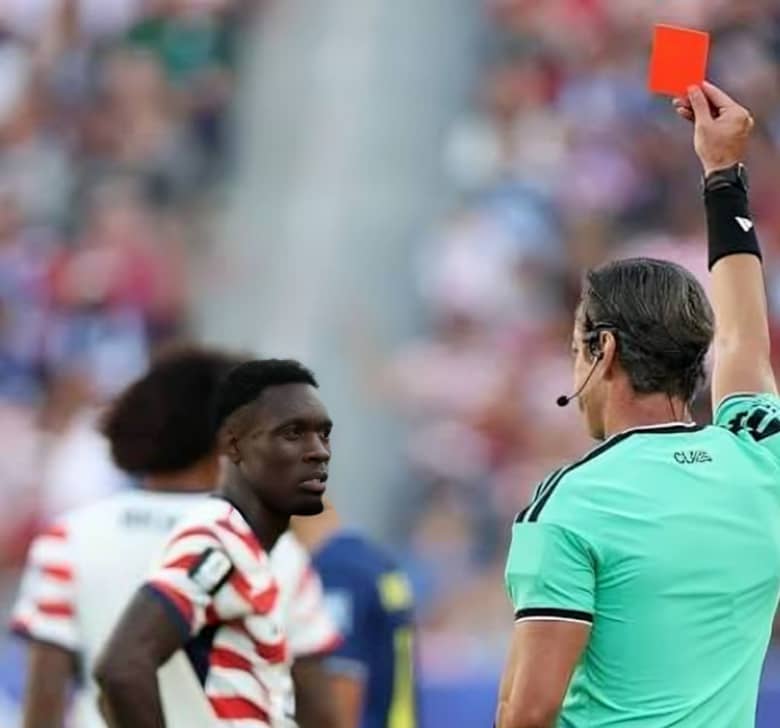

FIFA is facing increased public attention following reports concerning its decision to lift the suspension of United States international Folarin Balogun. The development has generated discussion across the football community, with questions being raised about the governing body's disciplinary procedures and the consistency of its decision making.
Media reports have suggested that the decision has prompted reactions from several football observers and national associations. However, there has been no official confirmation from FIFA that political influence or intervention by any government or political leader played a role in the disciplinary outcome. Claims suggesting such involvement remain unverified unless supported by official statements or documented evidence.
Folarin Balogun, who represents the United States at the international level, has emerged as one of the country's promising forwards in recent years. His performances for both club and country have earned attention, making any disciplinary decision involving him a subject of significant interest among football supporters and analysts.
FIFA's disciplinary framework is governed by established regulations that are applied through independent judicial bodies. Matters involving player suspensions, appeals, and disciplinary reviews are generally examined based on match reports, available evidence, and the relevant provisions of FIFA's Disciplinary Code. Decisions may be reviewed if an appeal is submitted through the appropriate legal channels.
Football governing bodies frequently face scrutiny whenever disciplinary rulings are modified or overturned. Players, clubs, and national teams have the right to seek reviews under existing regulations, and governing organizations are expected to provide decisions based on applicable rules rather than external considerations.
Reports indicating that other national football associations are seeking similar treatment remain speculative unless confirmed by the associations themselves or by FIFA. As of now, no official statement has been issued by FIFA indicating that requests of this nature have been received or considered.
The incident has nevertheless generated discussion about transparency and consistency in international football governance. Supporters and analysts have emphasized the importance of maintaining confidence in disciplinary systems by ensuring that all decisions are made according to established regulations and communicated clearly.
FIFA regularly updates its disciplinary procedures and governance framework to strengthen fairness, accountability, and integrity across international competitions. The organization also provides mechanisms through which decisions may be challenged before its judicial bodies or, where appropriate, before the Court of Arbitration for Sport.
As the governing body of world football, FIFA oversees disciplinary matters involving international competitions, national associations, players, and officials. Maintaining public confidence in these processes remains an important aspect of its responsibilities.
At present, the available official information confirms only the disciplinary outcome relating to the player concerned. Allegations of political influence have not been substantiated by FIFA or any official authority. Any further developments are expected to depend on future statements from FIFA, the relevant football associations, or other competent bodies.