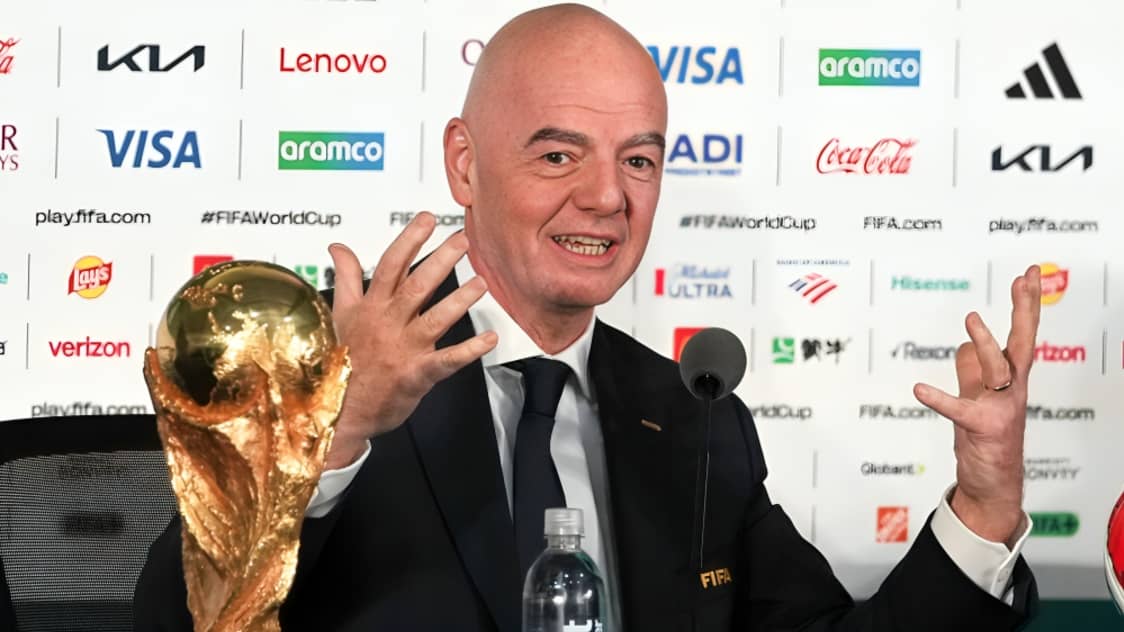

FIFA president Gianni Infantino is facing renewed attention as divisions emerge among major football confederations over the direction of global football governance. UEFA has reportedly expressed opposition to aspects of Infantino's leadership, while the Confederation of African Football has publicly backed the FIFA president.
The contrasting positions have highlighted growing political differences within international football. FIFA is made up of national associations and six continental confederations, each with its own priorities and interests. Differences between these bodies can influence discussions about competitions, finances, governance and the future direction of the sport.
UEFA, the governing body for football in Europe, represents some of the world's most influential football associations and domestic leagues. European football generates a significant share of the global game's commercial revenue, giving UEFA considerable influence within the international football structure.
CAF, meanwhile, represents football associations across Africa. African football has different development requirements and financial challenges compared with the established European football market. FIFA development programmes and international support are therefore particularly important to many African associations.
The reported support from CAF for Infantino reflects the importance of FIFA's development role in African football. Under FIFA's development programmes, member associations can receive financial support for infrastructure, grassroots football, youth development, administration and other projects.
For many developing football nations, these programmes provide resources that may not be available through domestic revenues. This can create a strong incentive to maintain a constructive relationship with FIFA leadership.
UEFA's reported opposition reflects a different set of priorities. European football has an extensive club competition structure and a highly developed commercial ecosystem. Changes proposed by FIFA can therefore have significant consequences for European leagues, clubs and players.
The disagreement has become more visible amid discussions surrounding the proposed FFE initiative. The proposal has faced questions over its feasibility and wider implications, adding to the political debate around FIFA's leadership.
Infantino has been FIFA president since 2016 and has overseen several major changes within the organisation. His tenure has included efforts to expand international competitions, increase FIFA revenues and strengthen development programmes for member associations.
Supporters of his leadership have pointed to increased investment in football development and the expansion of opportunities for national associations. Critics, however, have raised concerns about the impact of proposed changes on the existing football calendar and the interests of major leagues and clubs.
The disagreement between UEFA and FIFA is therefore part of a wider debate about who should determine the future direction of international football.
One of the central issues is the balance between national teams, domestic leagues and international competitions. Football's calendar is already crowded, and additional competitions or expanded tournaments can place greater demands on players.
European clubs and leagues have repeatedly emphasised concerns about player workload and scheduling. FIFA, on the other hand, has sought to develop competitions that can generate additional revenue and provide opportunities for associations outside the traditional football powers.
The debate also involves financial considerations. FIFA's global revenues support development programmes across its membership, while European football operates through a highly profitable club and league system.
These different financial structures can produce different priorities. Developing football regions may favour greater international investment, while established football markets may be more concerned about protecting existing competitions and commercial arrangements.
CAF's support for Infantino therefore has a strategic dimension. Strong relationships with FIFA can help African football associations access development resources and gain greater representation in international football discussions.
UEFA's position carries a different significance because of Europe's role in global football. Any sustained disagreement between UEFA and FIFA could influence negotiations over competitions, scheduling and governance.
The situation does not necessarily mean that the two organisations are permanently divided. International football governance frequently involves negotiations and disagreements between confederations, national associations, clubs and other stakeholders.
However, the current debate demonstrates that Infantino's leadership remains a major subject of discussion within football's governing structures.
For FIFA, maintaining support across all six confederations is important. The organisation depends on cooperation among its member associations to implement global competitions and development programmes.
Infantino's ability to manage these differing interests could become an important factor in the future of his presidency. Building consensus between established football markets and developing regions is a complicated political challenge.
The controversy surrounding the FFE proposal has added another layer to this situation. Questions about the proposal have contributed to broader discussions about FIFA's priorities and decision making.
For football fans, these governance disputes may appear distant from the matches themselves, but they can directly affect the sport's calendar, competitions and development programmes.
The outcome of the current tensions could influence how international football is organised in the coming years. Issues involving competition formats, player workload, financial distribution and development funding are likely to remain important areas of discussion.
The differing positions of UEFA and CAF show that there is no single view across global football. Each region has its own interests, challenges and expectations from FIFA.
As the debate continues, Infantino will face the task of maintaining support while addressing concerns raised by powerful football stakeholders. The future direction of FIFA will depend partly on its ability to balance these competing priorities.
For now, the contrasting positions of UEFA and CAF have brought FIFA's internal political dynamics into sharper focus. The disagreement over the FFE proposal and wider questions about international football governance could remain important issues as FIFA considers its next steps.
The developments underline the increasingly complex nature of global football administration, where sporting interests, financial considerations and regional priorities all play a role in shaping the future of the world's most popular sport.