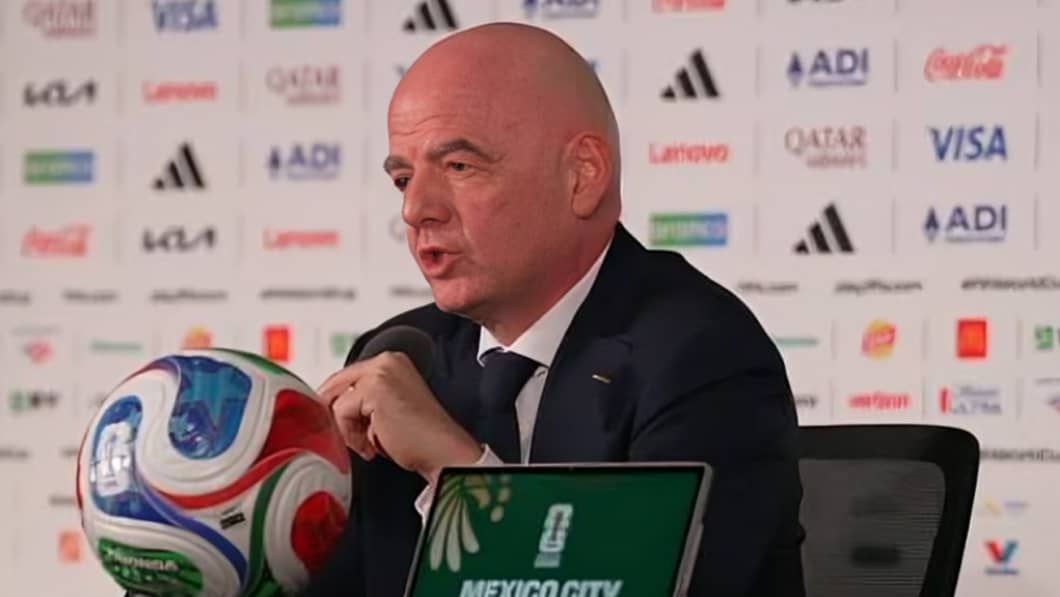

FIFA President Gianni Infantino has defended the use of hydration breaks during the FIFA World Cup 2026 following growing debate about their role in international football. Addressing concerns raised by critics, Infantino stated that the primary objective of the breaks is to ensure player welfare and preserve competitive balance rather than generate additional commercial opportunities.
The discussion emerged as several matches during the tournament were played in warm weather conditions, leading tournament organizers to implement hydration pauses at specific points during games. These scheduled breaks allow players to consume fluids, recover briefly, and receive guidance from coaching staff before play resumes.
According to FIFA officials, the decision was made after evaluating environmental conditions and considering the physical demands placed on athletes competing at the highest level. Modern football requires players to maintain intense physical activity for extended periods, making hydration and recovery increasingly important factors in performance and safety.
Critics have questioned whether hydration breaks interrupt the natural flow of matches and provide opportunities for tactical adjustments that may influence competition. Some observers have also suggested that additional stoppages could create commercial benefits through increased broadcast exposure and advertising opportunities.
Responding to such concerns, Infantino emphasized that the health and well-being of players remain FIFA's highest priority. He stated that the hydration breaks were introduced solely to address environmental challenges and ensure that all teams can compete under fair conditions regardless of weather-related factors.
Player welfare has become an increasingly significant topic in international football. Governing bodies, clubs, and medical professionals have focused greater attention on issues such as fatigue management, injury prevention, recovery protocols, and environmental conditions. Hydration strategies are considered a critical component of modern sports science, particularly during competitions held in regions experiencing high temperatures.
Sports medicine experts note that dehydration can affect athletic performance in multiple ways. Reduced fluid levels may impact endurance, concentration, reaction times, and overall physical output. In extreme situations, prolonged exposure to heat without adequate hydration can pose serious health risks.
FIFA has previously implemented hydration breaks in various international competitions when weather conditions met specific thresholds. Similar practices have been adopted in domestic leagues and continental tournaments around the world, reflecting broader recognition of player health considerations.
The FIFA World Cup 2026 is one of the largest tournaments in football history, featuring expanded participation and matches played across multiple venues. As a result, organizers have faced additional challenges related to climate, travel, scheduling, and player recovery. Measures such as hydration breaks are viewed as part of broader efforts to manage these complexities effectively.
Supporters of the policy argue that maintaining player safety should outweigh concerns regarding minor interruptions to gameplay. They contend that athletes competing at elite levels deserve appropriate protections when performing under demanding environmental conditions.
At the same time, football analysts continue to debate how such measures affect the tactical and competitive aspects of the sport. Discussions surrounding match flow, coaching influence, and tournament regulations are likely to continue as football evolves to address modern challenges.
For FIFA, the introduction of hydration breaks reflects an ongoing commitment to balancing player welfare with the integrity of competition. As the World Cup progresses, the effectiveness and reception of the policy will remain a topic of interest among players, coaches, officials, and fans worldwide.