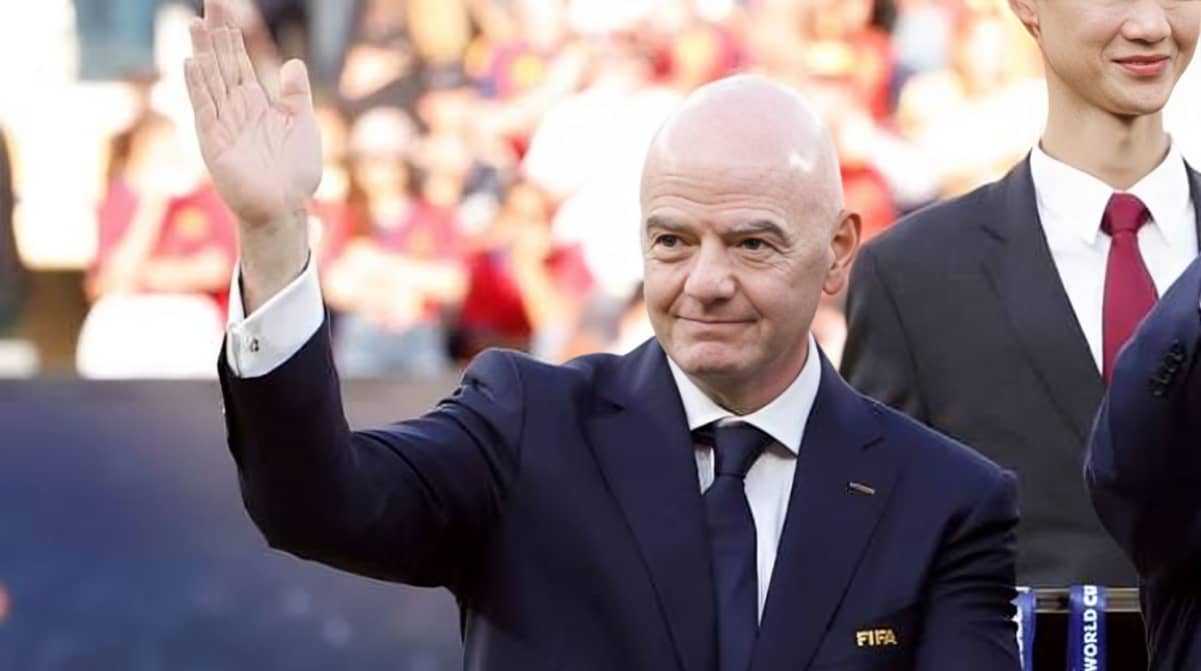
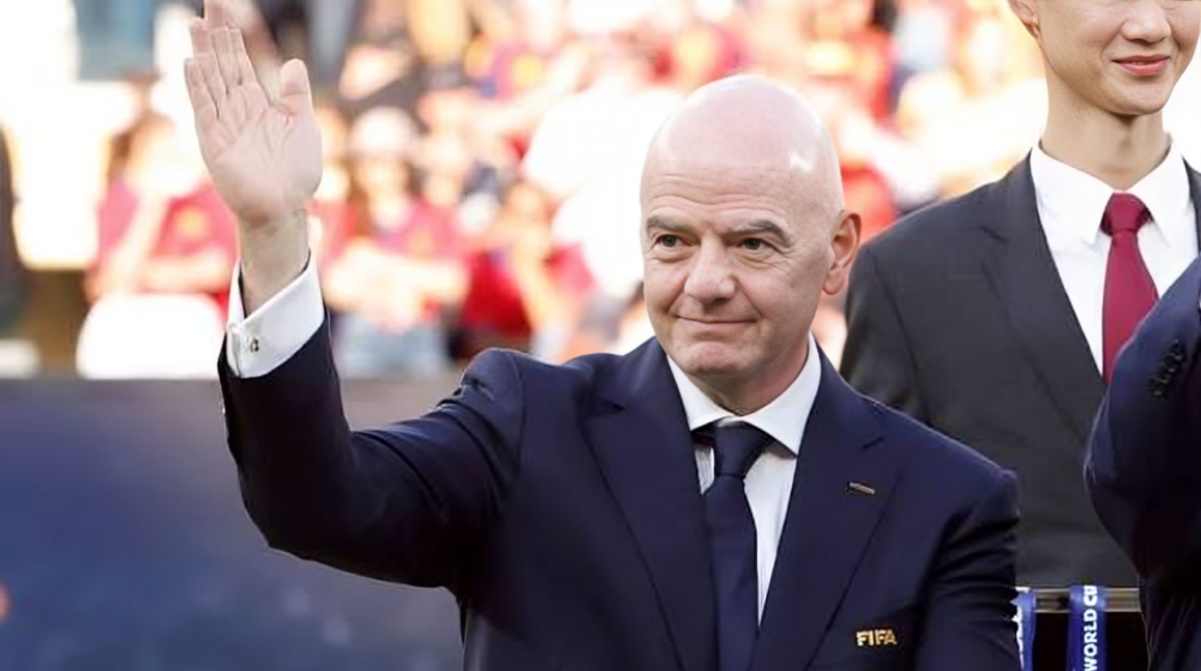
FIFA President Gianni Infantino is facing an increasingly complicated political situation ahead of the organisation’s 2027 presidential election. The latest development came from Scotland, where the Scottish Football Association confirmed that it will not support Infantino’s bid for another term.
Scottish FA Chief Executive Ian Maxwell said the association had aligned itself with the position taken by UEFA and that it had lost confidence in FIFA’s current leadership. Scotland’s decision adds to a growing list of European football associations that have withdrawn their backing for Infantino.
The development is significant because Infantino is seeking a fourth term as FIFA president. He announced earlier this year that he would stand for re-election at the 2027 FIFA Congress. The election is scheduled to take place in Morocco in March 2027.
Infantino has been FIFA president since 2016. During his presidency, FIFA has significantly increased its financial distribution to member associations, including through development programmes. His supporters point to increased investment in football infrastructure and development as evidence of his leadership record.
However, criticism has intensified following a controversial proposal concerning FIFA's commercial rights.
The proposal involved creating a new commercial entity that would manage certain FIFA commercial and ticketing rights and potentially sell a stake to private investors. The plan was criticised by several football governing bodies and other stakeholders who raised concerns about transparency, consultation and governance.
Infantino eventually abandoned the proposal after widespread opposition.
The decision did not end the controversy. Instead, it contributed to a broader debate about FIFA's leadership structure and the concentration of power within the organisation.
UEFA has been among the strongest critics. European football associations have questioned FIFA's approach to the proposed commercial venture and have expressed concerns about governance.
The Scottish FA has now formally joined that opposition. Scotland previously supported Infantino when he first ran for FIFA president in 2016, making its current decision a notable change in position.
The disagreement, however, is not limited to Europe.
Africa has emerged as one of the most important voting blocs in the upcoming FIFA election. The Confederation of African Football has formally backed Infantino, but that endorsement does not necessarily guarantee that all 54 African member associations will vote for him.
Each FIFA member association has one vote. FIFA currently has 211 member associations, meaning a candidate generally needs a majority of the available votes to win.
Africa's 54 associations therefore represent a significant portion of the total electorate.
Reuters reported that CAF's formal support for Infantino does not automatically translate into unanimous support from every African federation. African associations have historically demonstrated that they can vote independently of continental endorsements.
This makes Africa particularly important to Infantino's re-election campaign.
During his presidency, FIFA has increased its development spending across Africa. FIFA says investment in African football through its development programmes has grown substantially during Infantino's tenure.
That financial relationship has helped Infantino maintain strong support in several African football associations.
However, the current political situation is more complicated than a simple Europe versus Africa division.
Some African football officials continue to support Infantino, while others are taking a wait-and-see approach before deciding how they will vote.
The possibility of a strong challenger could also change the situation.
At present, Infantino remains the leading candidate, but opposition groups are attempting to build a coalition capable of challenging his position.
The FIFA presidential election will be held in March 2027, while the deadline for potential candidates is scheduled for November 18, 2026. This leaves several months for alliances to form and voting positions to change.
The current dispute has also created divisions among FIFA's continental confederations.
UEFA has taken a strongly critical position. The Asian Football Confederation and CONCACAF have also raised concerns about the abandoned commercial proposal and FIFA governance.
At the same time, CAF and CONMEBOL remain important sources of support for Infantino.
This creates a complicated political map in which continental alliances do not necessarily translate into uniform voting behaviour.
The Scottish decision is therefore important, but by itself it does not determine the outcome of the 2027 election.
Scotland represents one vote among FIFA's 211 member associations. Its importance comes primarily from the wider European position it represents.
UEFA has 55 member associations, making Europe the largest single continental voting bloc in FIFA.
If European associations remain united against Infantino, the opposition could become a major challenge to his re-election campaign.
The situation has also raised questions about the future structure of FIFA leadership.
Critics argue that FIFA needs stronger checks and balances and greater transparency in major commercial decisions.
Some opponents have discussed broader reforms to the organisation's leadership model, including changes to the way presidential authority is structured.
Infantino, however, has continued to indicate that he intends to remain in the race.
His supporters argue that FIFA has become financially stronger under his leadership and that development funding has benefited football associations across the world.
The controversy surrounding the commercial proposal has nevertheless created a significant political setback.
The plan was ultimately withdrawn after Infantino acknowledged that it had caused divisions within the football community.
The departure of FIFA Chief Operating Officer Kevin Lamour has added another layer to the controversy. Lamour had publicly criticised the commercial proposal before leaving the organisation. His departure has intensified questions about internal disagreement at FIFA.
Infantino's opponents are now attempting to turn those disagreements into a broader campaign for leadership change.
The election mathematics will be central to the contest.
With 211 FIFA members entitled to vote, a candidate needs substantial international support to win. Africa's 54 votes could therefore prove decisive, particularly if European opposition remains strong.
However, African support cannot automatically be treated as a single bloc.
Reuters has highlighted the possibility that individual African associations could make their own decisions regardless of CAF's official endorsement.
This could make the final months before the election especially important.
National associations may reassess their positions depending on the candidates entering the race, FIFA's governance reforms and the wider political situation.
The situation is also being watched closely by football organisations outside Europe and Africa.
Six Arab football associations, including Qatar and Morocco, have publicly backed Infantino. Their support demonstrates that the FIFA president still has influential allies despite the opposition campaign.
Morocco will host the 2027 FIFA Congress where the presidential election is scheduled to take place.
The country itself has also been among the associations supporting Infantino, adding another important relationship to the election landscape.
Infantino's position therefore remains uncertain but far from defeated.
The withdrawal of support from Scotland, England, Wales, Ireland and other European associations demonstrates that his coalition has weakened in parts of Europe.
At the same time, his support among African and some other international football associations means he retains a significant electoral base.
The outcome could ultimately depend on whether the opposition can agree on a single credible candidate.
If several candidates challenge Infantino, votes could be divided, potentially making it easier for the incumbent to retain the presidency.
If a single challenger secures broad backing from Europe, Asia, North America and enough other associations, the contest could become much closer.
For now, no definitive election outcome can be predicted.
The next major stage will be the candidate nomination process. The November deadline will clarify who is prepared to formally challenge Infantino.
Until then, football associations are likely to continue assessing their positions.
The debate is not only about Infantino personally. It has also become a wider discussion about how FIFA should be governed, how commercial decisions should be made and how much authority should be concentrated in the office of the president.
The abandoned commercial rights proposal has become a central point in that discussion.
Supporters of reform argue that major financial decisions involving World Cup rights should involve greater consultation with FIFA's members and stakeholders.
Infantino's critics believe the episode demonstrated the need for stronger institutional checks.
His supporters, meanwhile, point to FIFA's financial growth and increased global development programmes during his tenure.
The competing arguments are likely to shape the 2027 election campaign.
The Scottish FA's decision has therefore become another important development in a rapidly changing FIFA political environment.
It demonstrates that opposition to Infantino is becoming more visible, particularly among European associations.
However, the continuing support from CAF and other football federations means the election remains open.
Africa's 54 votes could be particularly important. Even though CAF has backed Infantino, individual associations may ultimately make independent decisions.
The balance between European opposition and African support could become one of the central issues of the election.
Overall, Gianni Infantino's position ahead of the 2027 FIFA presidential election is under increasing scrutiny. Scotland's decision to withdraw its support adds to the pressure from European football bodies, while the abandoned commercial rights proposal continues to fuel concerns about governance and transparency. At the same time, Infantino retains significant international support, particularly from Africa and parts of the Arab football community.
With the election still months away, the final result will depend on candidate nominations, international alliances and whether FIFA's 211 member associations maintain or change their current positions.