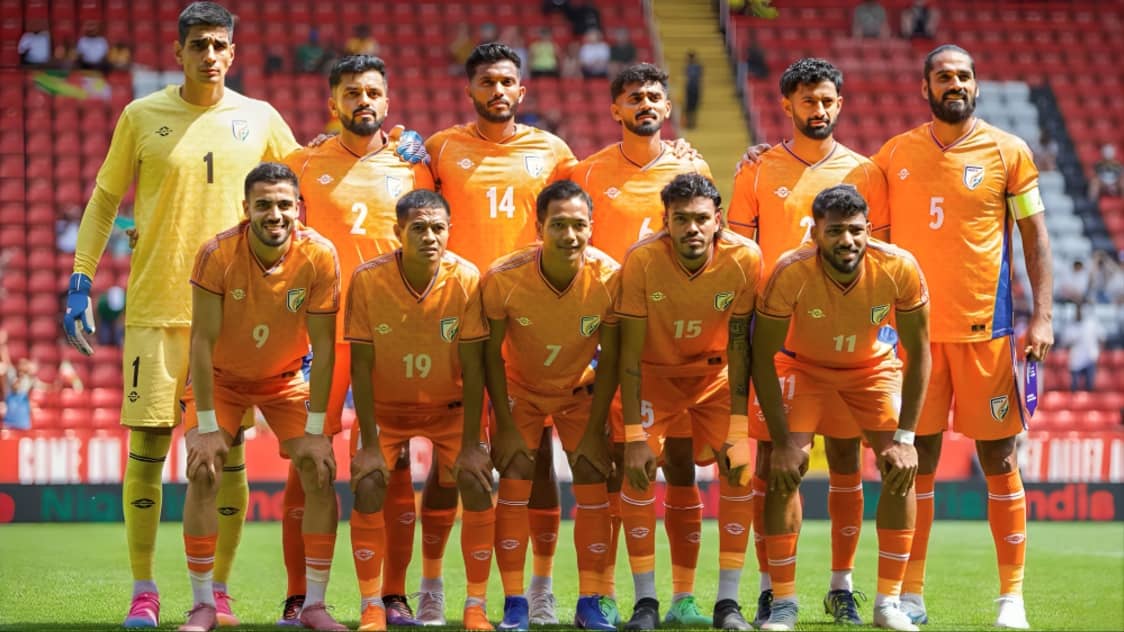

The All India Football Federation has informed FIFA that India will not participate in the inaugural FIFA ASEAN Cup 2026, with the federation choosing to prioritise a high profile international friendly against Brazil.
The decision comes after a scheduling conflict emerged between the FIFA ASEAN Cup and India's proposed home fixture against the five time world champions. The two events are scheduled around the same international window, creating a challenge for the AIFF in managing the national team's commitments.
The FIFA ASEAN Cup is a new international competition introduced by FIFA for teams from the Southeast Asian region. The inaugural tournament is scheduled for September and October 2026. India had been among the invited teams despite not being a member of the ASEAN Football Federation.
The AIFF had previously explored the possibility of sending a second string squad to the tournament while keeping the first choice national team available for the Brazil friendly. However, the federation's plans depended on approval from FIFA and the relevant tournament authorities. Earlier reports indicated that if a separate squad arrangement was not approved, India could withdraw from the competition.
The federation has now informed FIFA of India's decision not to participate. The move reflects the importance placed on the proposed Brazil friendly, which is being viewed as a major opportunity for Indian footballers to gain experience against one of the world's most successful national teams.
However, the withdrawal could have financial consequences for the AIFF.
According to reports, a withdrawal made at least 30 days before the start of the FIFA ASEAN Cup could attract a minimum penalty of approximately 17.64 lakh rupees. If the withdrawal takes place later, the reported minimum penalty could rise to around 23.52 lakh rupees. The exact financial consequences will depend on the applicable tournament regulations and the circumstances surrounding India's withdrawal.
The reported penalty has added another dimension to the AIFF's decision. While the federation is expected to consider the financial implications, its priority appears to be securing the strongest possible preparation for the Indian national team through high quality international fixtures.
A match against Brazil would represent a major opportunity for Indian football. Brazil is one of the most successful teams in international football history and has won the FIFA World Cup five times. Playing against such a high ranked opponent could provide Indian players with valuable experience and exposure.
The timing of the proposed match has nevertheless created a difficult scheduling situation. International football calendars provide limited opportunities for national teams to play competitive or high profile friendly matches. When two important events fall within the same window, football federations must decide which commitment offers greater sporting value.
For India, the AIFF appears to have decided that the Brazil fixture provides a more significant opportunity for the national team's development.
The FIFA ASEAN Cup itself is also an important new tournament. FIFA announced the competition as a new international event designed to provide national teams in Southeast Asia with another opportunity to compete during FIFA international windows.
The inaugural edition is expected to feature teams from the ASEAN region, with invited participation from countries outside the region also forming part of the planned competition structure.
India's withdrawal means the national team will not be part of the first edition. The decision could disappoint supporters who were looking forward to seeing India compete in a new international tournament.
At the same time, the Brazil friendly could generate considerable interest among Indian football supporters. A home match against Brazil would be one of the most high profile international fixtures involving the Indian national team in recent years.
The AIFF has also indicated plans to arrange additional international friendlies as part of its wider strategy. According to recent reporting, the federation is looking at organising two more significant matches to provide the national team with competitive exposure.
The decision also highlights the challenges faced by football federations when international fixtures overlap. National teams, clubs, tournament organisers and governing bodies must coordinate schedules to ensure players are available and competitions can be conducted without major conflicts.
The AIFF had initially attempted to find a solution by proposing that India field a reserve squad in the FIFA ASEAN Cup. Such an arrangement would have allowed the federation to participate in the tournament while keeping key players available for the Brazil match.
However, the proposal required approval. Earlier reports stated that FIFA's response was an important factor in determining whether India would remain in the tournament.
With the withdrawal now communicated to FIFA, attention is likely to shift towards the financial and regulatory implications as well as India's preparation for the Brazil fixture.
The reported penalty of 17.64 lakh rupees to 23.52 lakh rupees is relatively small when compared with the potential sporting and commercial value of a Brazil friendly. Nevertheless, the AIFF will have to address the applicable regulations and complete the withdrawal process in accordance with the tournament rules.
The situation also highlights the importance of long term planning in international football. National federations need to balance participation in new competitions with opportunities to play stronger opponents and improve their teams.
For Indian football, the Brazil match could offer players the chance to test themselves against elite opposition. Such matches can help coaches assess the squad, identify areas requiring improvement and provide younger players with international experience.
The FIFA ASEAN Cup withdrawal therefore represents a significant scheduling decision for the AIFF. India will miss the opportunity to participate in the first edition of the new tournament, but the federation is choosing to focus on a potentially historic encounter with Brazil.
The final financial impact of the withdrawal will depend on the applicable FIFA ASEAN Cup regulations and the timing and terms accepted by the relevant authorities. The reported figures should therefore be treated as estimates rather than a confirmed final penalty.
For Indian football supporters, the immediate focus will now be on the Brazil friendly and the national team's preparations. The match could become an important milestone for Indian football, while the AIFF will have to ensure that the decision to withdraw from the FIFA ASEAN Cup is properly managed from both sporting and administrative perspectives.