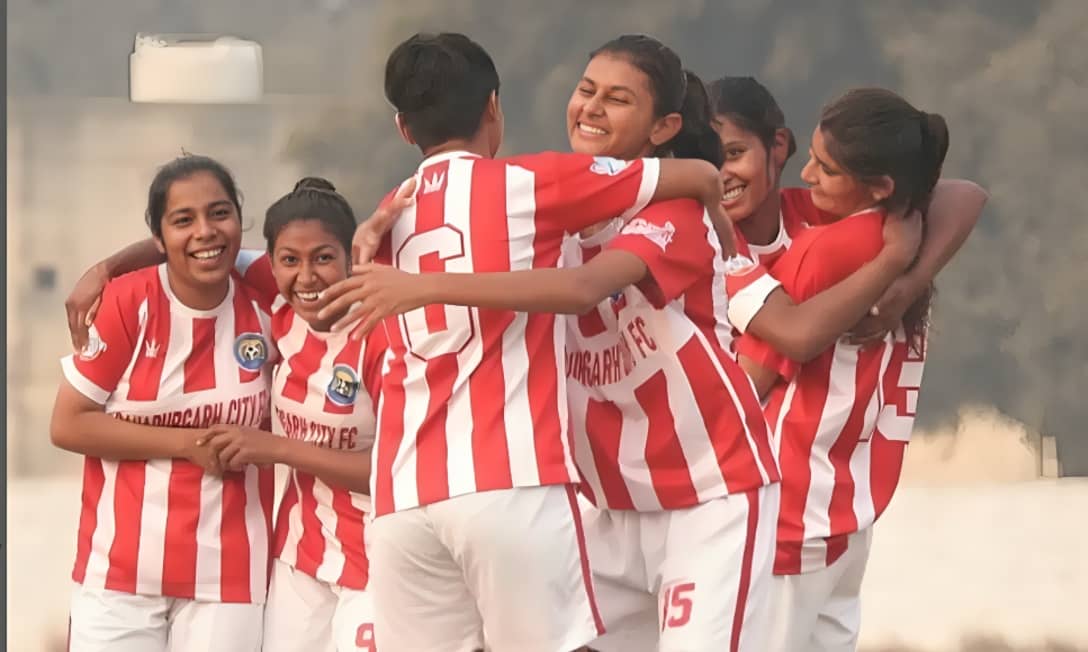
Indian women’s football is facing renewed scrutiny over the organisation and scheduling of its domestic competitions. The uncertainty surrounding the women’s football calendar has raised concerns among players, clubs and other stakeholders who depend on regular competitions for professional opportunities and financial stability.
The Indian Women’s League is the premier division of women’s club football in India, while the Indian Women’s League 2 serves as the second tier. According to the All India Football Federation, the top two teams from IWL 2 earn promotion to the Indian Women’s League, making the competition an important part of the country's player development and promotion structure.
The latest concerns are not limited to the timing of one tournament. Reports have highlighted wider problems involving uncertain fixtures, delayed competitions and difficulties faced by clubs in planning their seasons. For professional footballers, a predictable calendar is essential because contracts, training programmes, accommodation, travel arrangements and income are all linked to the availability of matches.
A recent report on Indian women’s football noted that the domestic calendar has repeatedly faced delays. Players and club representatives have raised concerns that the lack of certainty makes it difficult for clubs to plan finances and offer players reliable contracts.
The issue becomes particularly important for players who depend almost entirely on football for their income. When competitions are postponed or dates remain uncertain, players may have difficulty knowing when they will train, compete or receive match related payments.
The problem can also affect clubs. Running a professional women's football team involves expenses for player salaries, travel, accommodation, training facilities, medical support and competition fees. Without a dependable calendar, clubs may find it difficult to plan these expenses effectively.
The uncertainty surrounding IWL 2 is significant because the competition is designed to provide a pathway for teams and players to progress towards the top level of domestic women's football. Its role is not limited to determining promotion. It also provides competitive opportunities for emerging players who need regular matches to develop their skills.
The current situation is especially notable because Indian women's football has shown signs of progress at the international level. India's senior, under 20 and under 17 women's teams have achieved important qualification milestones, while the senior side has continued to attract attention through its performances in regional competitions.
However, international progress needs to be supported by a strong domestic structure. Regular club competitions give players opportunities to play competitive matches throughout the year and allow coaches to identify and develop talent.
The absence of a consistent calendar can therefore create a gap between international ambitions and domestic opportunities. Players may be expected to perform at a higher level internationally while receiving fewer regular competitive matches at club level.
Another concern is the impact on younger players. A strong second tier competition can provide an important bridge between youth football and senior professional football. If competitions are repeatedly delayed, young players may lose valuable playing time during important stages of their development.
Reports have also highlighted concerns about fixture congestion when competitions eventually take place. A properly planned calendar should provide sufficient recovery time between matches and allow teams to prepare adequately.
The financial dimension is equally important. Women's football clubs in India operate with considerably fewer resources than many men's teams. Some clubs rely heavily on private funding or parental support to maintain their operations. Increasing costs combined with uncertain competition schedules can place additional pressure on these organisations.
For players, the consequences can extend beyond football. An uncertain season can make it difficult to plan education, employment, travel and personal finances. Professional athletes need clarity about when their next competition will begin and how long their contracts and training commitments will last.
The situation has led to calls for a more dependable approach to women's football administration. A clearly published annual calendar, timely communication with clubs and players, properly planned fixtures and greater financial support could help strengthen the domestic structure.
The All India Football Federation has already established IWL 2 as the second level of the women's football pyramid. Its official competition information confirms the league's role in providing promotion to the Indian Women's League.
The challenge now is to ensure that the competition operates with the consistency expected from a professional national league.
Indian women's football has a growing pool of talented players and has made progress on the international stage. The domestic system needs to provide those players with enough opportunities to continue developing.
The concerns surrounding delayed competitions therefore represent more than a scheduling problem. They involve player livelihoods, club finances, talent development and India's broader ambitions in women's football.
A stable domestic calendar would allow clubs to recruit players earlier, organise training programmes, secure venues and manage budgets. It would also give players greater confidence about their careers.
The current debate has consequently placed renewed focus on the need for long term planning. If India wants to build a sustainable pathway towards international success, domestic women's football will need consistent competitions, stronger club structures and dependable financial arrangements.
The talent and ambition are already present. The key question is whether the administrative and financial structure can provide the stability required for Indian women's football to progress further.